
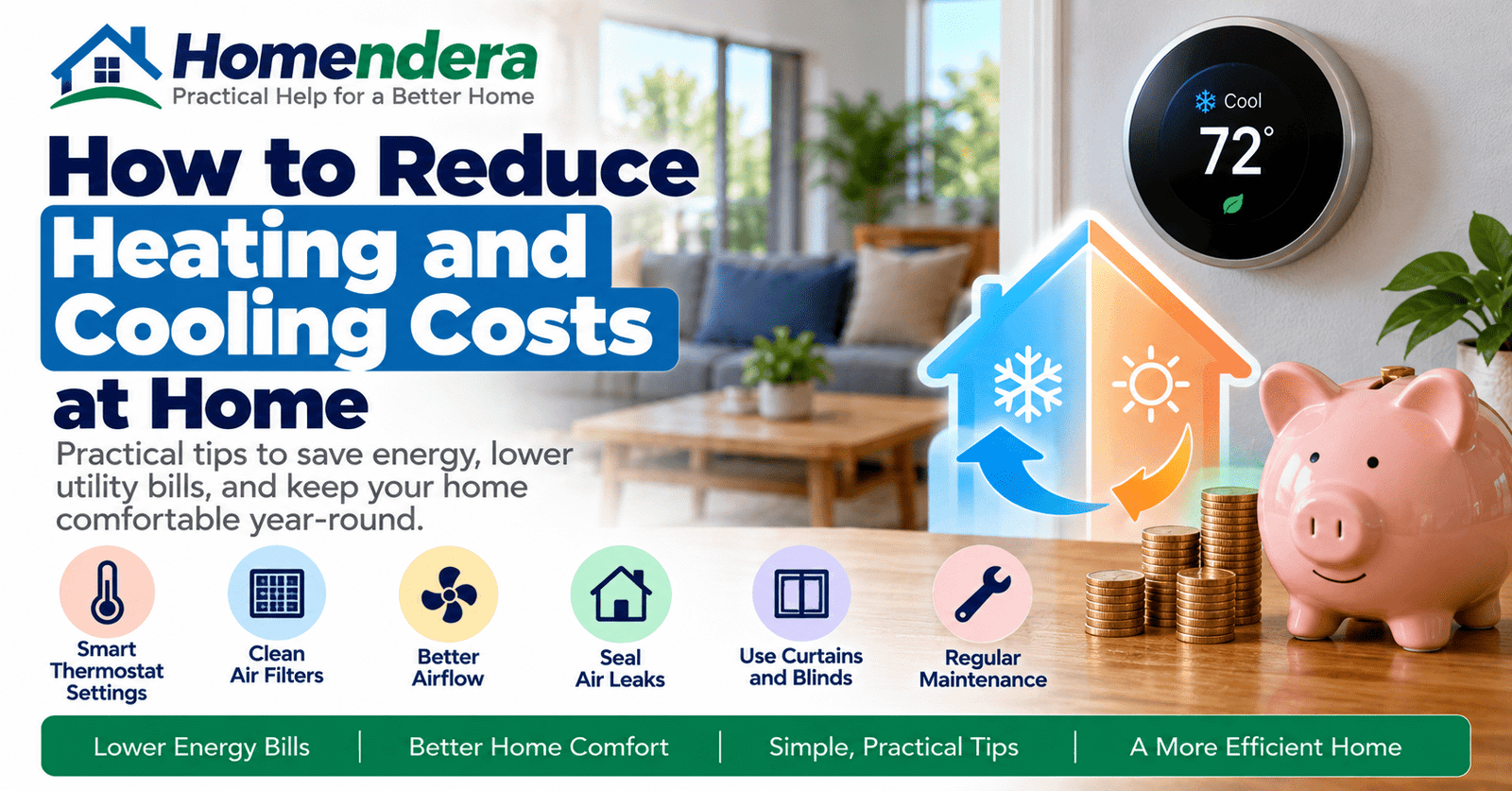
Heating and cooling can account for a significant part of a home’s energy use. However, reducing those costs does not always require replacing your HVAC system or making expensive renovations.
Small changes can make a difference. Better thermostat settings, regular HVAC maintenance, improved airflow, and reducing unwanted heat loss or gain can all help your system operate more efficiently.
This guide explains practical ways to reduce heating and cooling costs while keeping your home comfortable throughout the year.
1. Use Your Thermostat More Efficiently
Your thermostat controls when your heating and cooling equipment operates. Small adjustments can therefore affect energy use.
Avoid setting extremely high or low temperatures in an attempt to heat or cool the house faster. In many systems, this does not make the equipment reach the desired temperature faster. Instead, it may simply cause the system to run longer.
Choose a comfortable setting and adjust it when appropriate for your household.
If your thermostat behaves unexpectedly, our guide to common thermostat problems explains several settings and troubleshooting checks homeowners can make.
2. Adjust the Temperature When You Are Away
Heating or cooling an empty home to exactly the same comfort level you use while occupied may waste energy.
Depending on your climate, HVAC system, pets, humidity conditions, and household needs, you may be able to adjust the temperature when everyone is away.
Programmable and smart thermostats can automate these changes.
However, avoid extreme temperature changes that could create moisture problems, risk frozen pipes in cold weather, affect pets, or require excessive recovery when you return.
3. Keep Your HVAC Air Filter Clean
A dirty filter can restrict airflow through an HVAC system.
Restricted airflow may reduce performance and force the equipment to work harder. In some cases, it can also contribute to comfort or equipment problems.
Check your filter regularly and replace or clean it according to the equipment and filter manufacturer’s instructions.
Our guide on how often you should change your HVAC air filter explains why there is no single replacement schedule that works for every home.
4. Keep Supply and Return Vents Clear
Furniture, rugs, curtains, boxes, and other objects can accidentally block HVAC vents.
Walk through your home and check that supply registers and return-air openings have reasonable clearance.
Good airflow helps conditioned air move through the house as intended.
Avoid closing many vents in unused rooms unless your HVAC system was specifically designed for that type of zoning. Changing airflow significantly can affect system performance.
5. Maintain Your Heating and Cooling System
Regular maintenance can help HVAC equipment operate as intended and may identify developing problems before they become more serious.
Homeowner-level tasks may include checking filters, keeping vents clear, observing unusual sounds, and keeping appropriate areas around equipment unobstructed.
Use our HVAC maintenance checklist for homeowners to organize these routine checks.
Professional maintenance may also be appropriate according to your equipment manufacturer’s recommendations and system condition.
6. Seal Obvious Air Leaks
Unwanted outdoor air entering the home can increase heating and cooling demand.
Common places to inspect include:
- Exterior doors
- Window frames
- Gaps around penetrations
- Attic access points
- Weatherstripping
- Areas around suitable utility penetrations
Worn weatherstripping around a door, for example, may allow conditioned indoor air to escape while outdoor air enters.
Use products intended for the particular location and material. Some openings exist for ventilation, drainage, combustion safety, or other important purposes, so do not seal every gap simply because you can see one.
7. Check Exterior Doors and Windows
Windows and doors can contribute to heat gain during hot weather and heat loss during colder conditions.
Check whether exterior doors close properly. Look for damaged weatherstripping or obvious gaps.
Windows should also close and latch correctly.
If a door has alignment problems, fixing the underlying issue may improve both operation and sealing. Our guide on how to fix a door that won’t close properly covers common homeowner-level checks.
8. Use Curtains and Blinds Strategically
Window coverings can help manage solar heat.
During hot weather, closing blinds or curtains on windows receiving strong direct sunlight may reduce unwanted heat entering the room.
During colder weather, sunlight through suitable windows can sometimes provide useful daytime warmth. Closing window coverings later may help reduce the feeling of cold near the glass.
The most useful approach depends on your climate, window orientation, and season.
9. Use Ceiling Fans Correctly
Ceiling fans do not significantly lower the actual room temperature. Instead, moving air can make people feel more comfortable.
That may allow some households to use a slightly different thermostat setting while remaining comfortable.
Turn fans off when nobody is using the room unless there is another specific reason to keep them running. A fan primarily cools people through air movement rather than cooling an empty room.
Follow the manufacturer’s guidance for fan direction and seasonal operation where applicable.
10. Reduce Unnecessary Indoor Heat
Appliances and electronics release heat.
During hot weather, activities that produce substantial indoor heat can add to the cooling load.
Depending on your household routine, you might:
- Avoid unnecessary appliance use during the hottest part of the day
- Turn off lights and electronics that are not needed
- Use kitchen ventilation appropriately while cooking
- Run heat-producing appliances at more suitable times
Do not compromise ventilation or appliance safety simply to reduce cooling costs.
11. Check Attic Insulation and Air Sealing
The attic can have a major influence on indoor comfort.
Insufficient insulation or uncontrolled air leakage may increase heating and cooling demand. However, attic work requires careful planning.
Insulation should not interfere with required ventilation, electrical equipment, recessed fixtures, combustion systems, or moisture management.
If you suspect your attic is poorly insulated, an energy assessment or qualified contractor can help identify appropriate improvements.
12. Do Not Ignore Humidity
Temperature is only part of indoor comfort.
High humidity can make warm conditions feel less comfortable, while extremely dry air can affect comfort during colder weather.
Air-conditioning systems also remove some moisture while operating. If humidity remains unusually high despite normal cooling, investigate the cause rather than simply lowering the thermostat repeatedly.
Water intrusion, ventilation problems, oversized HVAC equipment, or other conditions can contribute to moisture issues.
13. Keep the Outdoor AC Unit Clear
If your home uses an outdoor air-conditioning or heat-pump unit, keep the surrounding area reasonably clear according to the manufacturer’s requirements.
Leaves, vegetation, debris, and stored objects should not restrict required airflow.
Do not dismantle the unit or perform electrical work.
If the equipment is operating but your home remains warm, read why your AC is running but not cooling the house before assuming the thermostat needs to be lowered further.
14. Avoid Constantly Changing Thermostat Settings
Frequent manual adjustments can make it difficult to understand how your home and HVAC system are actually performing.
Choose sensible settings and allow the system time to respond.
A programmable thermostat can help maintain a predictable schedule. Smart thermostats may offer additional features such as occupancy adjustments, remote control, and energy reports.
These devices can be useful, but they are not a substitute for proper HVAC maintenance or good building efficiency.
15. Pay Attention to Unusual HVAC Behavior
Rising energy use sometimes indicates more than changing weather.
Watch for changes such as:
- Longer-than-usual run times
- Frequent starting and stopping
- Weak airflow
- Unusual noises
- Rooms becoming harder to heat or cool
- Unexpected temperature differences
- Ice around cooling equipment
- Unusual odors
A sudden change in performance deserves investigation.
Catching a developing problem early may prevent continued inefficient operation.
16. Improve Efficiency One Step at a Time
You do not need to make every improvement at once.
Start with simple, low-cost measures:
- Review thermostat settings.
- Check the HVAC filter.
- Keep vents clear.
- Inspect obvious door and window gaps.
- Use blinds and curtains appropriately.
- Keep outdoor equipment unobstructed.
- Follow a regular HVAC maintenance routine.
- Monitor comfort and energy use.
After addressing simple issues, you can decide whether larger improvements make financial sense.
17. Be Careful With Expensive “Energy-Saving” Upgrades
Not every upgrade produces the same benefit in every home.
Before spending heavily on new equipment, insulation, windows, or smart-home products, identify where your home is actually losing energy.
An energy audit or professional assessment can be useful when the cause is unclear.
This approach can help you prioritize improvements based on the condition of your particular home rather than general claims.
18. When Should You Consider HVAC Replacement?
Older equipment is not automatically inefficient enough to justify immediate replacement.
Consider factors such as:
- System age
- Repair history
- Current condition
- Energy use
- Comfort problems
- Availability of replacement parts
- Installation quality
- Climate
- Expected time in the home
If major repairs are becoming frequent, ask a qualified HVAC professional to compare repair and replacement options.
Do not judge efficiency by equipment age alone.
When to Call a Professional
Some efficiency problems cannot be solved through thermostat changes or routine maintenance.
Professional assessment may be appropriate when:
- Energy use increases unexpectedly
- Heating or cooling performance declines significantly
- The system runs almost continuously
- Some rooms remain consistently uncomfortable
- HVAC equipment repeatedly short cycles
- You suspect duct leakage or major airflow problems
- Electrical or refrigerant problems are suspected
- You are considering major insulation or HVAC upgrades
A qualified professional can investigate system performance without relying on guesswork.
Final Thoughts
You can often reduce heating and cooling costs by improving how your home and HVAC system work together.
Start with thermostat settings, clean filters, clear vents, sensible window coverings, basic air-leak checks, and routine maintenance. These measures are generally more practical than immediately replacing expensive equipment.
Most importantly, look for the cause when energy use or comfort suddenly changes. A house that becomes unusually difficult to heat or cool may have a maintenance, moisture, airflow, or equipment problem that deserves attention.