
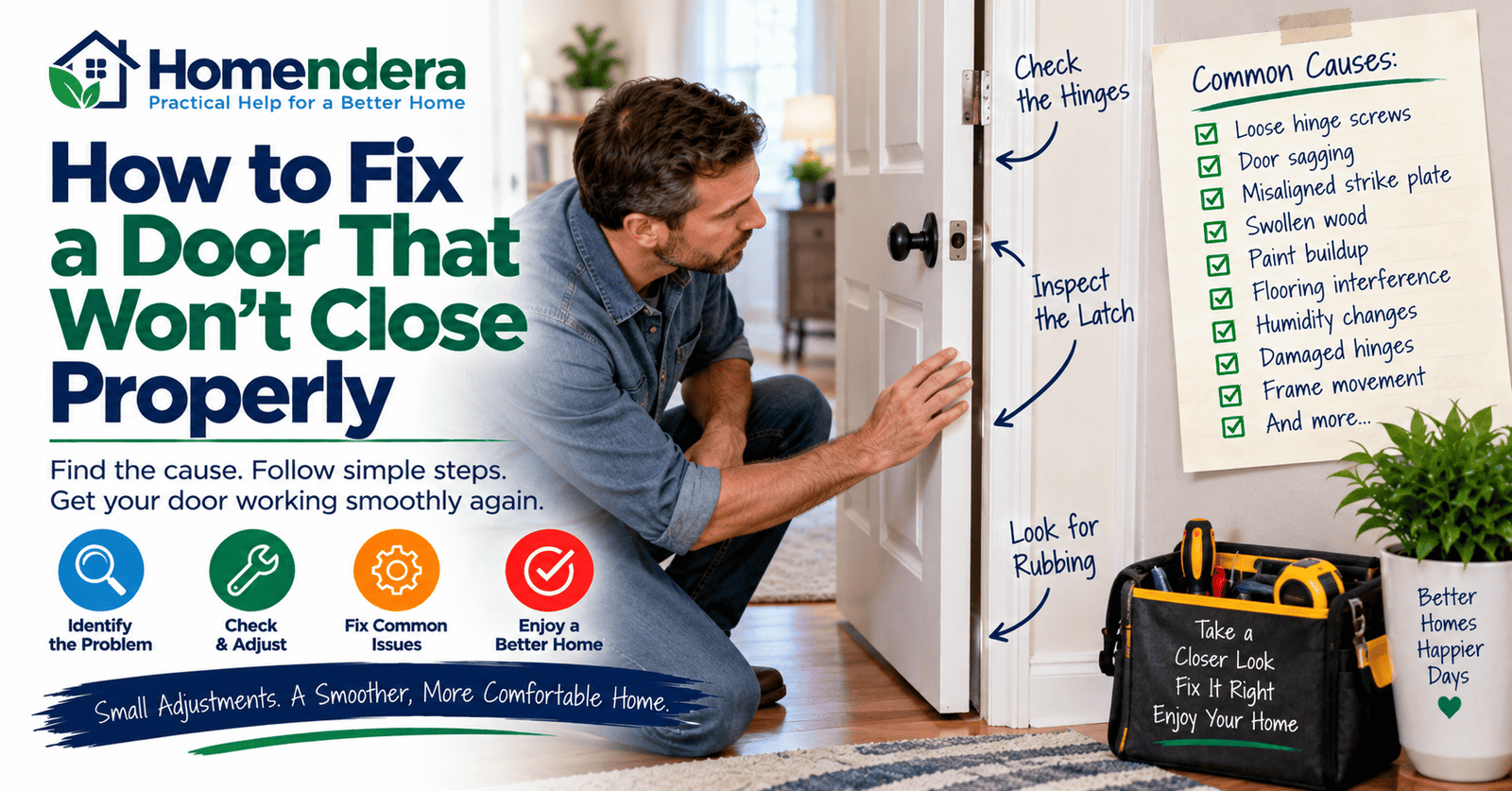
A door that will not close properly can be frustrating. It may rub against the frame, stick near the top, drag across the floor, or refuse to latch unless you push or lift it.
Fortunately, many door problems have relatively simple causes. Loose hinge screws, minor alignment changes, humidity, worn hardware, or a shifted strike plate can all affect how a door operates.
Learning how to fix a door that won’t close properly begins with finding the cause. Avoid sanding, cutting, or forcing the door before you know what is actually preventing it from closing.
For other manageable household repairs, see our Basic DIY Home Repairs Every Homeowner Should Know guide.
Why Won’t My Door Close Properly?
A door can stop closing correctly for several reasons.
Common causes include:
- Loose hinge screws
- Door sagging
- Hinge movement
- Misaligned strike plate
- Swollen wood
- Paint buildup
- Damaged hinges
- Changes in the door frame
- Flooring interfering with the door
- Building movement
The symptoms can help narrow down the cause.
Before using tools, open and close the door slowly while watching where it first makes contact.
Start by Looking at the Gaps Around the Door
Close the door as far as it will comfortably go.
Look at the space between the door and frame.
The gaps do not have to be perfectly identical, but a noticeably narrow or wide area can reveal where alignment has changed.
For example, a door that has dropped slightly may show a larger gap near the upper hinge side and make contact elsewhere.
Compare several areas rather than focusing only on the place where the door sticks.
Open and Close the Door Slowly
Move the door through its normal range several times.
Do not force it.
Watch carefully for the first point where it rubs, catches, or stops.
Ask:
- Does the top edge hit the frame?
- Does the latch side rub?
- Does the bottom drag?
- Does the latch miss the strike plate?
- Does the door need lifting before it closes?
- Does it close in dry weather but stick during humid periods?
These observations can help you avoid unnecessary repairs.
Check the Hinge Screws First
Loose hinges are one of the simplest things to check.
Open the door and inspect the screws securing each hinge to the door and frame.
If any are visibly loose, use the correct screwdriver to tighten them carefully.
Do not overtighten.
Excessive force can strip the screw hole or damage the surrounding wood.
Close the door again after tightening the hardware. A small hinge adjustment may be enough to restore normal operation.
What If a Hinge Screw Keeps Turning?
A screw that spins without becoming secure may no longer have a good grip.
Simply turning it harder will not repair the problem.
Several repair approaches may be possible depending on the frame material, screw location, door weight, and amount of damage.
Be cautious about replacing it with a much longer screw without understanding the construction behind the frame. Plumbing, wiring, or other concealed materials may be nearby.
When in doubt, use an appropriate repair method for the particular door construction or seek professional assistance.
Check Whether the Door Is Sagging
A sagging door may no longer sit squarely within the frame.
Signs can include:
- Rubbing near the top or side
- Difficulty latching
- Uneven gaps
- The door needing to be lifted
- Hinge screws repeatedly loosening
Loose or worn hinges can contribute to sagging.
Heavy doors may place considerable load on their hardware, so avoid removing hinges or several hinge pins without properly supporting the door.
If the door is unusually heavy, specialized, or difficult to control safely, professional help may be appropriate.
Inspect the Hinges for Damage
Hinges should sit securely against the door and frame.
Look for:
- Bent hinge leaves
- Loose pins
- Significant corrosion
- Cracks around fasteners
- Movement where the hinge attaches
- Worn components
A damaged hinge may need replacement rather than repeated adjustment.
Choose replacement hardware appropriate for the size, weight, location, and purpose of the door.
Exterior, security, and fire-rated doors may have additional hardware requirements.
Does the Door Squeak Too?
A door that sticks and squeaks may have more than one issue.
If the hinges make noise, inspect them for loose hardware, dirt, wear, or lack of appropriate lubrication.
Our guide on how to fix a squeaky door explains how to identify and address hinge noise safely.
Do not assume lubrication will fix alignment. It may reduce noise while the door continues rubbing against the frame.
Check the Latch and Strike Plate
Sometimes the door itself closes normally, but the latch does not enter the strike plate correctly.
Close the door slowly and observe where the latch meets the opening.
If the difference is very small, first check the hinges. A loose hinge can shift the entire door enough to create a latch problem.
Also inspect the strike plate for loose screws or obvious movement.
Avoid enlarging or moving the strike plate immediately. Determine why the alignment changed first.
Tighten a Loose Strike Plate
If the strike plate itself is loose, tighten its screws carefully with the correct tool.
Then test the door again.
Do not overtighten and damage the screw holes.
If the plate repeatedly becomes loose, the mounting material may need repair rather than another round of tightening.
Exterior-door security hardware deserves particular care. The goal is not merely to make the latch fit but to preserve proper operation and security.
Check for Paint Buildup
Multiple layers of paint can sometimes reduce clearance around a door.
Look closely at the area where rubbing occurs.
Paint buildup may be visible along the door edge or frame.
Do not immediately remove large amounts of material.
If paint is the problem, use a method appropriate for the surface and coating involved.
Older coatings may require additional precautions because some older homes can contain hazardous paint materials. If you suspect this, follow applicable local safety guidance before sanding or disturbing the finish.
Could Humidity Be Making the Door Stick?
Wood can respond to changes in moisture and humidity.
A door that works normally during one part of the year but sticks during a humid period may be reacting to environmental conditions.
This does not mean every seasonal sticking problem should simply be ignored.
Check the hinges and frame first.
Also look for signs of actual water intrusion. Swelling caused by a leak is different from ordinary seasonal movement.
If you see staining, softness, peeling finishes, or persistent dampness, investigate the moisture source.
Our guide on how to inspect your home for water damage can help you check surrounding areas.
Do Not Sand the Door Too Soon
Sanding or planing may appear to be an easy solution when a door rubs.
However, removing material should not be the first step.
If a loose hinge caused the problem, fixing the hinge may restore the correct clearance without altering the door.
A door that swells temporarily during humid weather may also shrink when conditions change.
Removing too much material can leave an unnecessary gap later.
Diagnose first. Modify the door only when you understand why the clearance is inadequate and when that modification is appropriate.
Check Whether Flooring Is Causing the Problem
A door may drag after new carpet, flooring, or a threshold has been installed.
Look underneath the door while moving it carefully.
If the floor covering is interfering with normal movement, determine whether the issue lies with the door clearance or the flooring installation.
Do not automatically cut the bottom of the door.
Some doors have construction, sealing, fire-rating, or weather-resistance requirements that can be affected by modification.
Check the Door Frame
Sometimes the problem is not the door itself.
Look for visible changes around the frame, such as:
- Cracks
- Separation
- Warping
- Loose trim
- Significant unevenness
- Water damage
- Movement around fasteners
A small cosmetic crack does not automatically indicate a structural problem.
However, significant or changing movement deserves investigation, particularly if several doors or windows in the same area suddenly become difficult to operate.
What If Several Doors Start Sticking?
One sticking door often points to a local problem.
Several doors changing at approximately the same time may deserve broader attention.
Environmental changes such as humidity can affect multiple wood components. However, building movement and moisture problems can also affect door operation.
Look for additional signs such as new cracks, uneven floors, window changes, or visible movement.
Do not diagnose structural problems from a sticking door alone. If the changes are significant or progressive, consider an appropriate professional assessment.
Should You Adjust the Hinges?
Minor hinge-related problems may sometimes be corrected through proper hardware adjustment.
Start with loose screws and obvious mounting issues.
Avoid bending hinges, inserting improvised materials, or altering hardware unless you understand the effect on alignment and load.
A quick internet trick may work on one type of door while damaging another.
Use a repair appropriate for the particular hinge and door.
Should You Move the Strike Plate?
Moving a strike plate can sometimes solve a genuine alignment issue.
But first determine why the latch no longer lines up.
If loose hinges caused the door to sag, correcting those hinges may return the latch to its original position.
Moving the strike plate first could hide the underlying problem.
If adjustment is genuinely needed, make small, controlled changes and preserve the secure attachment of the hardware.
Avoid Forcing the Door
Repeatedly pushing, kicking, lifting, or slamming a sticking door can damage hardware and the frame.
It can also turn a minor alignment issue into a larger repair.
When resistance appears, stop and identify where the contact occurs.
A properly functioning door should not require excessive force for ordinary operation.
Common Door Repair Mistakes
Door repairs often become more complicated when the diagnosis is skipped.
Avoid these common mistakes:
- Sanding before checking hinges
- Overtightening screws
- Forcing a sticking door
- Lubricating a door that actually has an alignment problem
- Moving the strike plate before checking the hinges
- Ignoring water damage
- Removing too much material from the door
- Using unsuitable replacement hardware
- Removing several hinges without supporting the door
- Ignoring significant frame movement
A simple rule helps: make the least invasive appropriate correction first.
When Should You Replace a Hinge?
A hinge may need replacement when it is badly bent, broken, severely worn, or significantly corroded.
Match the replacement carefully.
Consider:
- Hinge dimensions
- Screw pattern
- Door weight
- Interior or exterior use
- Material and finish
- Security requirements
- Any special door rating
Replacing hardware with something that merely looks similar is not always appropriate.
When Should You Call a Professional?
Many minor door adjustments are manageable DIY tasks.
Professional assistance may be appropriate when:
- The door or frame has significant damage
- The door is extremely heavy
- Several doors suddenly become misaligned
- Structural movement is suspected
- Water damage affects the frame
- Hinges repeatedly pull away
- Security hardware no longer works properly
- A fire-rated or specialized door is involved
- The repair requires substantial cutting or modification
- You cannot safely support or control the door
The goal is to correct the cause without compromising safety, security, or the building itself.
Prevent Door Problems With Routine Checks
Doors need very little regular maintenance, but occasional observation can catch small changes.
During your normal home-maintenance routine:
- Check loose hardware.
- Notice new squeaks.
- Look for rubbing.
- Watch for damaged weatherstripping.
- Check exterior-door seals.
- Pay attention to changes in gaps.
- Investigate moisture around frames.
Our Monthly Home Maintenance Checklist includes doors and windows among the areas worth checking regularly.
Final Thoughts
Learning how to fix a door that won’t close properly is mostly about diagnosis.
Start by observing where the door makes contact. Check loose hinge screws, inspect the hinges, look at the gaps, and see whether the latch aligns with the strike plate.
Do not immediately sand, cut, or force the door.
Many problems can be traced to relatively simple hardware or alignment issues. At the same time, recurring movement, water damage, significant frame changes, or problems affecting several doors may require further investigation.
Start with the simplest appropriate correction and stop if the repair moves beyond safe homeowner-level DIY work.