
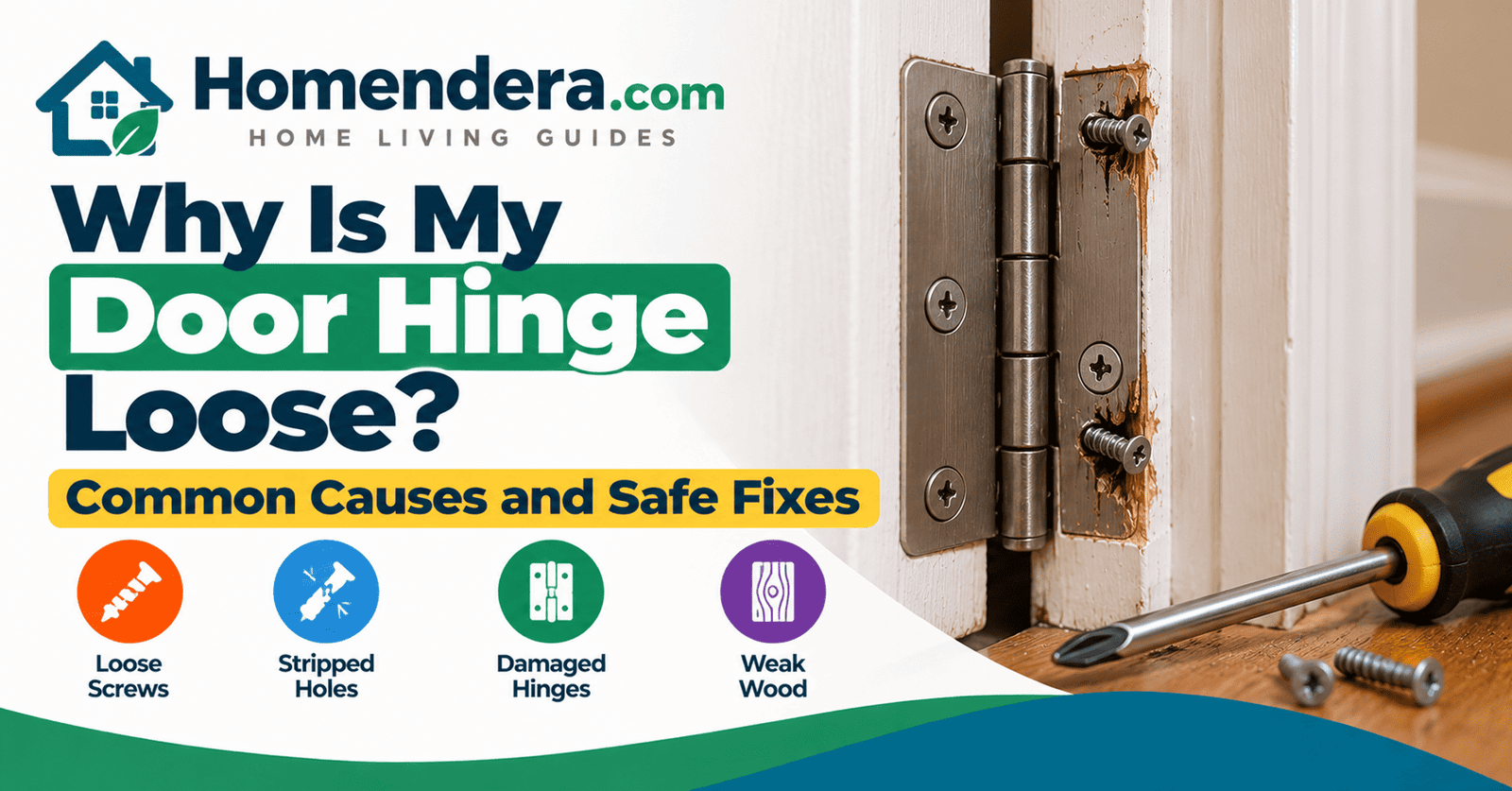
A loose door hinge can make a door difficult to open, close, or keep properly aligned. You may notice that the hinge moves when the door swings, screws keep coming loose, or the door starts rubbing against its frame. Sometimes, the problem is minor. However, a damaged hinge or weakened door frame may require more attention.
Door hinges support the weight of the door and allow it to move smoothly. Over time, repeated use, loose screws, worn hardware, and damaged wood can affect how securely the hinges remain attached.
Fortunately, some hinge problems can be fixed with basic tools. For example, a slightly loose screw may only need careful tightening. However, stripped screw holes, cracked wood, and damaged hinges require a different approach.
This guide explains why door hinges become loose, how to identify the cause, which repairs homeowners can safely attempt, and when to call a professional.
Why Do Door Hinges Become Loose?
Door hinges can loosen for several reasons.
Every time a door opens or closes, its hinges carry weight and experience movement. Repeated use may gradually affect the screws and surrounding materials.
Common causes include:
- Loose hinge screws
- Stripped screw holes
- Worn or damaged hinges
- Soft or deteriorating wood
- Heavy doors
- Incorrect screw sizes
- Poor hinge installation
- Repeated door slamming
- Moisture damage
- Misaligned door hardware
The correct repair depends on whether the problem involves the screws, hinge plates, door, or frame.
Signs That a Door Hinge Is Loose
A loose hinge may cause several noticeable problems.
Common warning signs
- The hinge plate moves when the door opens.
- Screws appear loose or partly raised.
- The door sags on one side.
- The door rubs against the frame.
- The latch no longer aligns properly.
- The door makes clicking or rattling sounds.
- A visible gap appears behind the hinge plate.
- Screws turn without tightening.
- The hinge looks bent or damaged.
If the door appears unstable or unusually heavy, avoid using it until the problem has been assessed.
1. Loose Hinge Screws
Loose screws are one of the simplest causes of hinge movement.
Over time, repeated opening and closing may allow screws to loosen, especially if they were not installed correctly.
How to identify loose screws
Open the door slightly and inspect the visible hinge plates.
Look for screws that sit above the plate surface or appear to have shifted.
If the hinge plate moves independently of the door or frame, the screws may no longer be holding securely.
How to fix loose hinge screws
For a lightweight interior door with sound wood and accessible hardware:
- Keep the door stationary and properly supported.
- Choose a screwdriver that fits the screw head.
- Carefully tighten any visibly loose screws.
- Stop when the screw is snug.
- Avoid excessive force.
- Check whether the hinge plate remains secure.
Do not overtighten the screws.
If a screw continues turning without becoming tight, the hole may be stripped.
Heavy doors, fire-rated doors, and doors that appear unstable should be inspected by a qualified professional.
2. Stripped Screw Holes
A stripped screw hole occurs when the surrounding material can no longer grip the screw threads properly.
This problem is common in wooden doors and frames.
Signs of stripped screw holes
- The screw spins without tightening.
- The hinge becomes loose again shortly after tightening.
- A screw pulls out easily.
- The surrounding wood looks worn or enlarged.
- The hinge plate does not sit securely.
Why does this happen?
Possible causes include repeated tightening, unsuitable screws, excessive force, or gradual deterioration of the wood.
How to repair stripped holes
For a lightweight, ordinary interior door, a suitable wood repair insert or manufacturer-approved screw-hole repair method may restore the connection.
However, the repair must provide adequate support for the door.
Do not rely on glue alone, loose filler, or improvised materials to secure a load-bearing hinge.
If several holes are damaged, the door is heavy, or the surrounding wood is weak, contact a carpenter.
3. Screws That Are Too Short
Some hinges become loose because their screws do not provide adequate engagement with the supporting material.
A short screw may not hold securely, particularly if the wood around the hole has weakened.
Warning signs
- The hinge loosens repeatedly.
- Screws pull out of the frame.
- The screw holes appear shallow or damaged.
- The problem began after hardware replacement.
What should you do?
Check the door or hinge manufacturer’s hardware specifications.
Use only screws suitable for the hinge, door material, and supporting structure.
Do not assume that installing the longest available screw is always appropriate.
Hidden electrical wiring, glazing, metal reinforcement, and specialized door construction may affect which fasteners can be used.
If the correct screw type or length is uncertain, seek professional advice.
4. Worn or Damaged Door Hinges
Door hinges contain moving components that can wear over time.
A damaged hinge may develop excessive movement even when the screws remain secure.
Common signs
- The hinge looks bent.
- The hinge pin appears damaged.
- The hinge plates no longer align.
- The door shifts while opening.
- The hinge makes unusual clicking sounds.
- The door hangs unevenly.
Can a damaged hinge be repaired?
Minor maintenance may be possible for certain hinge designs.
However, bent, cracked, or severely worn hinges usually require compatible replacement parts.
Do not attempt to bend damaged hinge plates back into shape.
For heavy or specialty doors, professional replacement is the safer option.
5. Soft or Damaged Wood Around the Hinge
A hinge can become loose when the wood supporting it deteriorates.
This may happen because of moisture, age, repeated screw removal, or previous repairs.
Signs of weakened wood
- Screws no longer grip.
- The hinge recess appears damaged.
- Wood fibers crumble around the screws.
- The door frame feels soft.
- Cracks appear near the hinge.
- The problem returns after tightening.
What should you do?
Inspect the visible wood for cracks, swelling, or deterioration.
Avoid installing additional screws into damaged material without determining whether it can support the door.
A carpenter may need to repair or replace the affected section.
If the damage appears moisture-related, identify the moisture source before completing the repair.
Our guide on signs of excess moisture in your home explains common warning signs and what to check.
6. A Heavy Door Putting Stress on the Hinges
Heavy doors place greater demands on their hinges and mounting hardware.
Solid wood, exterior, fire-rated, and some security doors may require specialized hinges and support.
Possible warning signs
- The door gradually sags.
- Hinges loosen repeatedly.
- Screws pull away from the frame.
- The door becomes difficult to close.
- A hinge plate appears distorted.
What should you do?
Check whether the hinges are suitable for the door’s weight and intended use.
Do not add random hinges or change the hardware arrangement without confirming the manufacturer’s requirements.
A qualified installer can determine whether the existing hinges and frame provide adequate support.
7. Poor Hinge Installation
A door hinge must sit correctly against the door and frame.
Incorrect installation can place uneven stress on the hardware.
Common installation problems
- Incorrect hinge positioning
- Uneven hinge recesses
- Misaligned hinge plates
- Missing screws
- Incompatible replacement hinges
- Incorrect fasteners
- Poorly prepared screw holes
Signs of installation problems
- The hinge was loose from the beginning.
- The door never aligned properly.
- One hinge looks different from the others.
- The door rubs despite tightening the screws.
- The hinge plate does not sit flat.
If the problem began after installation or replacement, review the manufacturer’s instructions.
Significant hinge repositioning is best handled by an experienced carpenter.
8. Repeated Door Slamming
Repeated slamming can place additional stress on hinges, screws, and the door frame.
Over time, this may contribute to looseness or hardware damage.
Common causes of door slamming
- Strong drafts
- Children pushing doors forcefully
- Incorrectly adjusted door closers
- Wind pressure
- Poorly fitted hardware
How to reduce the problem
Encourage gentle door operation.
Where suitable, consider compatible door stops or properly adjusted closers.
If drafts repeatedly cause doors to slam, our guide on how to stop drafts around doors and windows may help identify possible air leaks.
Do not modify fire-door closers or latching hardware without qualified guidance.
9. Moisture Damage Around Door Hinges
Moisture can weaken some door and frame materials.
Wood may swell, soften, or deteriorate when exposed to repeated dampness.
This can reduce the holding strength of hinge screws.
Warning signs
- Swollen wood near the hinge
- Peeling paint
- Discoloration
- Soft or crumbling material
- A musty odor
- Loose screws that will not tighten
What should you do?
Check for water entering around the doorway.
Look for plumbing leaks, damaged exterior seals, or nearby condensation.
Address the source of moisture before repairing the hinge.
Our article on how to inspect your home for water damage explains what homeowners should look for.
10. Why Does My Top Door Hinge Keep Coming Loose?
The upper hinge plays an important role in keeping many doors properly aligned.
If it becomes loose, the door may sag or tilt.
Possible causes
- Loose screws
- Stripped screw holes
- Weak supporting wood
- Incorrect fasteners
- Excessive door weight
- Damaged hinge hardware
What should you check?
Inspect the visible screws and hinge plate.
Look for movement, gaps, or damaged wood.
Do not remove the top hinge while the door is unsupported.
If the screws no longer hold, the underlying material may need repair.
11. Why Is My Bottom Door Hinge Loose?
The bottom hinge also contributes to the door’s alignment and stability.
When it becomes loose, the door may move unevenly or place additional stress on the other hinges.
Possible causes
- Loose mounting screws
- Damaged wood
- Moisture near the floor
- Incorrect installation
- Worn hinge hardware
Inspect the hinge plate and surrounding material.
If the lower frame is damp or deteriorating, investigate the moisture problem before attempting repairs.
12. Why Do My Door Hinge Screws Keep Coming Loose?
Repeatedly loose screws usually indicate an underlying problem.
Tightening them again may provide only temporary improvement.
Possible reasons
- Stripped screw holes
- Unsuitable screws
- Weak wood
- Excessive door movement
- Misaligned hinges
- Incorrect installation
What should you do?
Determine whether the screws are actually gripping the supporting material.
If a screw repeatedly loosens, avoid tightening it harder each time.
A proper repair may require restoring the screw hole, replacing damaged material, or correcting hinge alignment.
13. Why Does My Door Sag When the Hinges Are Loose?
Loose hinges can allow the door to shift away from its intended position.
The door may no longer sit evenly within the frame.
Common symptoms
- The upper latch-side corner rubs.
- The bottom edge touches the floor.
- The latch does not line up.
- The gap above the door becomes uneven.
What should you do?
Inspect the hinge attachments and surrounding wood.
If the door is rubbing against its frame, see our guide on why a door rubs against the frame for a closer look at alignment problems.
Do not attempt to lift a heavy door while adjusting the hinges.
14. Can a Loose Door Hinge Stop a Door From Closing?
Yes.
A loose hinge may allow the door to sag or shift.
This can prevent the latch from aligning with the strike plate or cause the door edge to touch the frame.
How to identify the problem
Close the door slowly.
Observe whether the door rubs against the frame or whether the latch fails to engage.
Check for visible hinge movement.
Our guide on how to fix a door that won’t close properly covers additional causes of closing problems.
15. Can a Loose Door Hinge Cause Squeaking?
Sometimes.
Loose or worn hinge components may produce noise during movement.
However, squeaking can also result from friction, dirt, or insufficient lubrication.
How to tell the difference
A hinge that squeaks but remains firmly attached may need routine maintenance.
A hinge that visibly moves or has loose screws requires attention to its attachment or condition.
Read our guide on how to fix a squeaky door for additional troubleshooting.
16. How to Inspect a Loose Door Hinge Safely
Before attempting repairs, examine the hinge and surrounding materials.
Step 1: Keep the door stationary
Prevent the door from swinging unexpectedly.
Step 2: Look at the hinge plates
Check whether they sit flat against the door and frame.
Step 3: Inspect the screws
Look for loose, missing, or damaged screws.
Step 4: Check the surrounding wood
Look for cracks, swelling, or deteriorating material.
Step 5: Observe the door’s alignment
Check whether the gaps around the frame appear uneven.
Step 6: Look for damaged hinge components
Inspect for visible bending, cracks, or unusual movement.
Step 7: Decide whether the repair is suitable for DIY
If the door is heavy, unstable, fire-rated, or significantly damaged, seek professional assistance.
Do not remove multiple hinges or loosen load-bearing fasteners without properly supporting the door.
17. How to Fix a Loose Door Hinge
The safest repair depends on the cause.
For a lightweight interior door with accessible hardware, the following approach may help.
Step 1: Identify the loose component
Determine whether the hinge plate, screws, or moving parts are loose.
Step 2: Inspect the screw holes
Look for signs of stripped or damaged wood.
Step 3: Check the hinge condition
Do not reuse cracked or badly bent hardware.
Step 4: Tighten sound screws carefully
Use the correct screwdriver and avoid overtightening.
Step 5: Address damaged screw holes appropriately
If the screws no longer grip, a suitable repair may be necessary.
Follow the manufacturer’s recommendations or consult a carpenter.
Step 6: Check door movement
Once the hinge is securely repaired, open and close the door gently.
Do not force the door if it remains misaligned.
Step 7: Seek professional help if the problem continues
Recurring looseness may indicate damaged supporting material or incorrect installation.
18. How to Fix a Door Hinge That Won’t Tighten
A hinge screw that spins without tightening may have lost its grip in the surrounding material.
What not to do
- Do not keep turning the screw with excessive force.
- Do not use an unsuitable oversized screw.
- Do not depend on loose packing materials for a structural connection.
- Do not ignore cracked or rotting wood.
- Do not remove multiple hinges from an unsupported door.
What may help?
For an ordinary lightweight wooden interior door, a suitable screw-hole repair insert or other approved wood repair method may restore holding strength.
However, the repaired connection must safely support the door.
If the frame is damaged or the door is heavy, professional repair is recommended.
19. Can You Fix a Loose Door Hinge Without Removing the Door?
In some cases, yes.
If the hinge is sound and the screws are simply loose, careful tightening may be possible without removing the door.
However, damaged hinges, stripped holes, or weakened wood may require additional work.
Do not attempt to remove hinge plates while the door is unsupported.
A heavy door can shift unexpectedly and cause injury.
20. Should You Use Longer Screws for Loose Door Hinges?
Longer screws are sometimes used in appropriate door-frame repairs.
However, the correct length depends on the hinge, door construction, frame material, and location of hidden services.
Before replacing screws
Check:
- The manufacturer’s hardware requirements
- The condition of the supporting material
- Whether the hinge holes are damaged
- The door’s weight
- The type of frame
- The presence of specialized hardware
Do not use longer screws automatically.
An unsuitable screw may damage the door, frame, or hidden components.
21. Should You Use Wood Glue to Repair Loose Hinges?
Wood glue may form part of certain wood repair methods.
However, glue alone should not be relied upon to secure a load-bearing hinge.
The hinge needs a properly supported mechanical connection.
If the wood is split, rotten, or significantly weakened, a more substantial repair may be necessary.
A carpenter can assess whether the material can be repaired or needs replacement.
22. Can You Replace a Loose Door Hinge Yourself?
Some homeowners may be able to replace a hinge on a lightweight interior door.
However, the process involves supporting the door and maintaining its alignment.
Consider professional help when:
- The door is heavy.
- The hinge is severely damaged.
- Several hinges need replacement.
- The frame is cracked.
- The door is fire-rated.
- The hardware is specialized.
- The door has become significantly misaligned.
Use compatible replacement hinges and follow the manufacturer’s installation requirements.
23. When Should You Replace a Door Hinge?
Replacement may be appropriate when:
- The hinge is cracked.
- The plates are bent.
- The hinge pin is badly worn.
- The hinge has excessive movement.
- Corrosion has weakened the hardware.
- The hinge no longer supports the door properly.
Minor screw looseness does not always require replacing the entire hinge.
The correct decision depends on the condition of the hardware and supporting materials.
24. Can a Loose Door Hinge Damage the Frame?
Yes.
A loose hinge may place uneven stress on the surrounding wood or other frame material.
Over time, this can contribute to:
- Enlarged screw holes
- Cracked wood
- Misaligned doors
- Damaged paint
- Loose hinge recesses
- Increased stress on other hinges
Repairing the underlying problem early may help prevent additional damage.
25. Is It Safe to Use a Door With Loose Hinges?
A slightly loose screw on a lightweight interior door may be a manageable maintenance issue.
However, a door with significant hinge movement may be unsafe.
Stop using the door and seek help if:
- The hinge is pulling away from the frame.
- The door appears likely to fall.
- Several screws are missing.
- The wood around the hinge is cracked.
- The door is unusually heavy.
- The hinge plate is broken.
- The door cannot remain properly aligned.
Keep children and pets away from a door that appears unstable.
Do not attempt to support a falling door by hand.
26. When Should You Call a Carpenter?
Professional repair is recommended when:
- Screw holes are severely stripped.
- The frame is cracked or rotten.
- Hinges repeatedly loosen.
- The door is heavy or unstable.
- The door has dropped significantly.
- Multiple hinges are damaged.
- The hinge installation appears incorrect.
- Specialized door hardware is involved.
- The repair requires removing the door.
For help deciding which household repairs are suitable for DIY, read DIY vs professional repair.
27. How to Prevent Door Hinges From Becoming Loose
Routine maintenance can reduce some common hinge problems.
Inspect hinge screws occasionally
Look for visible looseness or movement.
Avoid slamming doors
Repeated impacts can stress the hardware.
Keep moisture under control
Address leaks and dampness around door frames.
Use compatible hardware
Choose hinges and screws suitable for the door.
Do not overload doors
Avoid hanging heavy objects from door handles or the top edge.
Watch for early sagging
Uneven gaps may indicate developing hinge problems.
Maintain moving parts
Follow the manufacturer’s lubrication and maintenance recommendations.
Repair damaged wood promptly
Do not ignore screws that repeatedly lose their grip.
For more preventive tasks, explore our home maintenance checklist for homeowners.
Common Mistakes to Avoid
When repairing loose door hinges, avoid these mistakes:
- Tightening stripped screws repeatedly
- Overtightening fasteners
- Using incompatible screws
- Removing hinges from an unsupported door
- Ignoring damaged wood
- Bending hinge plates by hand
- Using glue alone to secure a hinge
- Continuing to use an unstable door
- Replacing hardware without checking compatibility
- Ignoring recurring moisture problems
- Attempting heavy-door repairs without assistance
A successful repair addresses the cause of the looseness rather than temporarily hiding the symptoms.
Frequently Asked Questions
Why Is My Door Hinge Loose?
Common causes include loose screws, stripped screw holes, damaged hinges, weakened wood, and incorrect installation.
How Do I Fix a Loose Door Hinge?
Start by checking whether the hinge screws are loose or the screw holes are damaged.
Careful tightening may help if the screws and surrounding material are sound.
Why Won’t My Door Hinge Screws Tighten?
The screw holes may be stripped or the surrounding material may be damaged.
A suitable repair or professional assessment may be necessary.
Can I Fix a Loose Door Hinge Without Removing the Door?
Sometimes. Minor screw looseness may be corrected while the door remains installed, provided it is stable and properly supported.
Will Longer Screws Fix a Loose Door Hinge?
They may be appropriate in some repairs, but only when compatible with the door, hinge, and supporting structure.
Can Wood Glue Fix Stripped Hinge Screw Holes?
Glue may be used as part of a suitable wood repair method, but it should not replace a secure mechanical connection.
Why Does My Top Door Hinge Keep Coming Loose?
Possible causes include stripped holes, unsuitable screws, weak wood, excessive door weight, or incorrect installation.
Can Loose Hinges Make a Door Sag?
Yes. Loose hinges can allow the door to shift, creating uneven gaps and alignment problems.
Should I Replace a Loose Door Hinge?
Not always. If the hinge is undamaged and only the screws are loose, a simpler repair may be sufficient.
When Should I Call a Professional?
Seek help when the door is heavy, unstable, badly misaligned, or supported by damaged wood or hardware.
Final Thoughts
A loose door hinge may seem like a small problem, but it can affect how securely and smoothly a door operates.
Loose screws are often easy to identify. However, stripped screw holes, weakened wood, and damaged hinge hardware require more careful attention.
Start by inspecting the hinge plates, screws, and surrounding materials.
Avoid forcing the door or repeatedly tightening screws that no longer grip.
If the door is heavy, unstable, or significantly damaged, a qualified carpenter can help restore proper support and alignment.
For more practical home repair guidance, explore our articles on why a door rubs against the frame, how to fix a door that won’t close properly, and basic DIY home repairs every homeowner should know.