
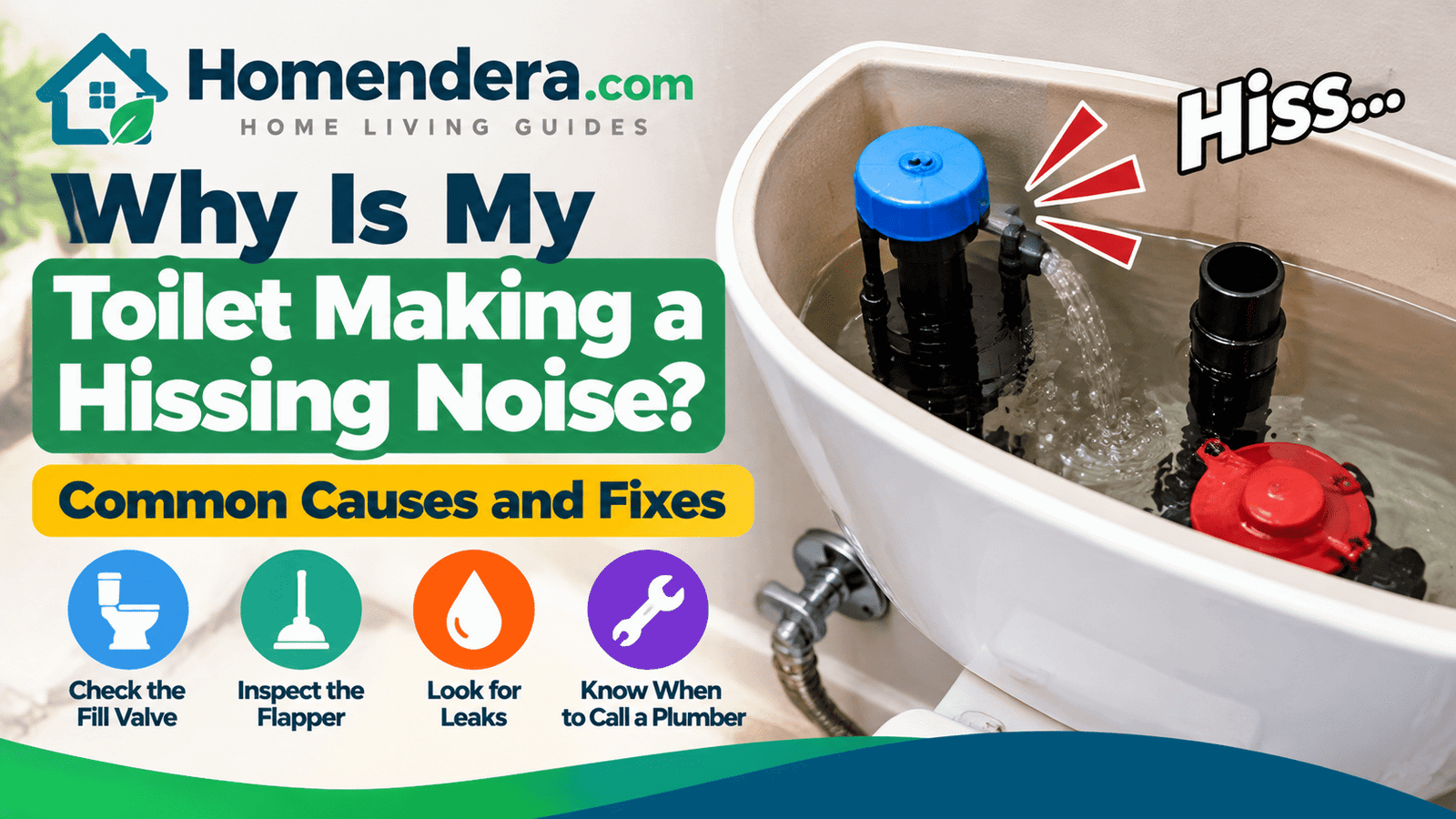
A toilet making a hissing noise can be confusing, especially when the sound continues long after flushing. You may hear a soft hiss while the tank refills, notice a faint sound coming from behind the toilet, or discover that the noise starts even when nobody has used the bathroom. Although some hissing is normal during refilling, a persistent sound may indicate a water supply or toilet component problem.
Most toilets use a fill valve to control water entering the tank. When you flush, the water level drops and the valve opens to refill it. Once the tank reaches the correct level, the valve should close.
However, worn parts, an incorrectly adjusted water level, or a small leak can prevent the system from working as intended. As a result, water may continue flowing and produce a hissing sound.
This guide explains why toilets hiss, how to identify the source, which problems homeowners can safely check, and when professional plumbing help is necessary.
Is It Normal for a Toilet to Make a Hissing Noise?
A brief hissing or rushing-water sound after flushing is often normal.
The sound usually comes from water moving through the fill valve as the tank refills.
Once the tank reaches its intended water level, the valve should shut off and the sound should stop.
However, continuous hissing is different.
If the noise continues for several minutes, returns without flushing, or never stops, something may be allowing water to flow when it should not.
Normal versus unusual toilet hissing
| Sound or Behavior | Possible Explanation |
|---|---|
| Brief hiss immediately after flushing | Normal tank refilling |
| Hiss continues after the tank is full | Fill valve may not shut off |
| Hissing returns without flushing | Possible internal water leak |
| Hiss near the supply connection | Possible valve or supply-line issue |
| Hiss accompanied by water entering the bowl | Possible flapper or flush-seal leak |
| Hissing with visible dripping | Possible external plumbing leak |
| Hissing with slow tank refilling | Restricted or worn fill valve |
The timing and location of the noise are useful clues.
1. A Worn Toilet Fill Valve
The fill valve controls the flow of water into the toilet tank.
It opens after flushing and closes when the tank reaches the correct water level.
Over time, internal seals and other components may wear out.
When this happens, the valve may struggle to shut off completely.
Signs of a faulty fill valve
- Continuous hissing after flushing
- Water entering the tank when it should be full
- Intermittent refilling
- Unusually slow tank filling
- Water rising too high in the tank
- A fill valve that repeatedly starts and stops
What should you do?
Remove the tank lid carefully and place it on a stable, protected surface.
Observe the water level and fill valve without touching moving components.
If water continues entering after the tank should be full, the fill valve may need adjustment, servicing, or replacement.
Follow the toilet manufacturer’s instructions.
If the valve is damaged or the repair involves unfamiliar plumbing connections, contact a plumber.
2. Water Level Set Too High
A toilet tank contains an overflow tube that helps prevent water from spilling over the top of the tank.
If the fill valve allows the water level to rise too high, excess water may enter the overflow tube.
This can create continuous water flow and a persistent hissing sound.
How to recognize the problem
Look inside the tank after it finishes refilling.
Check whether water is entering the overflow tube.
The correct water level varies by toilet model. Many tanks include a marked waterline.
What can you do?
If the fill valve has an accessible, manufacturer-approved water-level adjustment, follow the instructions for your model.
Do not bend components or force adjustment mechanisms.
If the water level remains too high after proper adjustment, the fill valve may be faulty.
3. A Leaking Toilet Flapper
The flapper is a seal near the bottom of many conventional toilet tanks.
When you flush, it lifts to allow water into the bowl.
After flushing, it should close and prevent water from escaping.
If the flapper does not seal properly, water can slowly leak from the tank into the bowl.
The fill valve may then open repeatedly to replace the lost water.
This can create intermittent hissing.
Signs of a leaking flapper
- The toilet refills without being flushed.
- You hear occasional hissing.
- Water moves into the bowl between flushes.
- The tank water level slowly drops.
- The toilet sometimes runs unexpectedly.
A simple check
For a conventional tank toilet, add a few drops of food coloring to the tank water, provided the manufacturer does not prohibit this.
Avoid flushing for approximately 15–30 minutes.
If the color appears in the bowl, water may be leaking past the flush seal.
Flush afterward to remove the coloring.
This test does not identify every possible leak, but it can help reveal a common internal problem.
For a broader explanation of continuous water flow, see our guide on why your toilet keeps running.
4. A Damaged Flush Valve Seal
Not every toilet uses a traditional flapper.
Some models use a canister-style or other flush valve seal.
If the seal becomes worn, dirty, or incorrectly seated, water may leak from the tank into the bowl.
The fill valve may respond by refilling the tank.
Common signs
- Hissing between flushes
- Unexplained tank refilling
- Water movement in the bowl
- A slowly dropping tank water level
What should you do?
Check the toilet manufacturer’s instructions to identify the flush valve design.
If the seal is accessible and intended for homeowner replacement, use the correct compatible part.
Do not force plastic components or install an incompatible seal.
A plumber can help if the mechanism is unfamiliar or damaged.
5. High Water Pressure
Excessive water pressure may contribute to noise in plumbing fixtures.
A toilet fill valve can produce a sharper hissing sound when water flows through it under certain pressure conditions.
However, noise alone does not confirm excessive pressure.
Possible signs of a pressure-related problem
- Several fixtures make unusual noises.
- Water flow seems unusually forceful.
- Plumbing components wear out repeatedly.
- The toilet fill valve makes a loud hiss during refilling.
What should you do?
Check whether other fixtures have similar symptoms.
Do not adjust a home’s pressure-reducing valve without understanding the plumbing system.
A plumber can measure the water pressure and determine whether adjustment or repair is necessary.
Our guide on why your water pressure is low explains other common water-pressure problems, although low pressure and excessive pressure are different conditions.
6. A Partially Closed Toilet Shutoff Valve
Most toilets have a water shutoff valve near the wall or floor.
This valve controls the water supply to the toilet.
If it is partly closed, water may flow through a restricted opening.
In some cases, this can produce noise or slow tank refilling.
Signs to look for
- The tank fills slowly.
- Hissing occurs mainly during refilling.
- The water supply valve was recently adjusted.
- The toilet receives less water than usual.
What should you do?
Inspect the valve for visible leaks, corrosion, or damage.
Do not force an old or stuck valve.
If the valve is damaged, leaking, or difficult to operate, contact a plumber.
A worn shutoff valve may require replacement rather than repeated adjustment.
7. Sediment Inside the Fill Valve
Mineral deposits and debris can sometimes accumulate in toilet fill valves.
This may restrict water flow or interfere with the valve’s normal operation.
Possible symptoms
- Hissing during tank refilling
- Slow filling
- Inconsistent water flow
- A valve that struggles to shut off
- Changes in the sound after plumbing work
What should you do?
Consult the manufacturer’s maintenance instructions.
Some fill valves include components that can be cleaned or serviced.
However, designs vary considerably.
Turn off the water supply before any permitted maintenance that requires opening the valve.
If the shutoff valve is unreliable or the fill valve is damaged, professional assistance is recommended.
8. A Loose or Damaged Water Supply Connection
The flexible supply line connects the toilet to the home’s water supply.
A damaged connection can sometimes produce noise, particularly when water is flowing.
More importantly, it may create an external leak.
Warning signs
- Moisture around the supply connection
- Water droplets beneath the tank
- A hissing sound near the supply line
- Corrosion around fittings
- Water collecting on the floor
What should you do?
Inspect the connection visually.
If you notice active leaking, shut off the water supply if it is safe to do so.
Avoid overtightening plastic or metal fittings.
Do not use tape or sealant as a temporary substitute for a proper repair.
If the connection is damaged or leaking, contact a plumber.
9. A Toilet That Refills by Itself
A toilet that starts refilling without being flushed is sometimes described as a ghost-flushing toilet.
This usually happens when water slowly escapes from the tank.
The fill valve then opens to restore the water level.
Possible causes
- A leaking flapper
- A worn flush valve seal
- An incorrectly positioned refill tube
- A damaged flush mechanism
What should you check?
Observe the tank water level when the toilet is not in use.
If the level drops and the valve opens again, an internal leak may be present.
Inspect the visible flush seal and refill tube arrangement according to the manufacturer’s instructions.
Do not push the refill tube deep into the overflow pipe. Incorrect positioning can sometimes create unwanted siphoning.
10. Why Does My Toilet Hiss After Flushing?
A toilet commonly makes a water-flow sound immediately after flushing.
This happens because the fill valve opens to refill the tank.
When is it normal?
The sound stops when the tank reaches the intended water level.
The refill time varies depending on the toilet and water supply.
When should you investigate?
Check the toilet if:
- The sound continues after the tank is full.
- Refilling takes much longer than usual.
- The valve repeatedly opens and closes.
- Water continuously enters the overflow tube.
- The sound has become noticeably louder.
These symptoms may indicate a fill valve or water supply problem.
11. Why Does My Toilet Hiss When Nobody Has Flushed?
Hissing that begins without anyone using the toilet may indicate that the tank is losing water.
A small internal leak can lower the water level enough to activate the fill valve.
Common causes
- A leaking flapper
- A worn flush seal
- An incorrectly positioned refill tube
- A faulty fill valve
Check whether the sound starts and stops at intervals.
Also look for water movement in the bowl.
If the toilet repeatedly refills without use, investigate the internal components.
12. Why Is My Toilet Hissing Constantly?
Constant hissing usually means water is continuing to move through part of the toilet system.
Possible causes include:
- A fill valve that does not close
- Water entering the overflow tube
- A significant internal tank leak
- A faulty supply component
- A leaking water connection
What should you do first?
Remove the tank lid carefully.
Observe the water level.
- If water is flowing into the overflow tube, the fill valve or water-level adjustment may be responsible.
- If the tank level is dropping while water enters the bowl, the flush seal may be leaking.
- If water is leaking outside the toilet, shut off the supply if safe and arrange repair promptly.
13. Why Is My Toilet Hissing but Not Running?
A toilet may make a hissing sound even when you cannot see water moving in the bowl.
Small internal leaks may be difficult to notice.
Alternatively, the sound may occur only during slow tank refilling.
What should you check?
- The tank water level
- The overflow tube
- The fill valve
- The flush seal
- The supply connection
- Whether the sound occurs continuously or intermittently
Do not assume that the absence of visible water movement means there is no leak.
14. Why Is My Toilet Hissing and Filling Slowly?
Slow filling and hissing may occur together when water flow into the tank is restricted.
Possible causes
- A partially closed shutoff valve
- Sediment inside the fill valve
- A worn fill valve
- A restricted supply line
- Low household water pressure
What should you do?
Check whether other fixtures have reduced water flow.
Inspect the visible shutoff valve and supply line for damage.
Do not disconnect plumbing components without safely isolating the water supply.
If several fixtures are affected, the problem may involve the wider plumbing system rather than the toilet alone.
15. Why Is My Toilet Hissing and Leaking Water?
A hissing sound accompanied by water outside the toilet requires prompt attention.
Possible leak locations include:
- The supply line
- The shutoff valve
- The connection beneath the tank
- Tank bolts or seals
- Cracks in the tank
What should you do?
If safe, turn off the toilet’s water supply.
Keep the area dry to reduce slipping hazards.
Avoid using the toilet until the leak is identified.
If water is near electrical equipment or outlets, stay clear and seek qualified help.
For leaks around the floor connection, see our guide on why a toilet leaks at the base.
16. How to Find Where the Hissing Sound Comes From
Identifying the location of the noise can help narrow down the cause.
Step 1: Listen after flushing
Notice whether the sound occurs only while the tank refills.
Step 2: Wait for the tank to fill
Check whether the sound stops.
Step 3: Remove the tank lid carefully
Place it on a stable surface where it cannot fall.
Step 4: Observe the water level
Look for water entering the overflow tube.
Step 5: Check for unexpected refilling
Listen for the fill valve opening when nobody has flushed.
Step 6: Inspect the supply connection
Look for visible moisture or dripping.
Step 7: Check for water entering the bowl
A slow internal leak may cause intermittent hissing.
Step 8: Stop if the problem involves damaged plumbing
Do not force old valves or disconnect pressurized components without proper preparation.
17. How to Stop a Toilet From Hissing
The appropriate solution depends on the source of the noise.
Step 1: Determine whether the sound is normal
A brief refill hiss may not require any repair.
Step 2: Check the tank water level
If water enters the overflow tube, the fill valve may need adjustment or replacement.
Step 3: Look for internal leaks
A leaking flapper or flush seal can cause repeated refilling.
Step 4: Inspect the visible fill valve
Look for continuous water flow or unusual operation.
Step 5: Check the supply connection
Watch for dripping, corrosion, or damaged fittings.
Step 6: Follow the manufacturer’s instructions
Only perform maintenance intended for homeowners.
Step 7: Contact a plumber when necessary
If the noise continues or the cause is unclear, professional diagnosis can prevent unnecessary repairs.
18. Can You Fix a Hissing Toilet Without Replacing Parts?
Sometimes.
A toilet may hiss because the water level is incorrectly adjusted or because an accessible component needs manufacturer-approved maintenance.
However, worn seals and damaged valves may require replacement.
Repairs that may not require new parts
- Correcting a permitted water-level adjustment
- Repositioning an incorrectly placed refill tube
- Cleaning a serviceable component according to the manufacturer’s instructions
Problems that may require replacement
- A worn fill valve
- A damaged flapper
- A deteriorated flush valve seal
- A leaking supply line
- A damaged shutoff valve
Avoid making several adjustments without identifying the cause.
19. Should You Replace the Toilet Fill Valve?
Fill valve replacement may be appropriate when the valve no longer shuts off correctly or cannot be restored through approved maintenance.
Signs replacement may be necessary
- Persistent hissing
- Repeated unexpected refilling
- Water continuously entering the overflow tube
- Damaged valve components
- Recurring filling problems
Choose a replacement compatible with the toilet model and follow the manufacturer’s instructions.
If you are unfamiliar with plumbing repairs, a plumber can replace the valve and check the system for leaks.
20. Can a Hissing Toilet Increase Your Water Bill?
Yes, if the hissing is caused by continuous or repeated water flow.
A leaking flush seal or fill valve may waste water even when the toilet is not being used.
Warning signs
- The toilet refills frequently.
- Water continuously enters the overflow tube.
- The bowl receives a steady trickle.
- The water meter indicates unexplained consumption.
Not every hissing sound means water is being wasted.
A normal refill sound after flushing is expected.
However, persistent hissing deserves investigation.
21. Can a Hissing Toilet Cause Water Damage?
An internal leak usually sends water into the bowl or overflow system.
Although this can waste water, it does not necessarily cause water to spill onto the floor.
External leaks are different.
A damaged supply line, loose connection, or cracked tank can release water into the bathroom.
Signs of possible water damage
- Wet flooring
- Damp baseboards
- Staining around the toilet
- Soft flooring materials
- Water appearing beneath the tank
- A persistent musty odor
Our guide on how to inspect your home for water damage explains additional warning signs.
22. Should You Turn Off the Water to a Hissing Toilet?
It depends on the symptoms.
If the toilet has a significant external leak, shut off the supply if you can do so safely.
If the toilet is continuously running and wasting water, shutting off the supply while arranging repair may also be appropriate.
However, do not force a corroded or stuck valve.
If the valve cannot be operated safely, contact a plumber.
Remember that turning off the toilet supply will prevent the tank from refilling normally.
23. When Should You Call a Plumber?
Professional assistance is recommended when:
- The toilet hisses continuously.
- The fill valve will not shut off.
- Water leaks from the supply line.
- The shutoff valve is damaged or stuck.
- The tank is cracked.
- The toilet repeatedly refills without flushing.
- Several plumbing fixtures make unusual noises.
- Water pressure appears abnormal.
- A repair requires disconnecting unfamiliar plumbing components.
- The problem continues after basic checks.
A plumber can identify the source and recommend an appropriate repair.
24. How to Prevent Toilet Hissing Problems
Routine checks may help identify small problems before they become more serious.
Listen for unusual sounds
Notice when refilling takes longer or the sound changes.
Check for unexpected refilling
A toilet should not repeatedly refill when it has not been flushed.
Inspect visible connections
Look for moisture, corrosion, and damaged fittings.
Address small leaks promptly
Internal leaks may waste water over time.
Use compatible replacement parts
Incorrect parts may prevent the toilet from sealing or filling properly.
Avoid forcing plastic components
Toilet tank mechanisms can be damaged by excessive pressure.
Follow manufacturer maintenance guidance
Different toilet models may require different procedures.
For broader plumbing maintenance advice, explore our guide to common plumbing problems at home.
Common Mistakes to Avoid
When troubleshooting a hissing toilet, avoid these mistakes:
- Assuming all hissing sounds indicate a leak
- Ignoring continuous refilling
- Replacing parts without checking the water level
- Overtightening plastic connections
- Forcing an old shutoff valve
- Using incompatible replacement components
- Ignoring water around the toilet
- Adjusting several parts at once
- Leaving a persistent internal leak unresolved
- Attempting unfamiliar plumbing repairs without isolating the water supply
A careful diagnosis usually saves time and prevents unnecessary repairs.
Frequently Asked Questions
Why Is My Toilet Making a Hissing Noise?
Common causes include normal tank refilling, a worn fill valve, a leaking flapper, an incorrect water level, or a restricted water supply.
Is a Hissing Toilet Dangerous?
A brief refill hiss is usually normal.
However, continuous hissing may indicate a leak or faulty component that needs attention.
Why Does My Toilet Hiss After Flushing?
Water flowing through the fill valve can produce a hissing sound while the tank refills.
The sound should stop when refilling is complete.
Why Does My Toilet Hiss When Not in Use?
A small internal leak may lower the tank water level and cause the fill valve to open again.
How Do I Stop My Toilet From Hissing?
Identify whether the noise comes from normal refilling, the fill valve, an internal leak, or the supply connection.
The correct repair depends on the cause.
Can a Bad Flapper Make a Toilet Hiss?
Yes. A leaking flapper can allow water to escape from the tank, causing the fill valve to refill it.
Can High Water Pressure Make a Toilet Hiss?
High pressure can contribute to noise during water flow, but the sound alone does not confirm a pressure problem.
Will a Hissing Toilet Waste Water?
It may waste water if the fill valve continuously runs or the toilet repeatedly refills because of an internal leak.
Should I Replace the Fill Valve?
Replacement may be appropriate if the valve does not shut off correctly or is damaged.
When Should I Call a Plumber?
Contact a plumber if the hissing continues, water leaks outside the toilet, the shutoff valve is damaged, or the cause remains unclear.
Final Thoughts
A toilet making a hissing noise does not always mean something is wrong.
A brief hiss after flushing is often part of normal tank refilling.
However, continuous hissing, unexpected refilling, or water leaking around the toilet may indicate a problem with the fill valve, flush seal, or supply connection.
Start by checking when the sound occurs and where it comes from.
Look for water entering the overflow tube, unexpected changes in tank level, and visible leaks.
If the problem involves damaged plumbing or continues after basic checks, contact a qualified plumber.
For more practical troubleshooting advice, explore our guides on why your toilet keeps running, why a toilet leaks at the base, and common plumbing problems at home.