
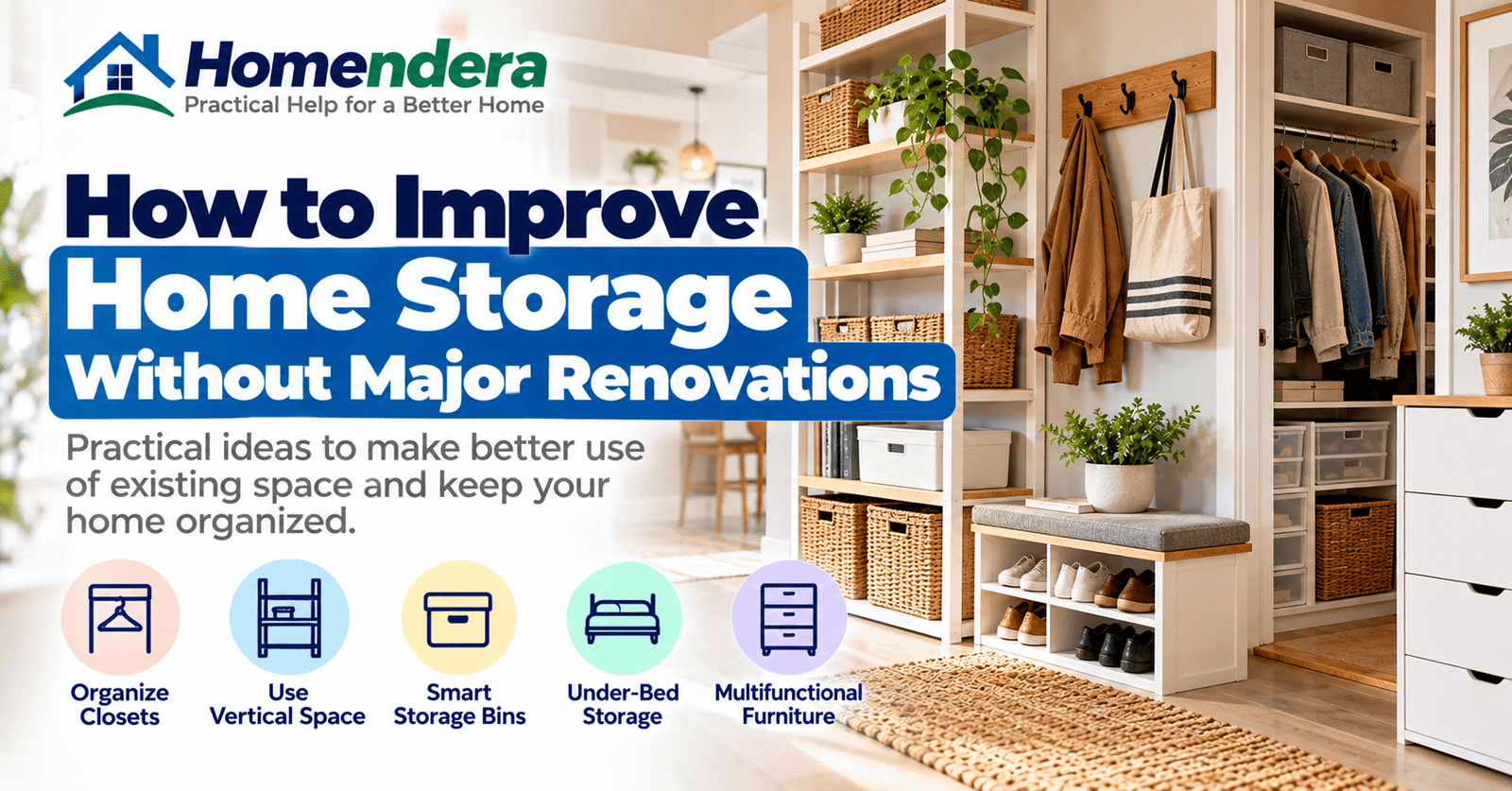
A home can feel short on space even when it has enough square footage. Often, the real problem is not the size of the home but how available storage is being used.
Fortunately, improving storage does not always require new built-in cabinets, structural changes, or an expensive remodeling project. Shelves, organizers, hooks, furniture choices, and better use of vertical space can make existing rooms much more practical.
This guide explains how to improve home storage without major renovations while keeping rooms organized, accessible, and comfortable.
1. Start by Removing What You No Longer Need
Before adding storage, look at what you are trying to store.
Adding shelves and containers for items you no longer use can simply move clutter from one place to another.
Go through one small area at a time. Consider whether each item is:
- Used regularly
- Needed occasionally
- Worth keeping
- Better stored somewhere else
- No longer useful
You do not need to empty the entire house at once. Starting with one drawer, shelf, or cabinet makes the process easier.
2. Identify Where Clutter Collects
Storage works best when it solves a specific problem.
Walk through your home and notice where items regularly accumulate. Common trouble spots include:
- Entryways
- Kitchen counters
- Bathroom surfaces
- Bedroom chairs
- Dining tables
- Desks
- Hallways
Then ask why those items end up there.
Keys near the entrance may need a small tray or hook. Shoes may need a rack. Frequently used kitchen items may need more accessible cabinet organization.
Design storage around real habits rather than forcing an inconvenient system.
3. Use Vertical Wall Space
Walls provide valuable storage without taking up additional floor space.
Depending on the room, you might use:
- Shelves
- Hooks
- Pegboards
- Wall-mounted organizers
- Rails
- Suitable hanging systems
Vertical storage can work particularly well in entryways, utility areas, home offices, kitchens, and bedrooms.
Always use mounting hardware appropriate for the wall construction and expected weight. Heavy objects require secure support.
4. Add Shelves Where They Are Actually Useful
A shelf can create storage in an otherwise unused area.
However, more shelves do not automatically mean better organization.
Place shelves where they serve a clear purpose. For example, a shelf near a desk might hold books or office supplies, while one in an entryway could hold small everyday items.
Avoid placing heavy objects above beds, seating areas, or other locations where falling items could cause injury.
5. Make Better Use of Closets
Many closets have unused space above, below, or between existing storage areas.
Look for opportunities such as:
- Additional shelves
- Hanging organizers
- Storage boxes
- Shoe organizers
- Hooks
- Drawer units
- A second hanging rail where appropriate
Measure the closet before buying organizers.
Products that do not fit correctly can waste more space than they save.
6. Use the Space Under Beds
The area beneath a bed can provide useful storage, especially in smaller bedrooms.
Low-profile containers can hold items that are not needed every day, such as seasonal clothing, spare bedding, or other suitable household items.
Choose containers that protect their contents from dust and remain easy to access.
Avoid filling the area so completely that cleaning becomes difficult or required ventilation is affected.
7. Choose Furniture With Storage
Furniture can sometimes perform two jobs.
Depending on your needs, useful options may include:
- Beds with drawers
- Storage benches
- Ottomans with internal storage
- Coffee tables with compartments
- Desks with shelving
- Side tables with drawers
Multifunctional furniture can be particularly helpful in small rooms.
However, do not replace perfectly useful furniture simply to gain a small amount of storage. Consider whether the additional function genuinely solves a problem.
8. Organize Drawers More Effectively
Large drawers can become messy when everything is stored together.
Dividers or small organizers can separate items by purpose.
This works well for:
- Kitchen utensils
- Office supplies
- Bathroom items
- Clothing accessories
- Tools
- Everyday household items
Before buying organizers, measure the inside dimensions of the drawer.
Simple containers you already own may work just as well as specialized products.
9. Improve Kitchen Cabinet Storage
Kitchen cabinets often contain unused vertical space.
Depending on the cabinet, shelf risers, organizers, hooks, or stackable storage may help make better use of the available area.
Keep frequently used items accessible and move rarely used items to less convenient locations.
Avoid overloading shelves.
Also maintain required clearance around appliances, ventilation openings, plumbing, and electrical components.
10. Keep Kitchen Counters Clear
Countertops are work surfaces, not necessarily long-term storage areas.
Keeping them relatively clear can make a kitchen feel larger and easier to use.
Consider moving rarely used appliances into cabinets or another suitable storage location.
Items used every day may reasonably remain accessible, but avoid filling every available section of the counter.
The goal is practical organization, not an empty kitchen.
11. Improve Bathroom Storage
Bathrooms often have limited floor space, so small storage improvements can be especially useful.
Depending on the room, consider:
- Wall shelves
- Drawer organizers
- Suitable baskets
- Over-toilet storage
- Hooks
- Under-sink organizers
- Small cabinets
Keep moisture in mind.
Choose materials suitable for humid environments, and do not block ventilation.
If you notice persistent moisture, stains, or musty odors, investigate the cause rather than hiding the area behind storage.
12. Use the Area Under a Sink Carefully
The cabinet beneath a sink can provide useful storage, but plumbing reduces the available space.
Choose organizers that fit around pipes and shutoff valves.
Keep plumbing components accessible in case you need to inspect or operate them.
Periodically check the cabinet for moisture.
Our guide to common plumbing problems at home explains why small leaks should not be ignored.
13. Improve Entryway Storage
A well-organized entrance can prevent clutter from spreading into the rest of the home.
Depending on the available space, useful additions might include:
- Wall hooks
- A shoe rack
- A narrow console
- Baskets
- A storage bench
- A key tray
Avoid narrowing the walking path or blocking doors.
Storage should make the entrance easier to use, not create another obstacle.
14. Use the Back of Doors Carefully
The back of a suitable door can provide additional storage through lightweight hanging organizers or hooks.
This may work well for:
- Accessories
- Lightweight clothing
- Cleaning items
- Shoes
- Small household supplies
Make sure the organizer does not prevent the door from closing correctly.
Too much weight can also strain hinges or damage the door.
If the door already has alignment problems, address those before adding more weight. Our guide on how to fix a door that won’t close properly can help with common causes.
15. Use Baskets and Containers With a Purpose
Storage containers can make shelves and cabinets easier to organize.
However, buying many containers before sorting your belongings can create additional clutter.
First decide what needs to be stored. Then choose a container of the appropriate size.
Labels can help when boxes are not transparent or when several people use the same storage area.
Avoid creating overly complicated systems that are difficult to maintain.
16. Keep Frequently Used Items Accessible
Good storage is not simply about fitting the maximum number of objects into a space.
Items you use regularly should be easy to reach.
Store frequently used belongings at convenient heights and less frequently used items in higher, lower, or more remote storage areas.
This reduces the need to move several objects just to reach one item.
It can also reduce unnecessary climbing or stretching.
17. Use High Storage Safely
Upper shelves can be useful for lightweight, infrequently used items.
Avoid placing heavy objects where retrieving them becomes dangerous.
If you need a step stool, use a stable product designed for that purpose. Do not stand on chairs, boxes, or unstable furniture.
Frequently used items generally belong within comfortable reach.
18. Combine Open and Closed Storage
Open shelves make items easy to access, but too many visible objects can make a room feel cluttered.
Closed storage hides visual clutter but may make items less convenient to reach.
A combination often works well.
Display a limited number of useful or attractive items on open shelves while keeping less visually appealing belongings in drawers, cabinets, baskets, or boxes.
This approach can also help make a small room look bigger by reducing visual clutter.
19. Create Storage Zones
Grouping similar items together makes them easier to find.
For example, you might create separate areas for:
- Cleaning supplies
- Tools
- Office supplies
- Seasonal items
- Spare linens
- Hobby equipment
- Frequently used household supplies
Avoid storing hazardous products where children or pets can access them.
Follow product labels for any special storage requirements.
20. Make Better Use of Corners
Corners are sometimes overlooked because standard furniture may not fit them efficiently.
Depending on the room, a corner might accommodate:
- A small shelving unit
- A narrow cabinet
- Hooks
- A corner desk
- A suitable basket
Do not fill every empty corner simply because it is available.
Leaving some open space can make a room easier to move through and visually calmer.
21. Avoid Blocking HVAC Vents
Storage should never interfere with the systems that keep your home functioning.
Do not place boxes, cabinets, furniture, or baskets where they block supply or return-air vents.
Restricted airflow can affect comfort and HVAC performance.
Our HVAC maintenance checklist for homeowners includes other simple airflow and maintenance checks worth following.
22. Do Not Hide Maintenance Problems
Storage sometimes conceals areas homeowners should inspect.
For example, a packed under-sink cabinet may hide a slow leak. Boxes against a wall may conceal moisture. Furniture can cover damaged outlets, vents, or deteriorating surfaces.
Periodically move stored items and inspect the area behind them.
If you find unexplained moisture, our guide on how to inspect your home for water damage can help you identify warning signs.
23. Think Before Installing Built-In Storage
Built-in shelves and cabinets can be useful, but they are not always necessary.
Before committing to permanent construction, try a removable solution.
Freestanding shelving, modular organizers, or furniture with storage may solve the problem at lower cost and with greater flexibility.
If your needs change later, removable storage is easier to rearrange.
24. Organize One Area at a Time
Trying to reorganize an entire home in one weekend can become frustrating.
Instead, choose one problem area.
A simple process is:
- Empty or review the area.
- Remove items you no longer need.
- Group similar belongings.
- Measure the available space.
- Decide what storage is actually required.
- Install or arrange it safely.
- Return only the items that belong there.
Once that area works well, move to the next.
25. Make Storage Easy to Maintain
The best storage system is one your household can continue using.
If putting something away requires opening several boxes, moving other objects, or using a ladder every time, the system may not last.
Keep everyday storage simple.
Occasionally review closets, drawers, and cabinets as household needs change.
When Does Storage Require a Larger Project?
Simple organizers cannot solve every storage problem.
A larger improvement may make sense when:
- Existing cabinets are badly damaged
- A closet layout is fundamentally impractical
- Structural changes are needed
- Storage interferes with plumbing or electrical systems
- Permanent shelving needs significant structural support
- Moisture has damaged existing storage areas
Before cutting walls or modifying structural, plumbing, or electrical components, determine whether professional help is required.
Final Thoughts
Learning how to improve home storage is less about adding as many shelves and containers as possible and more about using existing space effectively.
Start by reducing unnecessary belongings. Then improve closets, drawers, walls, under-bed areas, entryways, kitchens, and bathrooms according to how you actually use them.
Good storage should make your home easier to live in. It should also preserve safe walking paths, ventilation, access to plumbing and electrical components, and the ability to notice maintenance problems.
Small, thoughtful changes can provide substantial storage improvements without a major renovation.