
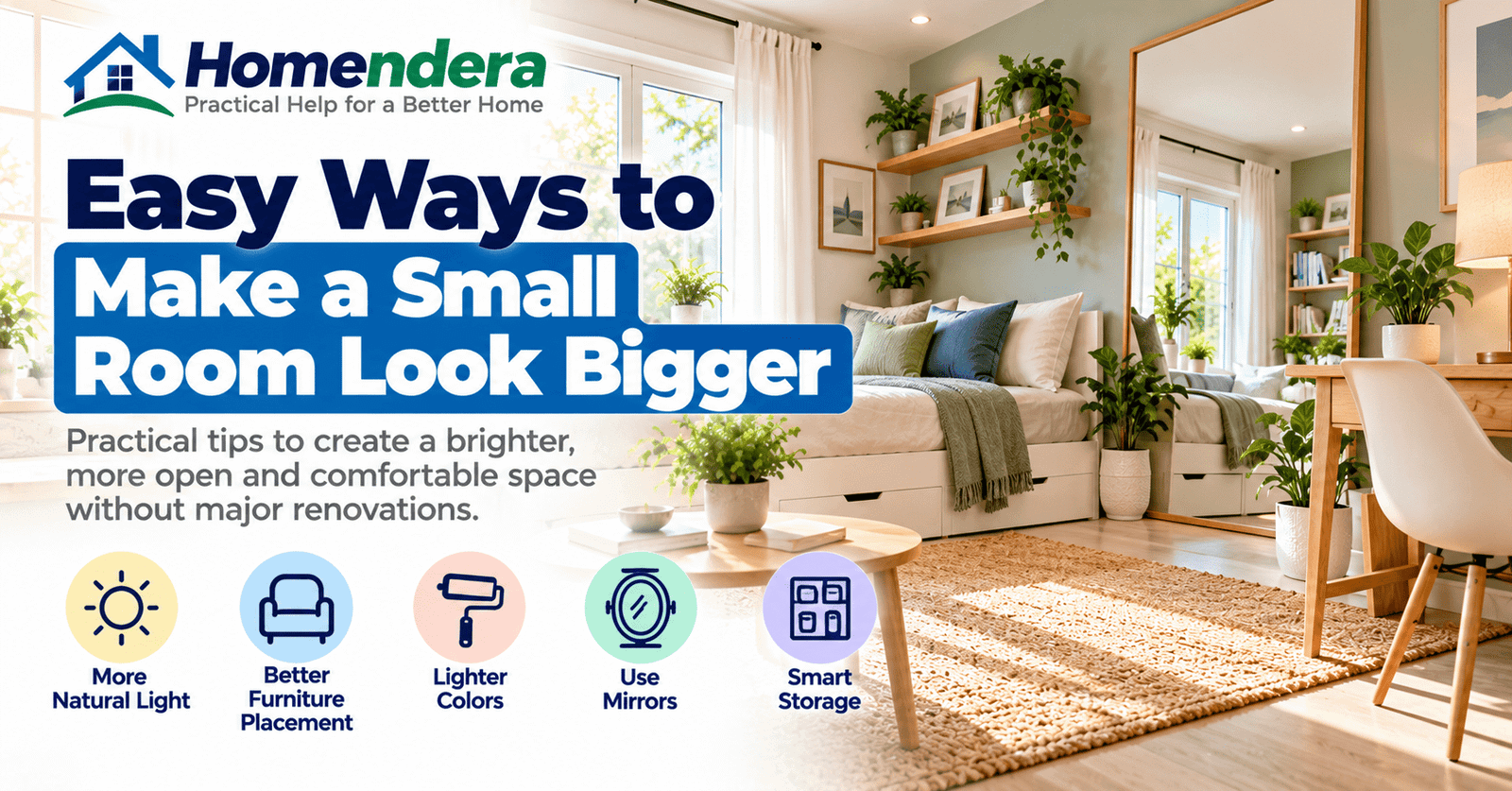
A small room does not always need more floor space to feel more comfortable. The way you use light, furniture, storage, color, and available space can change how large or crowded a room appears.
The goal is not to hide the room’s actual size. Instead, thoughtful choices can reduce visual clutter, improve movement, and make the available space feel more open.
Here are practical ways to make a small room look bigger without major remodeling.
1. Remove Unnecessary Clutter First
Before buying furniture, mirrors, shelves, or decorative items, start with what you already have.
Too many visible objects can make a small room feel crowded. Clear surfaces and organized storage usually create an immediate improvement.
Look at:
- Tables and countertops
- Open shelves
- Window sills
- Floors
- Doorways
- Furniture tops
Keep items you regularly use within easy reach. Store or remove things that do not need to remain visible.
This simple step costs nothing and can make later improvements much easier.
2. Keep Walking Paths Clear
Furniture placement matters more when floor space is limited.
Try to maintain a clear route between the room’s main entrance and frequently used areas. Avoid positioning furniture where people constantly need to walk around it.
A room often feels larger when movement through it is natural.
Rearranging existing furniture may therefore improve the space without requiring any new purchases.
3. Make Better Use of Natural Light
Natural light can make a room feel brighter and more open.
Avoid unnecessarily blocking windows with large furniture or heavy objects. During the day, open suitable curtains or blinds when privacy and heat control allow.
Clean windows can also improve the amount of light entering the room.
However, consider indoor temperature as well. Strong direct sunlight can increase heat during warm weather, so use window coverings strategically when needed.
Our guide to energy-efficient home improvements explains how windows and coverings can also affect household comfort.
4. Choose Window Coverings Carefully
Heavy or oversized window treatments can visually dominate a small room.
Depending on your privacy and light-control needs, simpler curtains, blinds, or shades may create a cleaner appearance.
Keeping the area around a window visually open can also draw attention toward the outdoors, which may make the room feel less enclosed.
Choose window coverings for function first. Privacy, sunlight, temperature, and ease of use still matter.
5. Use Lighter Colors Where They Suit the Room
Light-colored walls can reflect more available light and may help a small room feel more open.
That does not mean every small room must be painted white.
Soft neutral colors, pale shades, and other relatively light finishes can work well depending on the room and lighting.
Before repainting, repair wall damage properly. Our guide on how to patch small holes in drywall can help with minor dents and holes.
Never simply paint over unexplained moisture stains or recurring cracks.
6. Keep the Color Scheme Relatively Simple
Too many competing colors and patterns can make a small room feel visually busy.
Using a more consistent color palette across walls, larger furniture, curtains, and major decorative elements can create a calmer appearance.
You can still add contrasting colors through smaller items such as cushions, artwork, or accessories.
The goal is not to make the room boring. It is to reduce unnecessary visual competition.
7. Use Mirrors Thoughtfully
Mirrors can reflect both light and parts of the room, which may create a greater sense of depth.
Placement matters.
A mirror positioned where it reflects natural light or an attractive part of the room may be more effective than one placed randomly.
Avoid using so many mirrors that the space becomes visually confusing.
Large or heavy mirrors also need secure mounting appropriate for their weight and the wall construction.
8. Choose Furniture That Fits the Room
Large furniture can overwhelm a small space.
Before buying anything new, measure:
- The room
- Door openings
- Walking areas
- Available wall space
- Existing furniture
Consider whether the furniture’s dimensions match how you actually use the room.
A compact table that comfortably meets your needs may work better than a larger one that leaves little room to move.
Proportion is usually more important than simply choosing the smallest furniture available.
9. Avoid Filling Every Wall
It can be tempting to place furniture against every available wall.
However, filling the perimeter with cabinets, chairs, tables, and shelves may make a room feel crowded.
Leave some visual breathing space where practical.
An empty section of wall is not necessarily wasted space. Sometimes it helps the room feel calmer and less confined.
10. Consider Furniture With Visible Floor Space
Some furniture designs allow you to see more of the floor beneath them.
For example, a sofa, chair, cabinet, or table with visible legs can sometimes feel visually lighter than a solid piece extending all the way to the floor.
This is primarily a design consideration rather than a strict rule.
Comfort, durability, storage needs, and stability should still guide furniture choices.
11. Use Multifunctional Furniture When Practical
In small homes, one piece of furniture may be able to perform more than one function.
Examples include:
- A bench with storage
- A bed with built-in drawers
- A coffee table with storage
- A desk that also provides shelving
- An ottoman with internal storage
Multifunctional furniture can reduce the number of separate items needed in a room.
However, do not buy complicated furniture merely because it has several features. Choose pieces that solve a real problem.
12. Use Vertical Space
Small rooms often have more usable wall space than floor space.
Shelves, hooks, tall storage units, and wall-mounted organizers can move appropriate items upward instead of spreading them across the floor.
Vertical storage can work particularly well for:
- Books
- Decorative items
- Everyday accessories
- Office supplies
- Lightweight household items
Secure shelves and storage systems correctly. Heavy items require mounting appropriate for the wall type and expected load.
13. Keep Open Shelves Organized
Open shelving can provide useful storage, but overcrowded shelves may increase visual clutter.
Leave some space between items where practical.
Group similar objects together and remove things that do not need to remain on display.
If a room requires substantial storage, a combination of closed and open storage may create a cleaner appearance than open shelves alone.
14. Use Closed Storage for Visual Clutter
Some household items are useful but not particularly attractive when displayed.
Closed cabinets, drawers, baskets, and storage boxes can keep these items accessible without leaving everything visible.
This can be especially useful in:
- Bedrooms
- Living rooms
- Home offices
- Entryways
- Children’s rooms
Our guide will look more deeply at how to improve home storage without major renovations.
15. Improve the Lighting
Dark corners can make a small room feel more enclosed.
Instead of depending entirely on one overhead fixture, consider different sources of light where appropriate.
For example:
- General room lighting
- Table or floor lamps
- Task lighting
- Natural daylight
Lighting should support how the room is actually used.
Choose suitable bulbs and fixtures, and leave electrical wiring or modifications to a qualified person where required.
16. Avoid Oversized Decorative Pieces
Decorative items add personality, but too many large pieces can dominate a small room.
Artwork, plants, lamps, and accessories should be proportionate to the available space.
Interestingly, one well-chosen larger feature may sometimes look cleaner than many small objects scattered around the room.
Experiment with what you already own before purchasing more decorations.
17. Keep Floors as Visible as Practical
A visible, uncluttered floor can help establish clearer boundaries and walking paths.
Avoid unnecessary baskets, boxes, cables, or decorative objects scattered across the floor.
Choose rugs that suit the room rather than automatically using several small rugs.
Most importantly, keep walkways free of trip hazards.
18. Manage Cables and Cords
Visible cables can make a small room appear untidy.
Where practical, organize cords behind furniture or use cable-management products designed for the purpose.
Do not tightly bundle electrical cords in ways that could cause overheating, and never run ordinary extension cords under rugs or through locations where they can be damaged.
Cable organization should improve both appearance and safety.
19. Pay Attention to Doors
A poorly operating door can reduce usable space and interfere with furniture placement.
Make sure doors open and close freely without hitting unnecessary objects.
If a door sticks, rubs, or fails to latch correctly, identify the cause before modifying it.
Our guide on how to fix a door that won’t close properly covers several common alignment problems.
20. Create a Clear Focal Point
A room can feel more organized when the eye has somewhere natural to rest.
Depending on the space, this might be:
- A window
- A piece of artwork
- A simple feature wall
- A fireplace
- A well-arranged piece of furniture
Avoid having several strong focal points competing with each other.
A simpler visual structure often works better in a compact room.
21. Avoid Buying Everything at Once
When a room feels too small, buying organizers and smaller furniture may seem like the obvious solution.
Start by rearranging and removing things instead.
Live with the new layout for a few days. You may discover that you need fewer new items than expected.
This approach can save money and prevent additional clutter.
22. Improve One Problem at a Time
Identify what actually makes the room feel uncomfortable.
Is it:
- Too much furniture?
- Poor lighting?
- Lack of storage?
- Dark finishes?
- A blocked window?
- Too many visible objects?
- Poor furniture placement?
Solving the main problem often makes a bigger difference than making several unrelated cosmetic changes.
Our broader guide to simple home improvements can help you prioritize practical changes throughout the rest of the home.
When Should You Consider a Larger Change?
Furniture arrangement and decoration cannot solve every space problem.
A larger project may be worth considering when the room has:
- An impractical permanent layout
- Insufficient built-in storage
- Poor natural lighting
- Damaged surfaces
- Persistent moisture problems
- Structural limitations
- Doors or fixtures that significantly restrict usable space
Before changing walls, structural elements, electrical systems, or plumbing, determine whether professional design or construction advice is required.
Final Thoughts
You can often make a small room look bigger without expanding it.
Start by reducing clutter and improving the layout. Then consider natural light, appropriate colors, mirrors, well-proportioned furniture, vertical storage, and better lighting.
Most importantly, make the room easier to use rather than simply trying to make it look larger. A small room with clear walking paths, useful storage, and good lighting can feel more comfortable than a larger room filled with unnecessary furniture and clutter.