
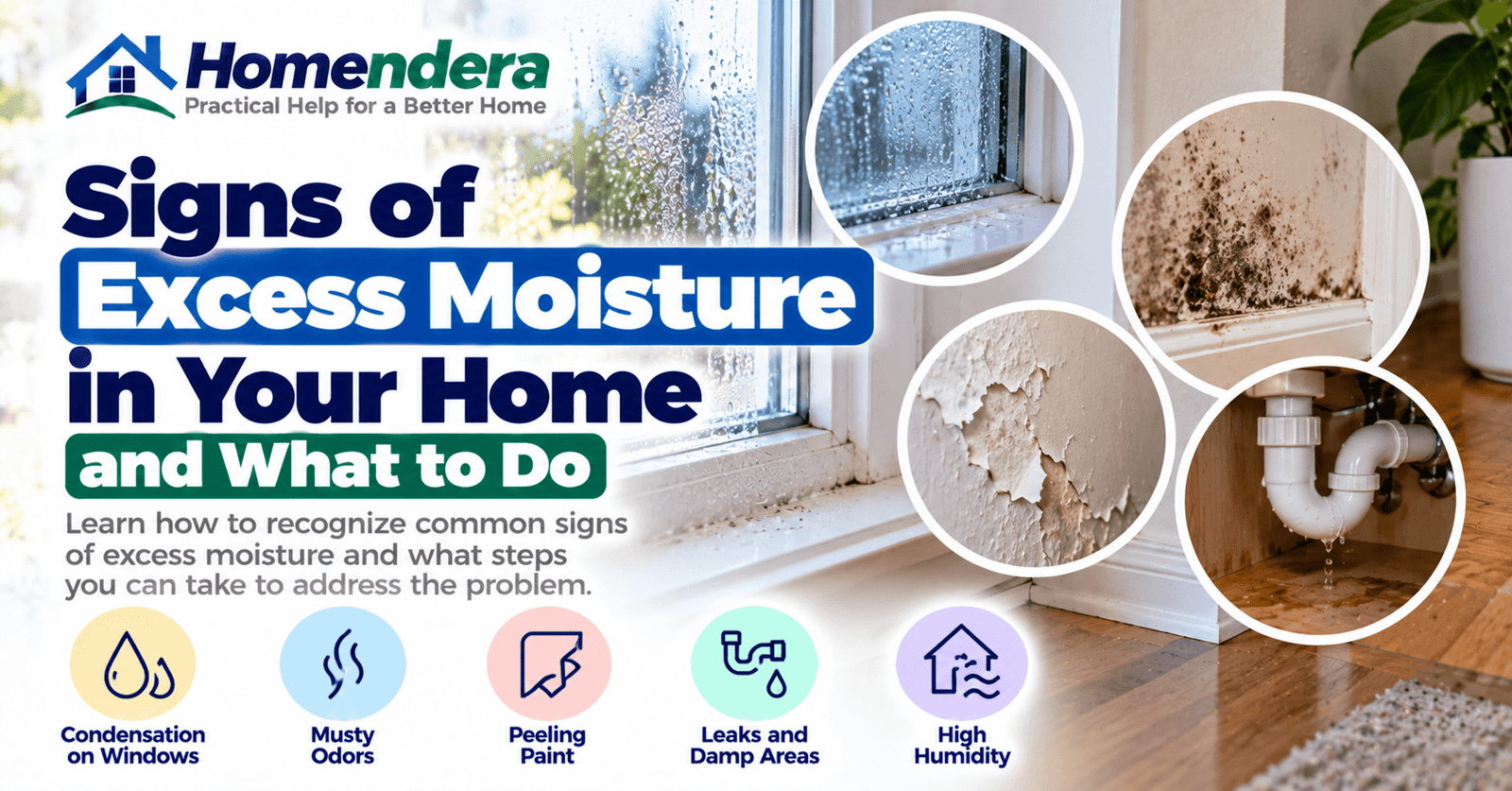
Some moisture inside a home is normal. Cooking, showering, washing clothes, breathing, and changing weather conditions all add moisture to indoor air.
Problems begin when moisture repeatedly collects where it should not, cannot dry properly, or enters the home through leaks and building defects. Over time, excess moisture can damage paint, drywall, wood, flooring, insulation, and other materials. It can also contribute to musty odors and unwanted biological growth.
Learning the signs of excess moisture in your home can help you identify a problem before the damage becomes more extensive.
Where Does Excess Moisture Come From?
Indoor moisture can have many sources.
Common examples include:
- Plumbing leaks
- Roof leaks
- Rain entering around doors or windows
- Poor bathroom ventilation
- Cooking without adequate ventilation
- Clothes drying indoors
- Condensation
- Damp basements or crawl spaces
- Drainage problems outside the home
- HVAC or condensate problems
- High outdoor humidity
Finding the source matters more than simply drying or cleaning the visible symptom.
1. Condensation on Windows
Occasional condensation can occur when warm, moisture-containing indoor air meets a cold surface.
However, windows that remain wet for long periods may indicate excessive indoor humidity, poor ventilation, cold surfaces, or another moisture-related issue.
Pay attention to:
- Water droplets on glass
- Wet window sills
- Damp frames
- Peeling finishes
- Discoloration around windows
Wipe away standing water so it does not remain against surrounding materials.
Then investigate why condensation occurs repeatedly.
If your windows frequently become wet, our guide to condensation on windows explains the difference between interior, exterior, and between-pane moisture and what each type may indicate.
2. Musty Odors
A persistent musty smell is an important moisture warning sign.
You may notice it in:
- Bathrooms
- Closets
- Basements
- Under sinks
- Laundry areas
- Cabinets
- Rooms that stay closed
- Areas near previous leaks
Do not rely on air fresheners to hide the smell.
A recurring odor suggests that you should inspect for damp materials, leaks, poor airflow, or other moisture sources.
If the odor seems to affect an entire room or several areas of the home, see why your house smells musty for a systematic check of moisture, plumbing, HVAC, fabrics, basements, and other possible sources.
3. Peeling or Bubbling Paint
Paint may peel, bubble, or blister when moisture reaches the surface or material beneath it.
This does not always mean there is an active plumbing leak. Humidity, condensation, exterior water intrusion, or an older moisture problem can also affect finishes.
Before repainting, determine why the paint failed.
Covering the area without addressing the moisture source may only hide the problem temporarily.
4. Water Stains on Walls or Ceilings
Yellow, brown, or darker stains can indicate previous or ongoing water exposure.
Possible sources include:
- Roof leaks
- Plumbing leaks
- Bathroom leaks
- HVAC condensate
- Water entering around exterior openings
Our guide on how to inspect your home for water damage explains how to investigate common areas more systematically.
A dry-looking stain does not prove the underlying problem has been resolved.
5. Damp or Soft Drywall
Drywall should normally feel firm and dry.
Moisture can cause it to become:
- Soft
- Swollen
- Crumbly
- Discolored
- Warped
Do not simply patch or paint over damaged drywall.
Find the moisture source first and determine whether the affected material needs replacement.
Our guide on how to patch small holes in drywall is appropriate for ordinary minor damage, but moisture-damaged material needs different attention.
6. Swollen Wood or Trim
Wood and wood-based materials can absorb moisture and change shape.
Watch for:
- Swollen baseboards
- Warped trim
- Cabinet edges expanding
- Doors beginning to stick
- Flooring lifting or changing shape
Sudden changes in wooden components deserve investigation, particularly when they occur near bathrooms, kitchens, exterior doors, or windows.
7. Doors That Suddenly Begin Sticking
Humidity can cause some wooden doors to expand temporarily.
However, a door that suddenly starts rubbing or becomes difficult to close may also indicate movement, moisture, or another underlying issue.
Check the surrounding frame and nearby surfaces for dampness or swelling.
Our guide on how to fix a door that won’t close properly covers alignment and other common causes.
Do not sand a door immediately if moisture may be responsible. The dimensions may change again when conditions dry.
8. Dampness Under Sinks
Under-sink cabinets are important moisture-checking areas because small leaks can remain hidden behind stored items.
Remove clutter occasionally and inspect around:
- Supply hoses
- Shutoff valves
- Drain connections
- P-traps
- Faucet connections
- Cabinet surfaces
Look for stains, droplets, swelling, corrosion, or musty smells.
If the area smells unpleasant, our guide on why your sink smells explains how drain buildup, leaks, P-traps, and other plumbing issues can contribute.
9. Unexpected Changes in Flooring
Moisture can affect some flooring materials.
Possible warning signs include:
- Lifting edges
- Warping
- Buckling
- Discoloration
- Soft areas
- Loose flooring
- Changes around bathrooms or appliances
The exact symptoms depend on the flooring material.
Do not assume damaged flooring itself is the original problem. Water may be coming from beneath, beside, or above it.
10. Moisture Around Toilets
Inspect the floor around toilets periodically.
Look for:
- Dampness
- Discoloration
- Soft flooring
- Persistent odors
- Water around the base
A toilet that keeps running usually involves water moving internally, but water outside the fixture is a different concern.
Our guide on why your toilet keeps running explains common tank problems. Visible water around the toilet should be investigated separately.
11. Bathroom Walls That Stay Wet
Bathrooms naturally become humid during showers and baths.
However, walls and ceilings should be able to dry afterward.
Persistent moisture may indicate inadequate ventilation.
Check whether the bathroom exhaust fan works properly where one is installed.
After bathing, using appropriate ventilation and allowing moisture to escape can help surfaces dry more quickly.
12. Check the Bathroom Exhaust Fan
A bathroom exhaust fan should move humid air out of the room.
If it appears ineffective, check accessible areas for obvious dust buildup and make sure the grille is not blocked.
Do not dismantle electrical fan components unless you are qualified to do so.
If the fan runs but humidity remains excessive, the ducting, fan capacity, or installation may need professional evaluation.
A bathroom exhaust fan that fails to remove humid air can contribute to persistent condensation and damp surfaces. Read our guide on why your bathroom exhaust fan is not working for common causes and practical checks.
13. Kitchen Moisture
Cooking can release substantial water vapor into indoor air.
Boiling water and other cooking methods may create condensation on nearby surfaces.
Use a properly vented range hood where available and appropriate.
Clean the hood filters according to the manufacturer’s instructions.
Remember that some range hoods recirculate air rather than exhausting it outdoors, so their effect on moisture can differ.
14. Laundry Can Add Moisture
Drying wet clothes indoors releases moisture into the air.
Clothes dryers also need appropriate venting according to their design.
For vented dryers, inspect accessible duct connections periodically and follow manufacturer maintenance instructions.
Never vent a dryer into an attic, wall cavity, crawl space, or other unsuitable indoor location.
15. Damp Closets
Closets can develop moisture problems because they often receive less airflow than the surrounding room.
Watch for:
- Musty odors
- Damp clothing
- Discoloration
- Moisture on exterior walls
- Condensation
- Unusual growth on surfaces
Avoid packing belongings tightly against a persistently damp wall.
Investigate whether the problem involves indoor humidity, an exterior wall, plumbing, or water intrusion.
16. Basement Moisture
Basements are particularly vulnerable because they are surrounded partly or completely by soil.
Signs of excess moisture may include:
- Damp walls
- Musty odors
- Water stains
- Efflorescence or mineral deposits
- Peeling finishes
- Wet flooring
- Condensation on pipes
- Visible water after rain
Basement moisture can involve drainage, groundwater, condensation, plumbing, or foundation-related issues.
Repeated water entry deserves professional investigation.
17. Crawl-Space Moisture
Crawl-space conditions can affect the rooms above them.
Possible warning signs elsewhere in the home include:
- Musty odors
- Damp flooring
- Unexplained humidity
- Wood deterioration
Crawl spaces can also contain electrical wiring, pests, sharp materials, poor air quality, or difficult access.
Do not enter an unsafe crawl space simply to investigate moisture.
A qualified professional can inspect areas that are difficult or hazardous to access.
18. Condensation on Pipes
Cold-water pipes can sometimes develop condensation when warm, humid air contacts their surfaces.
A small amount under certain conditions may be normal.
However, persistent dripping can wet nearby materials and may be mistaken for a plumbing leak.
Dry the pipe and observe whether water appears again only on the exterior surface or seems to come from a fitting.
If you cannot determine the source, professional inspection is sensible.
19. HVAC-Related Moisture
Air-conditioning systems remove moisture from indoor air and normally direct condensation away through a drainage system.
Problems can occur if condensate drainage becomes blocked or equipment malfunctions.
Look around accessible HVAC areas for:
- Standing water
- Damp flooring
- Water stains
- Overflow
- Musty odors
If unusual moisture appears alongside equipment problems, include it when describing the issue to an HVAC professional.
Our HVAC maintenance checklist for homeowners covers other routine observations worth making.
20. Excess Indoor Humidity
You do not always need visible water to have a moisture problem.
High indoor humidity can contribute to:
- Condensation
- Musty odors
- Slow drying
- Sticky or uncomfortable indoor conditions
- Moisture on cool surfaces
A hygrometer can provide a basic measurement of relative humidity.
However, the appropriate indoor humidity level depends on outdoor conditions, climate, building construction, and season. Avoid treating one universal percentage as ideal for every home.
21. Look for Patterns
Patterns can help identify moisture sources.
Ask:
- Does moisture appear after rain?
- Does it happen only during showers?
- Does condensation worsen during cold weather?
- Does a stain grow after using an upstairs bathroom?
- Does a room become damp when the AC operates?
- Does the problem occur only during humid weather?
These observations can be more useful than immediately applying a repair product.
22. Check Around Doors and Windows
Exterior openings can allow both air and water into the home when seals, flashing, frames, or surrounding materials deteriorate.
Inspect for:
- Damp trim
- Stains
- Peeling paint
- Soft material
- Visible gaps
- Failed caulk
Our guide on how to stop drafts around doors and windows covers ordinary air-sealing checks.
However, sealing a gap is not enough if water is entering because of damaged flashing, roofing, siding, or another building-envelope problem.
23. Check Exterior Drainage
Water outside the home should generally move away from the building.
Problems with gutters, downspouts, grading, or drainage can contribute to moisture near foundations and lower-level spaces.
From a safe ground-level position, observe what happens during or after rainfall.
Look for:
- Water collecting near the foundation
- Overflowing gutters
- Downspouts discharging too close to the building
- Persistent puddles
- Areas where soil slopes toward the home
Do not climb onto a wet roof or use a ladder in unsafe conditions.
24. Watch for Unusual Surface Growth
Persistent moisture can support biological growth on some surfaces.
Growth can vary in appearance and cannot always be reliably identified by color alone.
If you find a small area, the first priority is still to identify and correct the moisture source.
Large, recurring, hidden, or moisture-related growth may require professional assessment and remediation.
People with health concerns should seek appropriate medical guidance regarding symptoms rather than relying on visual identification of indoor growth.
25. Do Not Paint Over a Moisture Problem
Fresh paint can make a damaged area look better temporarily.
However, paint does not repair:
- Plumbing leaks
- Roof leaks
- Condensation problems
- Water intrusion
- Poor ventilation
- Wet building materials
Repair the cause and allow affected materials to dry appropriately before refinishing.
26. Do Not Seal Wet Materials Inside a Wall
If materials are wet, trapping moisture behind new drywall, insulation, paneling, or other finishes can create additional problems.
Drying requirements depend on the material and extent of exposure.
Extensive water intrusion may require professional drying equipment and moisture measurements.
The goal is not simply to make the surface look dry.
27. Improve Ventilation Where Appropriate
Ventilation can help manage moisture generated inside the home.
Useful practices may include:
- Using bathroom exhaust fans
- Using properly vented kitchen extraction
- Maintaining appropriate HVAC operation
- Allowing wet areas to dry
- Following appliance ventilation requirements
Do not create uncontrolled ventilation openings or modify mechanical systems without understanding their design.
28. Use a Dehumidifier Appropriately
A dehumidifier can help manage humidity in some spaces.
However, it should not become a substitute for repairing an active water leak.
If you use one:
- Follow manufacturer instructions
- Keep air pathways clear
- Empty or drain it correctly
- Clean it as recommended
- Use electrical equipment safely around moisture
If humidity quickly returns despite continuous operation, investigate the moisture source.
29. Address Plumbing Leaks Promptly
Even a slow leak can keep cabinets, walls, or flooring damp.
Check plumbing problems as soon as you notice:
- Dripping
- Dampness
- Water stains
- Unusual meter activity
- Swelling around fixtures
- Persistent musty odors
Our guide on how to find a water leak in your home provides a useful starting point.
30. Keep Records of Recurring Moisture
If a stain, smell, or damp area repeatedly returns, take photographs and note when it occurs.
Record:
- Date
- Weather conditions
- Recent plumbing use
- HVAC operation
- Approximate size of the affected area
- Whether the problem changed
This can help you recognize patterns and provide useful information to a contractor or other professional.
When Should You Call a Professional?
Professional investigation is appropriate when:
- You cannot identify the moisture source
- Water repeatedly enters after rain
- Walls or ceilings remain wet
- Flooring becomes soft or swollen
- Moisture appears near electrical equipment
- A plumbing leak is inaccessible
- Large areas of material are affected
- You suspect roof or foundation problems
- Musty odors persist without a visible source
- Moisture returns after attempted repairs
Electrical equipment and standing water are a particularly dangerous combination. Avoid contact and seek qualified help when water is near electrical components.
A Simple Moisture-Checking Routine
If you suspect excess moisture:
- Identify where you first noticed the problem.
- Look for visible water or staining.
- Check nearby plumbing.
- Inspect doors and windows.
- Consider recent rainfall.
- Check bathroom and kitchen ventilation.
- Look beneath sinks and around appliances.
- Observe HVAC areas for condensation problems.
- Note whether the problem is seasonal or recurring.
- Correct the source before repairing cosmetic damage.
This approach helps you treat the cause rather than only the symptom.
Final Thoughts
The signs of excess moisture in your home can be subtle at first.
Window condensation, musty odors, peeling paint, swollen trim, damp cabinets, water stains, and changes in flooring can all indicate that moisture deserves attention.
Start by identifying where the water or humidity is coming from. Check plumbing, ventilation, doors, windows, HVAC equipment, and exterior drainage where appropriate.
Most importantly, do not repeatedly cover moisture damage with paint, caulk, or new finishes.
A dry, well-maintained home depends on controlling the source of unwanted moisture, allowing affected materials to dry properly, and getting professional help when the cause or extent of damage is unclear.