
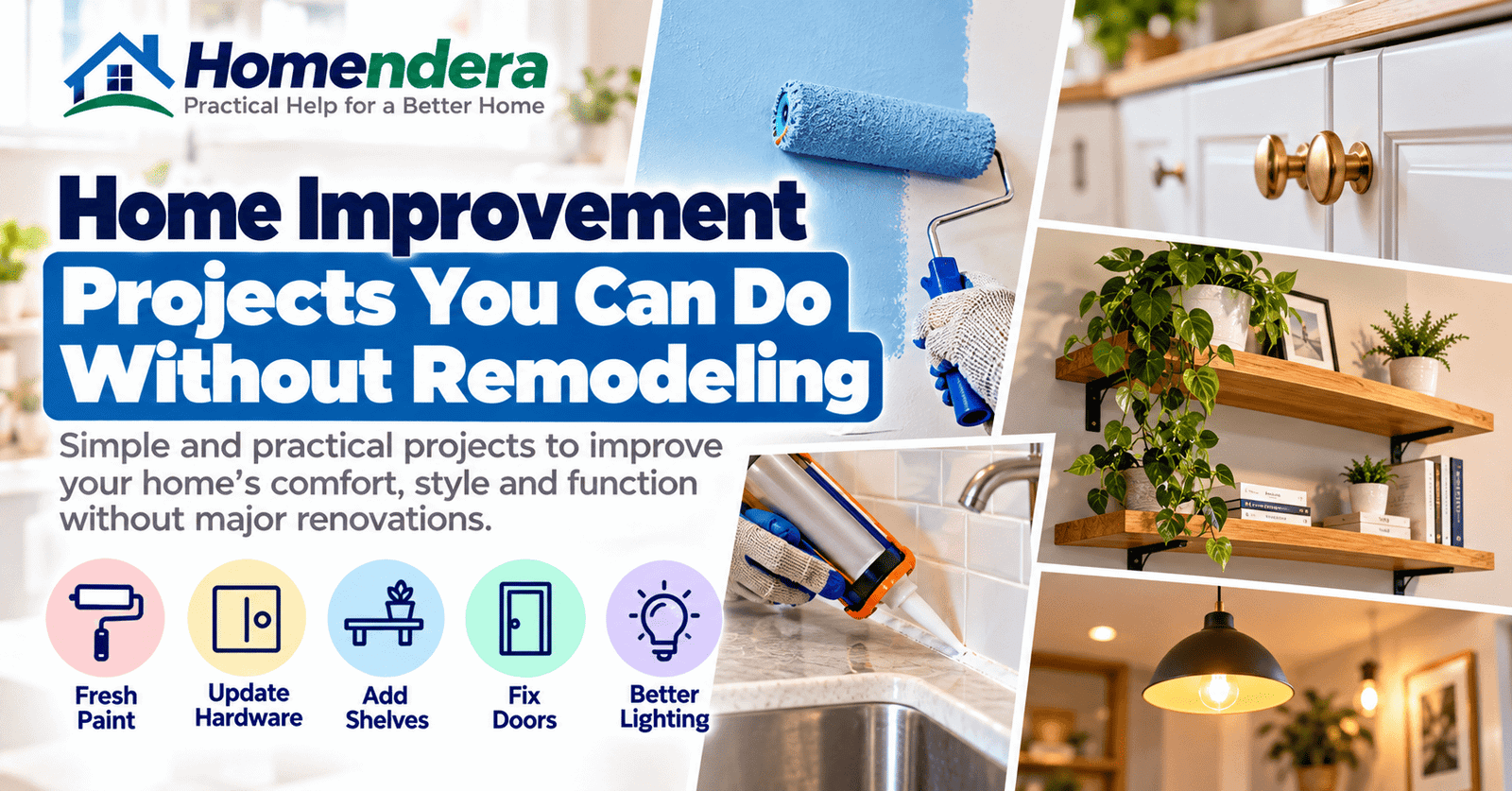
Improving your home does not always mean knocking down walls, replacing cabinets, or starting an expensive renovation. Many useful projects can improve comfort, appearance, organization, and everyday function without changing the basic structure of the home.
The key is choosing projects that solve real problems and match your skills. Some may take only an hour, while others can become a weekend project.
Here are practical home improvement projects without remodeling that can make a noticeable difference.
1. Give a Room a Fresh Coat of Paint
Painting can change the appearance of a room without altering its structure.
Walls naturally develop marks, scuffs, small holes, and other signs of everyday use. Preparing the surface properly and applying fresh paint can make the room feel cleaner and better maintained.
Before painting:
- Clean dirty areas
- Repair small holes
- Check for moisture stains
- Protect floors and furniture
- Use paint suitable for the surface
If the wall has minor damage, our guide on how to patch small holes in drywall explains the basic repair process.
Do not simply paint over recurring stains. Water damage should be investigated before cosmetic work begins.
2. Replace Cabinet Knobs and Handles
Cabinet hardware is relatively easy to update when the existing cabinets remain in good condition.
New knobs or handles can change the appearance of kitchens, bathrooms, storage cabinets, and furniture.
Measure the existing mounting holes before buying replacements. Choosing hardware with matching dimensions can avoid unnecessary drilling.
Sometimes replacement is not even necessary. Tightening loose hardware and cleaning existing handles may be enough.
3. Add Useful Wall Shelves
Wall shelves can create storage without taking up additional floor space.
They may work well in:
- Home offices
- Bedrooms
- Kitchens
- Entryways
- Utility areas
- Living rooms
Choose the location carefully and use mounting hardware appropriate for the wall and expected load.
Do not place heavy objects on inadequately supported shelves.
For more ideas, see our guide on how to improve home storage without major renovations.
4. Improve Closet Organization
A poorly organized closet can feel much smaller than it actually is.
Simple improvements might include:
- Additional organizers
- Storage boxes
- Shoe racks
- Hooks
- Shelf dividers
- Drawer units
- A second hanging rail where suitable
Start by removing belongings you no longer need. Then measure the available space before purchasing organizers.
Good organization often provides more benefit than simply adding more storage products.
5. Replace Damaged Weatherstripping
Weatherstripping around exterior doors and suitable windows can deteriorate with age.
Worn material may allow unwanted drafts and reduce indoor comfort.
Inspect it for:
- Cracks
- Missing sections
- Compression
- Loose areas
- Visible gaps
Replacement is often a manageable project.
However, make sure the door or window closes correctly first. New weatherstripping cannot compensate for serious alignment problems.
Our guide on how to fix a door that won’t close properly covers several common causes.
6. Renew Deteriorated Caulk
Caulk helps seal appropriate joints around certain sinks, tubs, showers, countertops, windows, trim, and other areas.
Over time, it may crack, shrink, separate, or become difficult to clean.
Removing deteriorated material and applying suitable new caulk can improve both appearance and protection.
Always choose a product designed for the specific location and surface.
Remember that caulk should not be used to hide active leaks or serious moisture problems.
7. Fix Squeaky Interior Doors
A squeaky door is a small problem, but it can become irritating when you hear it every day.
The cause may be as simple as a dry hinge or loose screw.
Start by identifying which hinge is making the noise. Then inspect the hardware before applying a suitable lubricant.
Our complete guide on how to fix a squeaky door walks through the troubleshooting process.
If the door also rubs, sags, or fails to latch, there may be an alignment problem rather than just a noisy hinge.
8. Improve Furniture Placement
Rearranging furniture costs nothing but can significantly improve how a room works.
Look for opportunities to:
- Open walking paths
- Improve access to windows
- Keep HVAC vents clear
- Make storage easier to reach
- Reduce visual clutter
- Improve conversation or activity areas
Avoid pushing furniture into every available space.
In compact rooms, thoughtful furniture placement can also help make a small room look bigger.
9. Add Better Entryway Organization
An entryway can quickly become cluttered with shoes, bags, coats, keys, and other everyday items.
Simple additions might include:
- Hooks
- A shoe rack
- A narrow shelf
- A small bench
- Baskets
- A key holder
Keep the walking path and door movement clear.
An organized entrance can make the home feel more orderly without requiring structural changes.
10. Improve Kitchen Drawer Organization
Kitchen drawers often contain more usable space than their organization suggests.
Dividers and small organizers can separate:
- Cutlery
- Cooking utensils
- Small tools
- Food-storage accessories
- Other kitchen items
Measure drawers before buying organizers.
Avoid overfilling them, as excessive contents can interfere with drawer operation.
11. Organize the Space Under Sinks
Under-sink cabinets often become cluttered because pipes and plumbing components make the space awkward to use.
Small organizers or suitable containers can help.
However, keep shutoff valves and plumbing connections accessible.
Periodically remove stored items and check for moisture. A slow leak can remain hidden behind bottles and cleaning products for a long time.
Our guide to common plumbing problems at home explains other warning signs worth watching for.
12. Improve Window Coverings
Changing curtains, blinds, or shades can affect appearance, privacy, daylight, and indoor comfort.
Choose coverings according to the needs of the room.
During warm weather, appropriate coverings may help control direct sunlight. In other conditions, opening them can make better use of natural light.
Window improvements also form part of some energy-efficient home improvements.
13. Replace Worn Door Hardware
Loose or damaged handles, knobs, stops, and other simple door hardware can make an otherwise good door feel neglected.
Check whether tightening the existing hardware solves the problem before replacing anything.
When installing replacement hardware, make sure it suits the existing door and mounting arrangement.
Avoid modifying fire-rated, security, or specialized doors without understanding their requirements.
14. Touch Up Damaged Trim
Baseboards, door trim, and other painted woodwork often collect scratches and marks.
Cleaning, filling minor appropriate damage, and touching up paint can improve the appearance of a room.
Before repairing damage, check whether it has an underlying cause.
For example, swollen trim near a bathroom or exterior door could indicate moisture rather than ordinary wear.
15. Improve Bathroom Organization
You do not need a full bathroom renovation to make the room easier to use.
Small projects might include:
- Adding suitable shelves
- Installing hooks
- Organizing drawers
- Using storage baskets
- Replacing worn shower accessories
- Renewing deteriorated caulk
- Improving under-sink organization
Avoid blocking ventilation.
Persistent condensation, peeling finishes, or musty odors should be investigated rather than hidden behind new storage or decoration.
16. Upgrade Suitable Lighting Without Rewiring
Better lighting can change how a room feels and functions.
Simple improvements may include:
- Changing compatible bulbs
- Adding table lamps
- Adding floor lamps
- Improving task lighting
- Cleaning dusty shades or fixtures
- Making better use of daylight
Choose bulbs that are compatible with their fixtures.
Projects involving new wiring, electrical boxes, circuits, or uncertain electrical connections should be left to a qualified professional.
17. Create a More Useful Home Workspace
A home office does not necessarily require a dedicated room.
A small area can become more functional with:
- A suitable desk
- Better lighting
- Cable organization
- Wall storage
- Drawer organizers
- A comfortable chair
- Reduced clutter
Keep electrical cords safely arranged and avoid overloading outlets or extension devices.
The goal is to improve function rather than fill the space with office furniture.
18. Add Hooks Where They Solve a Problem
Hooks are inexpensive and can provide useful storage in areas where floor space is limited.
They can work for lightweight appropriate items in:
- Entryways
- Closets
- Bedrooms
- Utility areas
- Kitchens
- Bathrooms
Choose hooks and mounting hardware based on the expected load.
Do not assume adhesive hooks or simple drywall fasteners can safely support heavy objects.
19. Improve Storage With Multifunctional Furniture
Furniture that also provides storage can reduce the number of separate items needed in a room.
Examples include:
- Storage benches
- Beds with drawers
- Ottomans with storage
- Coffee tables with compartments
- Desks with shelving
Buy multifunctional furniture only when it solves a genuine need.
Adding more furniture simply to gain storage can make a room more crowded.
20. Repair Small Cosmetic Wall Damage
Small dents, nail holes, and other minor wall imperfections can make a room look unfinished.
Repairing these areas can be a manageable home project when the wall is otherwise dry and sound.
Recurring cracks deserve more attention.
Likewise, discoloration, softness, bubbling paint, or staining may indicate water damage.
If you are uncertain, use our guide on how to inspect your home for water damage before covering the area.
21. Improve Exterior Door Appearance
The main entrance has a strong effect on the first impression of a home.
Depending on the door’s condition, a simple project may involve:
- Cleaning it
- Touching up suitable paint
- Tightening hardware
- Cleaning glass
- Replacing worn weatherstripping
- Improving nearby organization
Check the door’s operation at the same time.
A door that sticks or fails to latch should be repaired rather than merely given a cosmetic update.
22. Create Better Cable Management
Loose charging cables, computer wires, and entertainment-system cords can make a room look cluttered.
Cable clips, organizers, and suitable management products can help keep them under control.
Avoid unsafe shortcuts.
Do not run ordinary extension cords beneath rugs, pinch cables behind furniture, or overload electrical outlets.
23. Refresh a Room Without Buying New Furniture
Before replacing furniture, try changing the room around it.
You might:
- Remove unnecessary objects.
- Rearrange furniture.
- Improve lighting.
- Organize visible storage.
- Clean or repair existing furniture.
- Refresh walls or trim.
- Change a few small decorative elements.
This approach may produce the improvement you wanted without the expense of replacing large items.
Our guide to simple home improvements contains additional ideas that can make an existing room feel better.
24. Create a Small Project List
Small improvements are easier to manage when you prioritize them.
Walk through the home and write down problems you notice.
Then divide them into groups such as:
- Quick fixes
- Weekend projects
- Maintenance
- Cosmetic improvements
- Projects requiring professional help
Start with projects that solve everyday problems.
Completing several small useful improvements can have a greater impact than beginning one large project that remains unfinished.
25. Know Which Projects Are Not Simple DIY Work
The phrase “home improvement” covers everything from organizing a drawer to changing the structure of a building.
Do not treat every project as a DIY job.
Professional help may be appropriate for work involving:
- Electrical wiring
- Gas lines or appliances
- Structural changes
- Major plumbing modifications
- Roofing at height
- Significant HVAC repairs
- Hazardous materials
- Serious moisture or mold problems
- Major window or door alterations
If a seemingly simple project reveals something more serious, stop and reassess.
Our guide on DIY vs professional repair can help you decide when professional help makes more sense.
Start With Projects That Solve Everyday Problems
A successful improvement does not have to impress visitors.
It should make your home easier, safer, more comfortable, or more pleasant to use.
Start with something you notice regularly: a squeaky door, disorganized closet, cluttered entryway, damaged wall, poor lighting, or inefficient storage.
Finish that project properly before moving to the next.
Over time, these improvements can change how the entire home feels.
Final Thoughts
There are many useful home improvement projects without remodeling.
Painting, storage improvements, better organization, repaired doors, renewed caulk, improved lighting, updated hardware, and thoughtful furniture placement can all make a noticeable difference without structural renovation.
Choose projects based on actual needs rather than trends. Prepare properly, use suitable materials, and stay within your skills.
Most importantly, recognize when a small project reveals a bigger problem. Good home improvement is not about doing everything yourself. It is about making sensible changes while protecting the home and the people who live in it.