
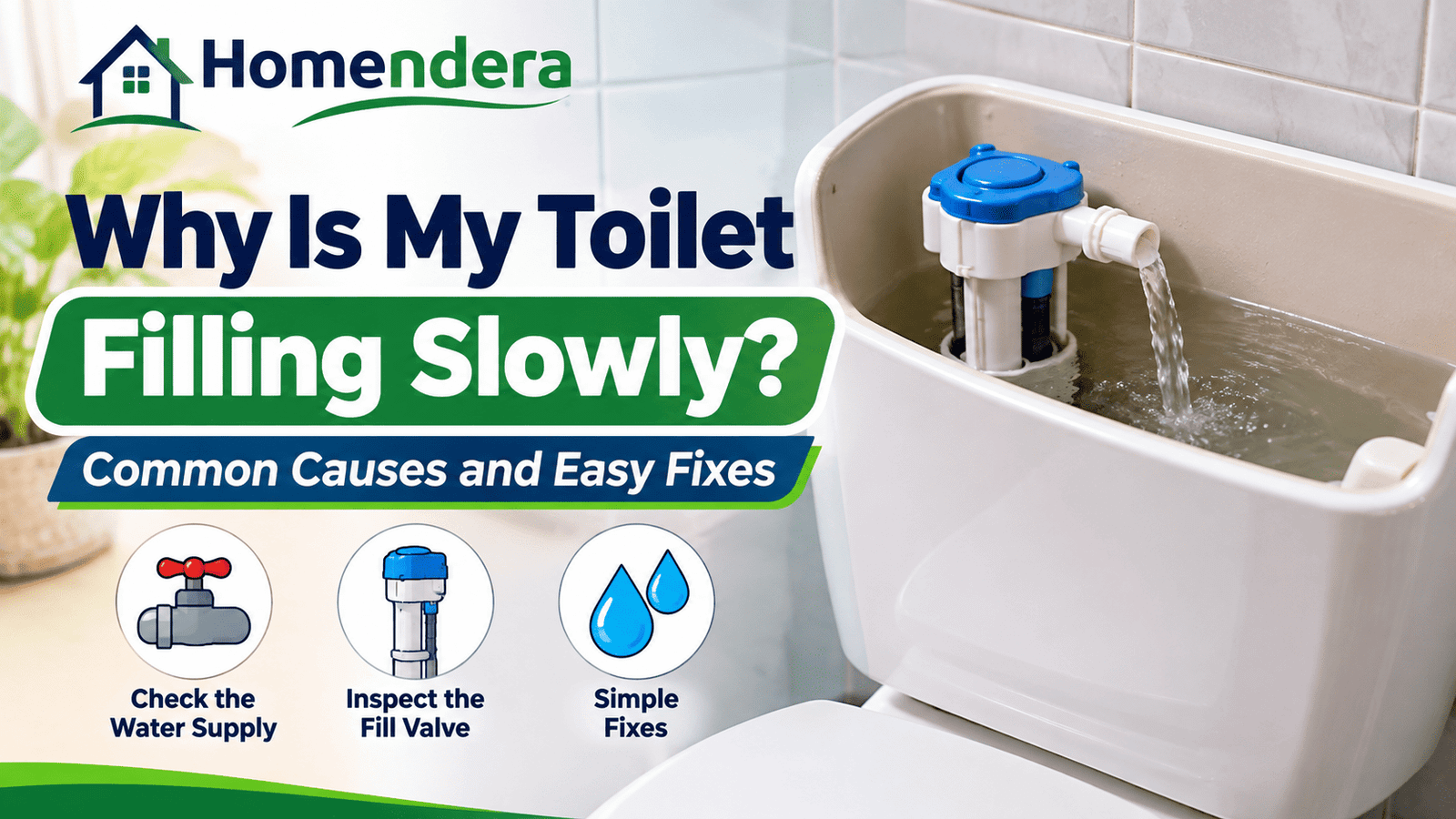
A toilet filling slowly after flushing can be frustrating, especially when several people share the same bathroom. You may hear water trickling into the tank for several minutes or notice that the toilet is not ready for another full flush.
Fortunately, many slow-filling toilets have relatively simple causes. A partially closed water supply valve, clogged fill valve, kinked supply hose, or worn internal component may restrict water entering the tank.
However, low household water pressure and hidden plumbing problems can also affect how quickly the toilet refills.
This guide explains how to identify the likely cause, perform safe checks, and decide when to repair a component or call a plumber.
How Long Should a Toilet Tank Take to Fill?
Many conventional gravity-flush toilets refill in roughly 30 seconds to a couple of minutes. However, the actual time varies with the toilet design, tank capacity, fill valve, and available water pressure.
Some water-saving or specialized systems operate differently.
A toilet may have a problem if:
- The tank takes several minutes longer than it previously did.
- Water enters the tank in a weak trickle.
- The tank does not reach its normal water level.
- The toilet struggles to complete another flush.
- The fill valve makes unusual noises.
- Refilling becomes progressively slower.
Rather than relying on one fixed time limit, compare the toilet’s current behavior with its normal performance.
If it has always refilled slowly, consult the manufacturer’s specifications before assuming a fault.
Quick Fix: What to Check When Your Toilet Fills Slowly
Before replacing any parts, check these common causes.
- Check the water supply valve. Make sure the shutoff valve beside or below the toilet is fully open according to its design.
- Inspect the supply hose. Look for visible bends, kinks, leaks, or damage.
- Check other fixtures. Determine whether low water flow affects only the toilet or other taps as well.
- Observe the fill valve. Remove the tank lid carefully and watch how the tank refills.
- Check the float. Make sure it moves freely and does not catch on other components.
- Look for debris or mineral buildup. A restricted fill valve may need cleaning or replacement.
- Inspect for continuous water loss. A leaking flapper can make the tank appear slow to refill.
If the cause is not obvious, avoid forcing old valves or dismantling unfamiliar components.
Common Causes of a Toilet Filling Slowly
| Possible cause | Typical symptom | Recommended action |
|---|---|---|
| Partially closed shutoff valve | Weak water flow into the tank | Check the valve position |
| Clogged fill valve | Slow or noisy refilling | Clean or replace as directed |
| Kinked supply hose | Restricted flow | Inspect and replace if damaged |
| Low water pressure | Other fixtures also have weak flow | Investigate the household supply |
| Faulty float mechanism | Tank fills incorrectly or stops early | Check movement and adjustment |
| Worn fill valve | Inconsistent or prolonged filling | Consider replacement |
| Leaking flapper | Tank repeatedly refills | Check for water leaking into the bowl |
| Mineral buildup | Reduced flow through valve components | Follow approved cleaning procedures |
These symptoms provide clues. They do not establish a definite diagnosis.
1. The Toilet Water Supply Valve Is Partially Closed
The shutoff valve controls water entering the toilet.
You can usually find it on the wall or floor near the toilet, connected to the tank by a supply line.
If the valve is only partly open, the tank may receive less water than normal.
How to check the shutoff valve
First, locate the valve and inspect it for corrosion or leaks.
Next, identify whether it uses a round handle or a quarter-turn lever.
A typical quarter-turn valve is open when the lever aligns with the pipe, although designs can vary.
A conventional multi-turn valve usually opens by turning the handle counterclockwise.
However, never force a stiff, damaged, or corroded valve. Old shutoff valves can leak or fail when disturbed.
If the valve moves normally, confirm that it is fully open.
Then flush the toilet and observe the refill speed.
When to call a plumber
Contact a plumber if the valve leaks, will not move safely, or appears badly corroded.
A faulty shutoff valve may need replacement.
2. The Fill Valve Is Clogged With Debris
The fill valve controls water entering the toilet tank after a flush.
As the tank fills, a float or internal sensor signals the valve to stop when the correct water level is reached.
Over time, sediment, rust particles, or mineral deposits can restrict the valve.
This may reduce the water flow and make refilling unusually slow.
Signs of a clogged fill valve
- Water enters the tank slowly.
- Refilling takes longer than before.
- The valve makes a faint hissing or whistling sound.
- The tank receives only a weak stream of water.
- Other bathroom fixtures have normal water pressure.
How to inspect the fill valve
Remove the toilet tank lid carefully and place it on a stable, protected surface.
Flush the toilet and observe the water entering the tank.
Look for visible damage, unusual movement, or a float that catches on another component.
If the valve appears restricted, check the manufacturer’s instructions for cleaning.
Some fill valves have serviceable caps or filters. Others are better replaced as a complete unit.
Do not disassemble a pressurized valve without first shutting off the water supply and following the correct procedure.
If the valve is old, damaged, or repeatedly clogged, replacement may be more practical than cleaning.
3. The Toilet Supply Hose Is Kinked or Damaged
A flexible supply hose connects the shutoff valve to the toilet tank.
If the hose bends sharply or becomes damaged, water flow may decrease.
What to look for
- Sharp bends
- Twisted sections
- Visible cracks
- Bulging
- Corrosion around fittings
- Moisture or dripping connections
Inspect the hose without pulling or twisting it.
If it is damaged, replace it with a suitable toilet supply connector.
Before disconnecting any plumbing connection, shut off the water and relieve pressure according to the manufacturer’s instructions.
Keep a towel and container nearby for residual water.
Do not reuse a damaged connector or overtighten fittings.
If you are uncertain about the correct hose size or installation, hire a plumber.
4. Low Household Water Pressure
Sometimes the toilet itself is not the problem.
Low water pressure or restricted flow elsewhere in the plumbing system may reduce the refill rate.
How to identify a wider water supply problem
Check whether:
- Bathroom faucets also have weak flow.
- The shower pressure has decreased.
- Multiple toilets refill slowly.
- Water flow changes significantly throughout the day.
- The problem began after plumbing or municipal supply work.
If several fixtures are affected, investigate the main water supply rather than replacing the toilet fill valve immediately.
Possible causes
- Partially closed main water valve
- Supply interruptions
- Plumbing restrictions
- Pressure regulator problems
- Leaks
- Issues with a well or booster system
Some causes require professional diagnosis.
For related guidance, read our Why Is My Water Pressure Low? article.
5. The Toilet Float Is Sticking or Incorrectly Adjusted
Most modern toilets use a float mechanism to control the water level.
The float rises as water enters the tank.
When the water reaches the intended level, the fill valve shuts off.
However, a float that catches against another component may interfere with normal filling.
Signs of a float problem
- The tank stops filling too early.
- The water level remains below the manufacturer’s mark.
- The float rubs against the tank wall.
- Refilling becomes inconsistent.
- The valve does not shut off correctly.
How to check the float
Remove the tank lid carefully.
Observe the float during a normal flush and refill.
Make sure it moves freely.
Check for obvious obstructions.
If adjustment is necessary, follow the fill valve manufacturer’s instructions.
Do not bend or force plastic parts.
Also, avoid raising the water level above the recommended mark. Excessive water levels can cause water to flow into the overflow tube.
6. Mineral Deposits Restrict Water Flow
Hard water contains dissolved minerals that can accumulate on plumbing components.
Over time, deposits may form inside certain valve passages and filters.
This can reduce the amount of water entering the tank.
Signs of mineral buildup
- White or chalky deposits on accessible components
- Gradually decreasing refill speed
- Restricted flow despite an open supply valve
- Repeated fill valve problems
What can you do?
Inspect accessible components for visible deposits.
If the manufacturer permits cleaning, use the recommended procedure and cleaning product.
Avoid pouring strong chemicals into the toilet tank or mixing cleaning products.
Some toilet components contain seals and plastic parts that harsh chemicals can damage.
If internal passages are severely restricted, replacing the fill valve may be more reliable.
7. The Fill Valve Is Worn Out
Fill valves do not last forever.
Internal seals, diaphragms, and moving parts can wear with repeated use.
A worn valve may refill slowly, make unusual noises, or fail to stop water correctly.
Signs that replacement may be necessary
- Cleaning does not improve the refill speed.
- The valve leaks.
- The float mechanism repeatedly sticks.
- Water flow remains inconsistent.
- The valve is visibly damaged.
- The toilet frequently requires adjustment.
Should you replace the fill valve?
Replacement is often a reasonable option when a compatible valve is readily available.
However, select a model suitable for the toilet.
Follow the manufacturer’s installation instructions and water-level requirements.
If the tank fittings are corroded, the shutoff valve is unreliable, or you are uncomfortable disconnecting plumbing connections, use a professional plumber.
8. A Leaking Flapper Makes the Tank Seem Slow to Fill
A toilet flapper seals the opening between the tank and bowl.
When you flush, the flapper lifts and releases water into the bowl.
It should then close and allow the tank to refill.
If the flapper does not seal correctly, water may continue escaping into the bowl.
The fill valve must replace that lost water, making the tank seem slow to fill or causing repeated refilling.
Signs of a leaking flapper
- The toilet runs after the normal refill period.
- Water periodically enters the tank without a flush.
- You hear intermittent filling noises.
- Water continues moving into the bowl.
- The tank struggles to maintain its normal level.
How to check for a leak
Wait until the tank has finished filling.
Then add a small amount of suitable food coloring to the tank water, without flushing.
After approximately 15–20 minutes, check the toilet bowl.
If color appears in the bowl, water is leaking from the tank into the bowl.
The flapper is one possible cause, but the flush valve seat or another component may also be involved.
Follow the manufacturer’s instructions to identify and replace faulty parts.
For more information, read our existing guide on Why Does My Toilet Keep Running?.
9. Why Does My Toilet Fill Slowly After Replacing the Fill Valve?
Sometimes the problem continues even after installing a new fill valve.
This does not always mean the replacement part is defective.
Possible reasons
- The shutoff valve is not fully open.
- Sediment entered the new valve.
- The supply hose restricts flow.
- The replacement valve is incompatible.
- The float is incorrectly adjusted.
- The household water supply has a problem.
What should you check?
Confirm that the replacement part matches the toilet.
Review the installation instructions.
Check the water supply and visible hose condition.
Make sure the float moves freely.
If the problem continues, professional inspection may prevent unnecessary replacement of additional parts.
10. Why Does My Toilet Fill Slowly but Other Faucets Work Normally?
If other faucets have normal water flow, the problem may be localized to the toilet.
The likely areas to inspect include:
- Toilet shutoff valve
- Flexible supply hose
- Fill valve
- Float mechanism
- Internal valve filter
However, normal flow at a nearby faucet does not completely rule out a restriction in the branch supplying the toilet.
Start with the simplest accessible checks.
Then investigate the toilet’s fill valve and supply connections if needed.
11. Why Is My Toilet Filling Slowly and Making a Hissing Noise?
A hissing sound often comes from water passing through the fill valve.
Some sound during normal refilling is expected.
However, unusually prolonged hissing may indicate restricted flow, a worn valve, or water continuously entering the tank.
What should you do?
Observe whether the sound stops when the tank reaches its normal level.
Check the float and fill valve.
Look for signs of water escaping into the bowl.
If the sound continues after the tank should be full, investigate possible leakage or valve failure.
Our Why Is My Toilet Hissing? guide explains this symptom in greater detail.
12. Can a Slow-Filling Toilet Affect Flushing Performance?
Yes, especially if the tank does not reach its intended water level before the next flush.
A conventional gravity-flush toilet depends on an appropriate amount of stored water for normal operation.
If the tank remains partly empty, the next flush may be weaker.
However, a slow refill does not automatically mean the toilet has a drain blockage.
These are different problems.
What should you check?
Wait until the tank finishes filling.
Then observe whether the toilet flushes normally.
If the flush remains weak despite a correct tank water level, another issue may be responsible.
Avoid repeatedly flushing a toilet that appears blocked or close to overflowing.
13. How to Fix a Slow-Filling Toilet Step by Step
Use this simple troubleshooting process.
Step 1: Observe the refill cycle
Flush once and note how long the tank takes to refill.
Listen for unusual sounds.
Step 2: Check the shutoff valve
Make sure it is in the proper open position.
Do not force a damaged valve.
Step 3: Inspect the supply hose
Look for kinks, leaks, or deterioration.
Step 4: Check nearby fixtures
Determine whether reduced water flow affects other plumbing fixtures.
Step 5: Inspect the tank
Remove the lid carefully and observe the fill valve and float.
Step 6: Look for continuous leakage
Check whether water keeps escaping into the bowl.
Step 7: Follow approved cleaning instructions
Clean accessible, serviceable valve parts only when the manufacturer permits it.
Step 8: Replace faulty components if appropriate
Use compatible parts and follow installation instructions.
Step 9: Test the toilet
After completing a safe repair, restore the water supply and check for leaks.
Flush the toilet and confirm that the tank refills to the correct level.
Step 10: Call a plumber if needed
Seek professional help if the toilet still fills slowly or you discover damaged plumbing components.
14. Common Mistakes to Avoid
When troubleshooting a slow-filling toilet, avoid these mistakes:
- Forcing a corroded shutoff valve
- Overtightening plastic fittings
- Ignoring a leaking supply connector
- Replacing the fill valve before checking the water supply
- Using incompatible replacement parts
- Pouring harsh chemicals into the tank
- Raising the tank water level too high
- Ignoring water leaking into the bowl
- Disassembling unfamiliar components without instructions
Small mistakes can create leaks or damage the toilet tank.
Therefore, stop and seek professional help when a repair becomes uncertain.
15. How to Prevent a Toilet From Filling Slowly
Regular maintenance can help identify developing problems before they become inconvenient.
Check for visible leaks
Inspect the supply hose and connections occasionally.
Watch for unusual refill times
A gradual change may indicate a developing restriction.
Address running water promptly
Continuous water loss can waste water and may point to worn internal parts.
Avoid harsh tank chemicals
Some cleaning products can damage seals and other components.
Maintain the household plumbing system
Investigate widespread low water pressure rather than ignoring it.
Use compatible replacement parts
Choose components recommended for the toilet design.
For general household plumbing guidance, explore our Common Plumbing Problems and How to Fix Them article.
16. When Should You Call a Plumber?
Contact a qualified plumber when:
- The shutoff valve leaks or will not operate safely.
- The supply hose is damaged.
- The toilet continues filling slowly after basic checks.
- Multiple fixtures have low water flow.
- You suspect a hidden plumbing leak.
- The fill valve repeatedly fails.
- Water leaks from the tank or its connections.
- The toilet has unusual pressure-related noises.
- You cannot identify the correct replacement components.
If water is leaking significantly, shut off the supply when safe and arrange prompt repair.
Frequently Asked Questions
Why is my toilet tank filling so slowly?
A partially closed supply valve, clogged fill valve, restricted supply hose, or low water pressure may slow the refill process.
Can a clogged fill valve cause slow refilling?
Yes. Debris or mineral deposits inside the fill valve can restrict water entering the tank.
How do I know if my toilet fill valve is bad?
Possible signs include slow refilling, unusual noises, inconsistent water levels, and failure to stop filling. However, check the water supply before replacing the valve.
Will opening the water supply valve make my toilet fill faster?
It may help if the valve was partially closed. However, do not force a stiff or damaged valve.
Why does my toilet take five minutes to fill?
A five-minute refill may indicate restricted flow or another problem, particularly if the toilet previously filled much faster. Compare its behavior with the manufacturer’s guidance.
Can low water pressure cause a toilet to fill slowly?
Yes. Low water pressure or restricted water flow can increase the time needed to refill the tank.
Why does my toilet fill slowly after flushing?
The problem may involve the shutoff valve, supply hose, fill valve, float mechanism, or household water supply.
Should I replace the fill valve myself?
Some homeowners can replace a compatible fill valve by following the manufacturer’s instructions. However, hire a plumber if connections are damaged, corroded, or difficult to handle safely.
Can a leaking flapper cause slow filling?
A leaking flapper can allow water to escape while the tank refills, making the refill process seem prolonged or causing repeated filling.
Is a slow-filling toilet an emergency?
Usually not. However, active leaks, significant water damage, or unsafe plumbing conditions require prompt attention.
Final Thoughts
A toilet filling slowly often points to restricted water flow or a problem with the tank’s filling mechanism.
Start by checking the shutoff valve, visible supply hose, and nearby fixtures. Then inspect the fill valve and float for obvious problems.
In many cases, a simple adjustment, approved cleaning procedure, or compatible replacement part can restore normal refilling.
However, avoid forcing damaged valves or disconnecting unfamiliar plumbing components.
If the problem continues, a qualified plumber can identify the underlying cause and recommend a suitable repair.