
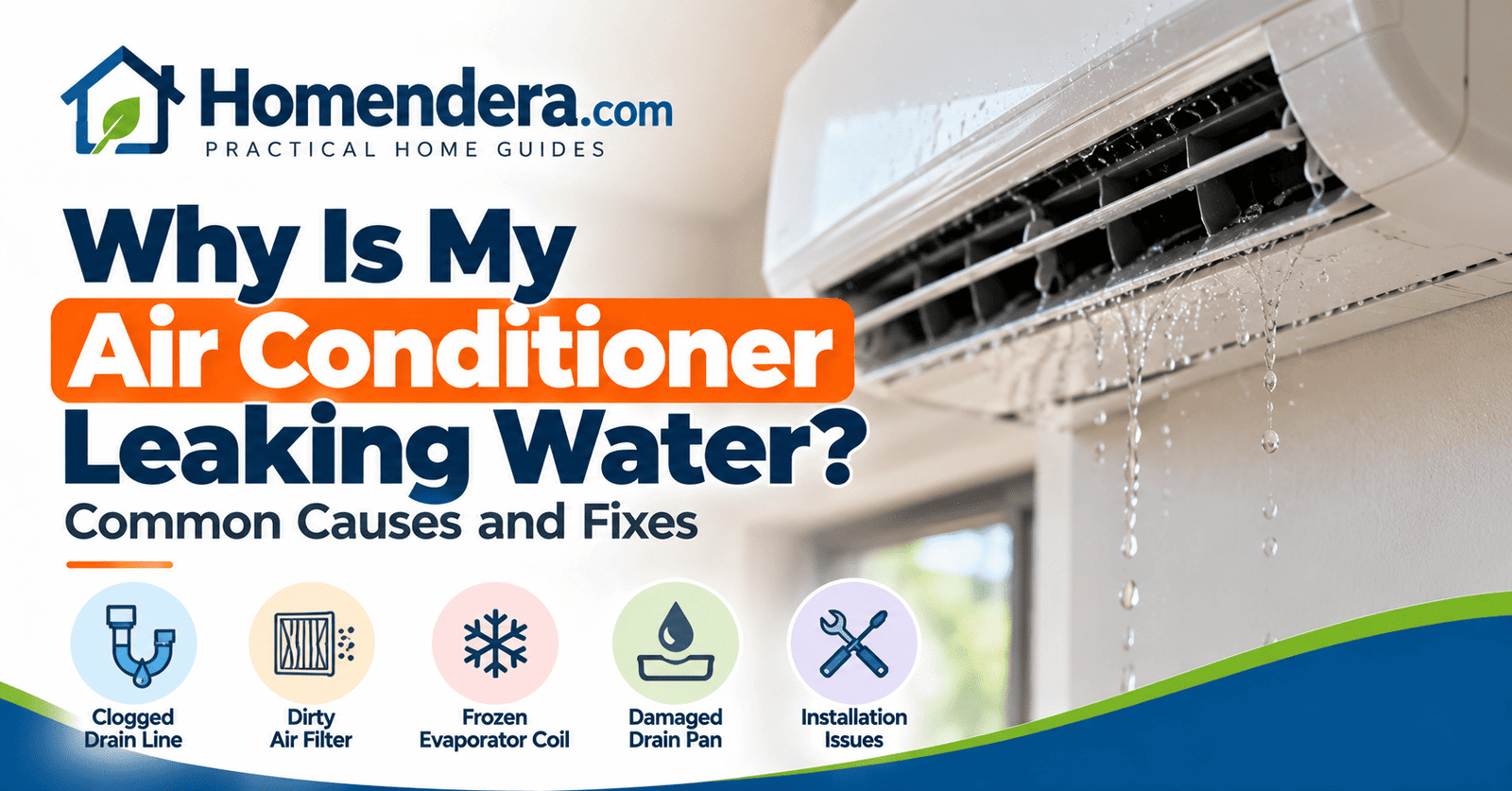
If you’re wondering why your air conditioner is leaking water, the problem may involve a clogged condensate drain, dirty air filter, frozen evaporator coil, or damaged drain pan. Some moisture around an air conditioner is normal, but water dripping indoors or collecting around the unit should not be ignored.
Air conditioners remove moisture from indoor air as they cool your home. Normally, this water flows into a drain pan and leaves through a condensate drainage system. However, when something interrupts that process, water can overflow or appear where it should not.
A small leak can damage ceilings, walls, flooring, and nearby electrical components. In addition, recurring moisture may encourage mold growth.
Fortunately, several warning signs can help you identify the likely cause before the damage becomes worse.
This guide explains why air conditioners leak water, what you can safely check, how common problems are repaired, and when professional HVAC service is necessary.
Is It Normal for an Air Conditioner to Drip Water?
Air conditioners produce condensation during normal cooling.
However, whether dripping water is normal depends on the type of system and where the water appears.
For example:
- Central air conditioners: Condensation normally drains through a designated pipe or drainage system.
- Window air conditioners: Some water may collect inside the outdoor-facing base and drain outside, depending on the model.
- Mini-split air conditioners: Indoor condensation should normally leave through a properly installed drain line.
- Portable air conditioners: Some models collect water in a tank, while others evaporate or drain condensation automatically.
Water dripping from an intended outdoor drainage point may be normal.
However, water leaking from an indoor unit, dripping through a ceiling, or pooling around electrical equipment is not normal.
The first step is to identify exactly where the water is coming from.
What to Do First When Your AC Is Leaking Water
If you notice water leaking indoors, act promptly.
Step 1: Turn off the cooling system
Use the thermostat or normal operating controls to stop cooling.
This can help prevent additional condensation while you investigate.
If water is near electrical wiring, outlets, or equipment, do not touch wet electrical components or operate nearby switches. Keep away from the affected area and arrange qualified assistance.
Step 2: Protect the surrounding area
If it is safe to do so, place a container beneath a small drip.
Move furniture and other belongings away from the water.
Use towels to absorb minor moisture on accessible surfaces.
Do not stand beneath a sagging or water-damaged ceiling.
Step 3: Look for the source
Check whether the water appears near:
- The indoor air handler
- A ceiling vent
- A wall-mounted indoor unit
- The condensate drain line
- A window air conditioner
- The outdoor unit
The location can provide important clues.
Step 4: Avoid restarting the system repeatedly
If the unit continues leaking, do not keep switching it on to see whether the problem disappears.
A blocked drain or frozen coil may cause further leakage.
Step 5: Contact a technician when necessary
Persistent leaks, electrical hazards, frozen coils, and damaged components may require professional service.
1. A Clogged Condensate Drain Line
A blocked condensate drain is a common cause of water leaking from indoor air-conditioning equipment.
As the evaporator coil removes moisture from the air, condensation collects in a drain pan.
The water then flows through a condensate drain line.
However, algae, slime, dust, or other debris can gradually restrict the pipe.
When the water cannot drain properly, it may back up and overflow.
Signs of a clogged condensate drain
- Water pooling around the indoor unit
- Dripping near the air handler
- A full or overflowing drain pan
- A musty smell near the equipment
- Repeated water leakage during cooling
- An AC system that shuts off because of a condensate safety switch
How is it fixed?
The drain line must be inspected and cleared using a method suitable for the system.
Some installations have accessible cleanout openings. However, not every drain arrangement is designed for homeowner servicing.
Avoid pouring random chemicals into the pipe or disconnecting unfamiliar fittings.
A qualified HVAC technician can clear the blockage, inspect the drain pan, and confirm that water flows correctly.
2. A Dirty Air Filter
A dirty air filter can restrict airflow through the air-conditioning system.
When airflow becomes too low, the evaporator coil may become excessively cold.
In some cases, ice forms on the coil.
When the ice melts, the resulting water may exceed the drainage system’s capacity or escape from an unexpected location.
Signs of a dirty filter
- Reduced airflow from vents
- Poor cooling performance
- Dust buildup around the filter
- Ice on accessible refrigerant lines
- Water leaking after the system has been running
- Longer cooling cycles
What should you do?
Turn off cooling if the system is leaking or appears frozen.
Check the air filter only if it is safely accessible.
If the filter is dirty, replace or clean it according to the manufacturer’s instructions.
Use the correct filter size and specification for your system.
Our guide on how to change an HVAC air filter explains the basic maintenance process.
However, changing the filter may not resolve a coil that has already frozen or a separate refrigerant-related problem.
If icing or leakage continues, arrange professional inspection.
3. A Frozen Evaporator Coil
The evaporator coil absorbs heat from indoor air.
Under normal conditions, it becomes cold enough to remove heat and moisture without accumulating significant ice.
However, certain problems can cause the coil to freeze.
Possible causes include:
- Restricted airflow
- A dirty air filter
- Blower or fan problems
- A dirty evaporator coil
- Refrigerant system problems
- Other airflow restrictions
As the ice melts, excess water may collect in the drain pan or leak from the unit.
Signs of a frozen coil
- Ice visible on accessible cooling components
- Weak airflow
- Reduced cooling
- Water leaking after the system stops
- Unusually long cooling cycles
What should you do?
Turn off cooling and avoid forcing ice off the coil.
Do not use sharp tools, hair dryers, or other direct heat sources to remove ice.
If safe and consistent with the manufacturer’s instructions, allow the system to thaw naturally.
Because refrigerant and electrical problems can contribute to freezing, persistent icing should be investigated by a qualified HVAC technician.
Our article on why your AC is running but not cooling covers additional cooling-related problems.
4. A Cracked or Damaged Drain Pan
The condensate drain pan collects water beneath the evaporator coil.
Over time, some pans can develop cracks, corrosion, or other damage.
If the pan cannot hold water properly, condensation may escape before reaching the drain.
Warning signs
- Water dripping from the bottom of the indoor unit
- Visible corrosion around an accessible drain pan
- Repeated leakage despite a clear drain
- Water collecting beneath the air handler
- Damage to surrounding materials
How is it repaired?
The damaged pan may need repair or replacement, depending on the equipment design and manufacturer guidance.
Some pans are difficult to access because they are integrated into the air-conditioning unit.
Do not dismantle the air handler to reach a concealed drain pan.
Professional service is generally the safer option.
5. A Disconnected or Damaged Drain Pipe
Condensate drain pipes can become loose, cracked, damaged, or improperly connected.
If water escapes from a joint, it may appear that the air conditioner itself is leaking.
Possible signs
- Water dripping from a visible drain connection
- Moisture beneath a pipe joint
- Water stains around the air handler
- Leakage beginning after HVAC maintenance or installation
What should you check?
Look at accessible drain piping without moving or disconnecting it.
If you notice a visibly separated joint or damaged pipe, stop operating the leaking system and arrange appropriate repairs.
The drainage system should be checked for proper routing, support, and flow.
6. A Condensate Pump Problem
Some air conditioners use a condensate pump when gravity drainage is not practical.
The pump moves collected water to an appropriate discharge point.
If it stops working, the reservoir may fill and overflow.
Signs of a pump problem
- Water collecting around the pump
- A full condensate reservoir
- An AC shutdown associated with a safety switch
- Repeated leakage when cooling operates
- Unusual pump noises
Possible causes
- Electrical failure
- A blocked discharge line
- A stuck float mechanism
- A failed pump motor
- Improper installation
What should you do?
Turn off the cooling system if water is overflowing.
Do not open electrical components or bypass the pump’s safety controls.
A technician can test the pump and determine whether cleaning, repair, or replacement is necessary.
7. Poor Air Conditioner Installation
An incorrectly installed air conditioner may have difficulty draining condensation.
Potential problems include:
- Improper condensate drain slope
- Incorrect drain connections
- Inadequate support
- Improper equipment positioning
- Missing required drainage components
- Poorly routed drain hoses
Signs of installation-related leakage
- The problem started soon after installation.
- Water has leaked since the unit was new.
- Leakage occurs despite normal cooling.
- Drainage appears inconsistent.
- The indoor unit is visibly out of position.
What should you do?
Contact the original installer if the problem began after installation or servicing.
Do not attempt to reposition heavy air-conditioning equipment yourself.
The technician should confirm that the system follows manufacturer requirements and applicable installation standards.
8. Why Is My Central Air Conditioner Leaking Water Inside?
Central air-conditioning systems often have an indoor air handler or evaporator coil located in a closet, basement, utility room, or attic.
Condensation should drain away through the designated system.
If water appears around the indoor equipment, possible causes include:
- A clogged condensate line
- A damaged primary drain pan
- A blocked secondary drain
- A frozen evaporator coil
- A failed condensate pump
- An installation problem
What should you do?
Turn off cooling if water is escaping indoors.
Check for visible moisture around accessible components.
If the air handler is in an attic, pay attention to ceiling stains or dripping water below it.
Do not enter an unsafe attic or step on unsupported ceiling materials.
Professional inspection may be necessary to prevent structural damage.
9. Why Is My Window Air Conditioner Leaking Water?
Window air conditioners manage condensation differently from many central systems.
Some models are designed to retain a small amount of water in the outdoor-facing base.
This water may help with normal operation before draining or evaporating.
However, water leaking into the room is a warning sign.
Possible causes
- Incorrect installation angle
- Blocked drainage pathways
- Excessive dirt buildup
- Damaged seals or housing
- A frozen cooling coil
- Improper installation
What should you do?
Turn off the unit if water is entering the room.
Check the manufacturer’s instructions for the required installation position.
Do not drill additional drain holes or change the unit’s tilt without manufacturer approval.
Window units are heavy and can fall if handled incorrectly.
If the installation needs adjustment, seek appropriate assistance.
10. Why Is My Mini-Split Air Conditioner Dripping Water Indoors?
Ductless mini-split systems have wall-mounted or ceiling-mounted indoor units.
These units collect condensation and normally send it outside through a drain hose or suitable condensate system.
If water drips from the indoor unit, drainage may be restricted.
Common causes
- A blocked drain hose
- Incorrect hose slope
- A damaged drain pan
- A disconnected drain connection
- A frozen indoor coil
- Improper installation
Warning signs
- Water dripping from the wall unit
- Stains beneath the unit
- Musty odors
- Leakage during long cooling cycles
- Reduced cooling performance
What should you do?
Stop cooling and protect the wall and floor from further moisture.
Check for visible leaks without opening the unit.
Do not pull the indoor unit away from the wall or disconnect refrigerant lines.
A qualified technician can inspect the condensate system and correct the problem.
11. Why Is My Portable Air Conditioner Leaking Water?
Portable air conditioners may collect condensation in an internal reservoir or remove it through a drain hose.
Some models use self-evaporating designs that reduce the need for manual draining.
However, leaks can occur if the water management system is not working correctly.
Possible causes
- A full collection tank
- A loose drain cap
- A disconnected drain hose
- An incorrectly positioned unit
- A blocked drainage outlet
- A damaged reservoir
What should you do?
Turn off and unplug the unit only if the plug and surrounding area are dry and safe to access.
Follow the manufacturer’s instructions for emptying the tank and checking drainage components.
Keep the unit positioned according to its operating requirements.
If leakage continues, discontinue use and seek servicing.
12. Why Is My Air Conditioner Leaking Water From the Ceiling?
Water dripping from a ceiling near an air-conditioning system deserves immediate attention.
In homes with attic-mounted air handlers, condensation can escape from a blocked drain, damaged pan, or other component.
Water may then travel across building materials before becoming visible indoors.
Warning signs
- Brown or yellow ceiling stains
- Peeling paint
- Damp drywall
- Water dripping near ceiling vents
- A sagging ceiling
- Musty odors
What should you do?
Turn off the cooling system if you suspect it is the source.
Keep people away from wet electrical fixtures and sagging ceiling sections.
Do not puncture or press on a water-damaged ceiling.
Contact an HVAC technician and arrange appropriate building repairs when necessary.
Also remember that roof leaks and plumbing leaks can produce similar symptoms.
Our guide on how to inspect your home for water damage explains additional warning signs.
13. Why Is My AC Leaking Water but Still Cooling?
An air conditioner can continue cooling even when its condensate drainage system is blocked or damaged.
For example, the evaporator coil may still remove heat from the air while water collects in the wrong location.
Possible causes include:
- A clogged drain
- A cracked drain pan
- A loose drain connection
- An overflowing condensate pump
- An installation-related drainage problem
Should you keep running it?
No. If water is leaking indoors, stop cooling until the cause is identified.
Continued operation may increase water damage, even if the room remains comfortable.
14. Why Is My AC Leaking Water After I Turn It Off?
Water may continue dripping after cooling stops.
This can happen because condensation remains on the evaporator coil and other cold surfaces.
If the drainage system is restricted, that remaining water may continue overflowing.
Another possibility is melting ice from a previously frozen coil.
What should you check?
Notice whether the system had weak airflow or poor cooling before the leak.
Look for accessible signs of icing or a blocked drain.
Do not restart the unit repeatedly.
If the leakage continues or the cause is unclear, arrange professional service.
15. Why Is My AC Leaking Water Only on Hot Days?
Air conditioners often remove more moisture when indoor humidity is high.
During humid weather, the system may produce a larger amount of condensation.
Normally, the drain should handle this water.
However, a partial blockage or marginal drainage problem may become more noticeable when condensate production increases.
Possible causes
- A partially restricted drain
- A condensate pump that cannot operate correctly
- Drainage installation problems
- High indoor humidity
- A frozen coil that later thaws
What should you do?
Do not assume that an indoor leak is normal simply because the weather is hot.
Inspect the visible symptoms and arrange repairs if water is escaping from the intended drainage system.
16. Why Is Water Dripping From My Outdoor AC Unit?
Water around outdoor equipment does not always indicate a fault.
The explanation depends on the type of system and operating mode.
For example, a heat pump operating in heating mode may produce water outdoors during a defrost cycle.
Condensate from an indoor air-conditioning system may also discharge at an outdoor drain termination.
However, an outdoor unit that produces unexpected water, unusual noises, or poor performance may need inspection.
What should you do?
Identify whether the water is coming from an intended drain outlet, the equipment cabinet, or another nearby source.
Do not open electrical panels or attempt refrigerant repairs.
If the leak is unusual or accompanied by performance problems, consult an HVAC professional.
17. Can Low Refrigerant Cause an AC Water Leak?
Low refrigerant can sometimes contribute indirectly to water leakage.
Under certain operating conditions, refrigerant problems can cause the evaporator coil to freeze.
When the ice melts, water may overflow or escape from the normal drainage path.
However, low refrigerant is not the only reason a coil freezes.
Restricted airflow and other mechanical problems can produce similar symptoms.
Important safety advice
Do not attempt to add refrigerant yourself.
Refrigerant handling requires appropriate equipment, training, and compliance with local regulations.
A technician should diagnose the underlying problem, identify any leaks, and repair the system as appropriate.
18. Can a Dirty Evaporator Coil Cause Water Leakage?
A dirty evaporator coil can interfere with normal heat transfer and airflow.
Depending on the condition of the system, this may contribute to icing or abnormal condensate drainage.
Possible warning signs
- Reduced cooling
- Poor airflow
- Unusual odors
- Visible dirt on accessible components
- Ice formation
- Recurring water leakage
What should you do?
Maintain the air filter according to the manufacturer’s recommendations.
Avoid spraying household cleaning chemicals onto concealed cooling components.
Professional coil cleaning may be necessary if buildup is significant.
19. Can High Indoor Humidity Make an AC Leak Worse?
High indoor humidity increases the amount of moisture an air conditioner may remove from the air.
This produces more condensation.
A properly functioning drainage system should manage the water generated during normal operation.
However, high humidity can make an existing drainage restriction more noticeable.
What can help?
- Use bathroom exhaust fans during showers.
- Address indoor moisture sources.
- Repair plumbing leaks.
- Keep doors and windows closed when appropriate during cooling.
- Maintain the air-conditioning system.
- Investigate unusually high humidity.
If your home regularly feels damp, our guide on signs of excess moisture in a home explains what to watch for.
20. Can I Fix an Air Conditioner Water Leak Myself?
Some checks are appropriate for homeowners, while others require professional service.
Homeowner checks that may be appropriate
- Turn off cooling.
- Identify the location of the leak.
- Protect nearby belongings from water.
- Inspect an accessible air filter.
- Replace a dirty filter according to instructions.
- Check a portable AC’s collection tank.
- Look for visible moisture around accessible drain components.
- Record when the leakage occurs.
Repairs better left to professionals
- Clearing inaccessible condensate lines
- Repairing or replacing drain pans
- Servicing condensate pumps
- Investigating frozen coils
- Diagnosing refrigerant problems
- Correcting installation defects
- Opening electrical compartments
- Repairing concealed drainage connections
Never bypass a condensate safety switch simply to keep the system running.
21. When Should You Call an HVAC Technician?
Arrange professional service when:
- Water repeatedly leaks indoors.
- The condensate drain appears blocked.
- The evaporator coil freezes.
- The drain pan is damaged.
- The condensate pump fails.
- Water is dripping through the ceiling.
- The air conditioner stops cooling properly.
- You notice electrical hazards.
- The system leaks after installation.
- The problem returns after basic maintenance.
- You suspect refrigerant or mechanical problems.
Seek urgent assistance if water is near electrical equipment or the ceiling shows signs of structural damage.
A qualified technician can inspect the condensate system, airflow, and cooling components to identify the underlying cause.
22. How to Prevent Air Conditioner Water Leaks
Regular maintenance can reduce the likelihood of avoidable condensate problems.
Replace or clean the air filter
Follow the manufacturer’s recommended schedule.
A clean filter supports normal airflow and reduces the risk of certain freezing problems.
Schedule HVAC maintenance
Professional maintenance can include checking the condensate drain, drain pan, airflow, and cooling performance.
Our HVAC maintenance checklist explains the main areas homeowners should monitor.
Watch for early signs of drainage problems
Look for unexpected moisture around indoor equipment.
Pay attention to musty odors, recurring shutdowns, or water stains.
Keep accessible drainage areas clear
Do not place stored items where they could damage visible condensate piping.
Avoid disturbing drain connections.
Investigate weak airflow
Reduced airflow may indicate a dirty filter or another problem that needs attention.
Address leaks early
A small drip can become a larger repair problem if water continues reaching drywall, wood, or electrical components.
Common Mistakes to Avoid
When an air conditioner leaks water, avoid these mistakes:
- Continuing to run the system despite an indoor leak
- Ignoring water stains around the air handler
- Restarting a frozen system repeatedly
- Breaking ice off an evaporator coil
- Pouring harsh chemicals into an unfamiliar drain
- Opening electrical compartments
- Bypassing condensate safety switches
- Drilling new drainage holes in a window AC
- Attempting refrigerant repairs without proper training
- Ignoring ceiling moisture or structural damage
A careful diagnosis is more useful than guessing which part needs replacement.
Frequently Asked Questions
Why Is My Air Conditioner Leaking Water Inside the House?
Common causes include a clogged condensate drain, frozen evaporator coil, damaged drain pan, failed condensate pump, or drainage installation problem.
Should I Turn Off My AC If It Is Leaking Water?
Yes. If water is leaking indoors, turn off cooling using safe operating controls and investigate the cause. Avoid electrical equipment in wet areas.
Can a Dirty Air Filter Cause an AC Water Leak?
Yes. A severely restricted filter can contribute to coil freezing. When the ice melts, water may overflow or leak.
Why Is My AC Leaking Water but Still Cooling?
The cooling system may still operate while the condensate drainage system is blocked or damaged.
Is Water Dripping Outside From an AC Normal?
It can be normal when water leaves through an intended drainage outlet. The answer depends on the equipment type and operating mode.
Why Does My AC Leak Water After Turning It Off?
Remaining condensation or melting ice may continue producing water after cooling stops.
Can Low Refrigerant Cause Water Leakage?
It can contribute indirectly by causing certain systems to freeze, but other problems can produce similar symptoms.
How Do I Stop My Air Conditioner From Leaking Water?
Turn off cooling, identify where the water appears, check accessible filters and drainage components, and arrange professional service if the cause is not safely identifiable.
Is an AC Water Leak an Emergency?
It may be urgent if water is near electrical equipment, leaking through a damaged ceiling, or causing significant property damage.
Final Thoughts
An air conditioner leaking water may have a simple maintenance-related cause, but it can also indicate a drainage, airflow, or equipment problem.
Start by identifying where the water appears and turning off cooling if the leak is indoors.
A dirty filter, clogged condensate line, or frozen coil may explain the problem. However, damaged drain pans, condensate pumps, and installation issues often require professional attention.
Most importantly, do not ignore persistent water leakage. Early action can help protect your home from moisture damage and prevent more expensive repairs.
For more practical cooling advice, explore our guides on AC running but not cooling, how to change an HVAC air filter, and HVAC maintenance.