
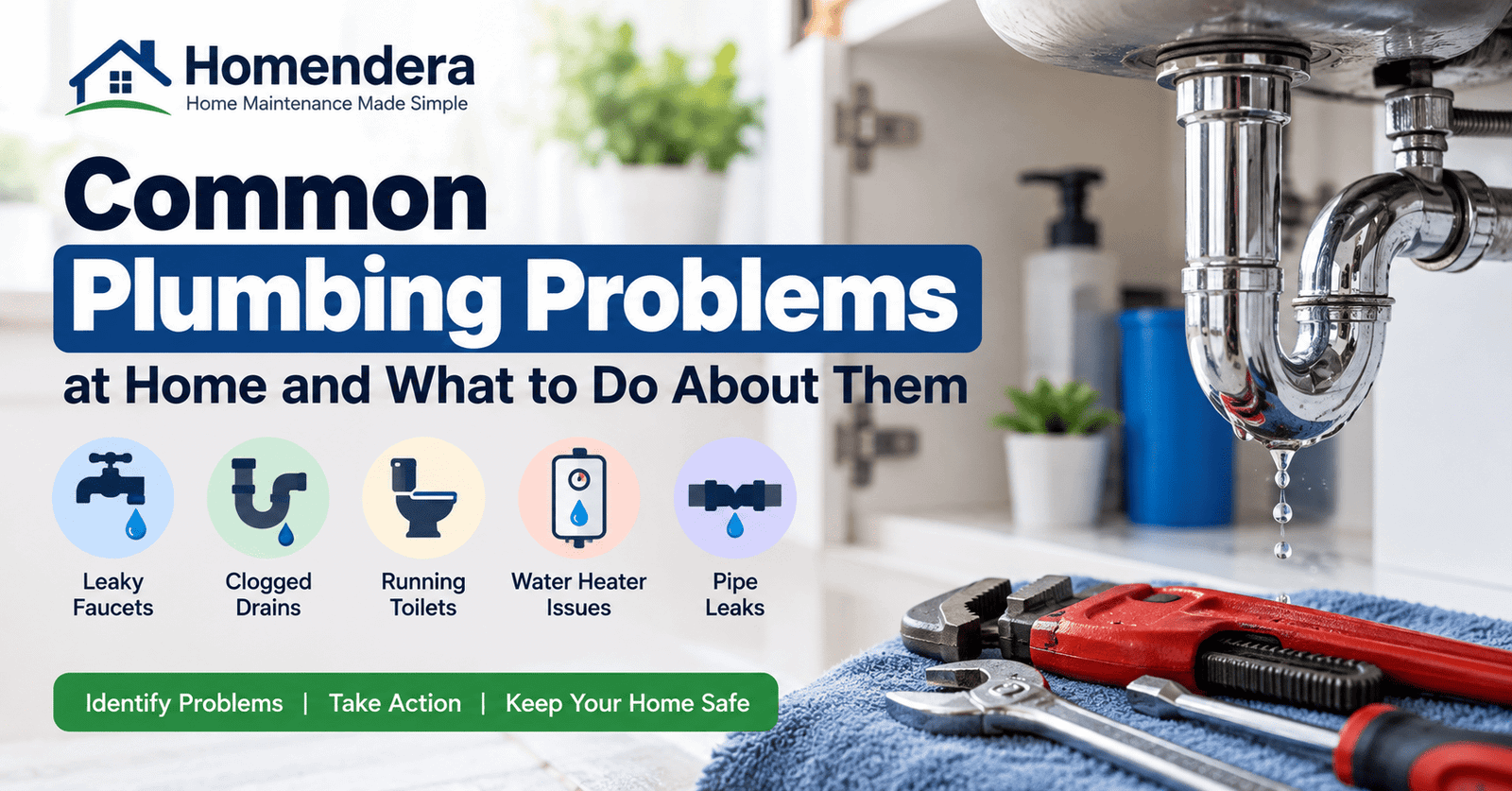
Plumbing problems can range from a slightly annoying dripping faucet to a hidden leak that damages walls, floors, or cabinets. Some problems are easy to investigate, while others need quick attention from a plumber.
Learning to recognize common plumbing problems can help you respond before a small issue becomes more expensive. You do not need to become a plumbing expert. Instead, focus on spotting warning signs, checking simple causes, and knowing when to stop troubleshooting.
This guide covers common household plumbing issues and practical steps you can take when you notice them.
1. Dripping Faucets
A faucet that drips occasionally may not seem serious. However, a continuous drip wastes water and can indicate worn or damaged internal components.
Common causes include:
- Worn washers or seals
- Damaged cartridges
- Loose components
- Mineral buildup
- High water pressure
- Aging faucet parts
First, determine whether the water is coming from the spout, handle, or around the base of the faucet.
If the problem involves a replaceable washer or cartridge, a straightforward repair may solve it. The exact procedure depends on the faucet design.
Always shut off the water supply before dismantling a faucet.
We will cover this repair in more detail in our guide on how to fix a dripping faucet.
2. Slow-Draining Sinks
A sink that drains slowly usually indicates a partial blockage somewhere in the drain system.
Bathroom sinks often collect:
- Hair
- Soap residue
- Toothpaste
- Cosmetic products
- General debris
Kitchen sinks may develop buildup from grease, food particles, and other residue.
Start by checking the visible drain opening and removable stopper. Cleaning these areas may restore normal drainage.
Avoid immediately reaching for aggressive chemical drain cleaners. Some products can be hazardous to handle and may not address the underlying problem.
If several fixtures begin draining slowly at the same time, the problem may be deeper in the drainage system.
For step-by-step troubleshooting, see our guide on how to unclog a slow-draining sink safely.
3. Clogged Drains
A completely clogged drain needs more attention than one that simply drains slowly.
Standing water is an obvious sign. You may also notice gurgling sounds or unpleasant odors before the drain stops working altogether.
A plunger or suitable drain-cleaning tool may clear a simple local blockage. Use tools designed for the particular fixture and follow their instructions.
Repeated clogs deserve further investigation. Continually clearing the same drain without finding the cause can allow a larger problem to continue unnoticed.
Unpleasant odors can also point to buildup, a dry P-trap, or another drainage issue, so check why your sink smells if the problem continues even when water still drains.
An unpleasant smell from a shower drain may come from soap buildup, a dry trap, or a plumbing vent problem. Read our guide on shower drain odors and their causes for practical troubleshooting advice.
4. Running Toilets
A toilet that continues running after flushing can waste a significant amount of water.
The problem often occurs inside the tank. Possible causes include:
- A poorly sealing flapper
- Incorrect float adjustment
- A faulty fill valve
- Problems with the flush mechanism
- A chain that is too tight or loose
Remove the tank lid carefully and observe what happens after flushing.
You can often identify whether water continues entering the tank or escaping into the bowl.
Avoid forcing plastic components. Many toilet tank parts can become brittle as they age.
If the tank continues refilling or you hear water running long after flushing, see why your toilet keeps running for a step-by-step look at the flapper, float, fill valve, and other common causes.
Similarly, If your toilet makes a hissing sound after flushing or starts hissing when nobody is using it, see our guide on toilet hissing noises for common causes and safe troubleshooting steps.
5. Toilets That Frequently Clog
An occasional toilet clog can happen in almost any home. Frequent clogs are different.
Too much toilet paper, unsuitable items, or a partial obstruction may be responsible.
Use a toilet plunger designed to create a good seal around the outlet. Give the blockage time to clear rather than repeatedly flushing a full bowl.
Never continue flushing when the water level is rising. Doing so can cause the toilet to overflow.
Persistent or multiple toilet problems may require professional inspection.
6. Low Water Pressure
Weak flow from a faucet or shower can have several possible causes.
Before assuming that the whole plumbing system has a problem, determine where the pressure is low.
Ask:
- Is only one faucet affected?
- Is the shower affected?
- Is the problem present with both hot and cold water?
- Does the entire house have weak flow?
- Did the change happen suddenly?
A clogged faucet aerator or showerhead can restrict flow at a single fixture. Cleaning mineral deposits may solve that type of problem.
Whole-house pressure changes deserve more careful investigation.
Our separate guide on why water pressure is low will examine these causes in greater detail.
Shower pressure problems may come from mineral buildup, faulty valves, or restrictions in the plumbing system. Our guide to fixing low shower water pressure explains what to check before replacing fixtures.
7. Leaking Pipes
Not every pipe leak produces a dramatic spray of water. Small leaks can develop around joints, fittings, valves, or damaged sections of pipe.
Look for:
- Water droplets
- Damp surfaces
- Corrosion
- Discoloration
- Musty odors
- Swollen cabinets
- Peeling paint
- Unexplained moisture
Do not ignore a small leak simply because you can place a container underneath it.
Water can travel along pipes and building materials, which means the visible wet area may not be the actual source.
Our guide to inspecting your home for water damage explains other warning signs worth checking.
8. Hidden Water Leaks
Some leaks occur behind walls, beneath floors, or in other concealed areas.
Possible warning signs include unexplained water stains, damp smells, damaged flooring, persistent moisture, or an unexpected increase in water use.
When you suspect a leak, start by checking accessible plumbing fixtures and supply connections.
You can also observe your water meter when no water should be running in the home. Continued meter activity can be one clue that water is being used somewhere, although it does not by itself identify the source.
Our guide on how to find a water leak in your home will cover this process step by step.
9. Leaks Under the Sink
The cabinet beneath a sink deserves regular inspection because small leaks can remain unnoticed there.
Check around:
- Supply lines
- Shutoff valves
- Drain connections
- Trap fittings
- Faucet connections
- The bottom of the sink
Run the faucet while watching the plumbing underneath.
Use a dry tissue or paper towel around suspicious connections. Even a small amount of moisture can become easier to detect this way.
Dry the cabinet after testing so that future moisture is easier to identify.
10. Faucet Leaks Around the Base
Water around a faucet does not necessarily mean that the supply pipe is leaking.
Sometimes water escapes around the faucet body only while it is being used. Worn seals, loose fittings, or deterioration around the fixture may be responsible.
Dry the entire area first. Then operate the faucet and watch carefully to see where the moisture first appears.
Finding the source before attempting a repair can prevent unnecessary disassembly.
11. Leaking Toilet Bases
Water around the base of a toilet needs attention.
First, determine whether the moisture actually comes from beneath the toilet. Condensation, nearby splashes, or a leaking supply connection can sometimes create a similar appearance.
Dry the area completely and observe it again.
If water repeatedly appears around the base after flushing, stop treating it as a minor surface problem. A failed seal or another plumbing issue may require the toilet to be removed and correctly reseated.
Professional help is sensible if you are not experienced with this type of repair.
Water around the bottom of a toilet can indicate a damaged seal, loose mounting hardware, or a leak from another connection. Our guide to why a toilet leaks at the base explains what homeowners should check and when professional repair is necessary.
12. Noisy Pipes
Plumbing systems can make different sounds, and the type of sound matters.
You might hear:
- Banging
- Rattling
- Whistling
- Humming
- Gurgling
Loose pipes can sometimes rattle when water flows. Sudden banging after a valve closes may have a different cause.
Gurgling from drains can point toward drainage or venting problems.
Instead of trying random repairs, note when the noise occurs and which fixtures are operating at the time. This information can make diagnosis easier.
Unusual bubbling or gulping noises from a kitchen sink can indicate a developing blockage or a plumbing vent problem. Our guide on why your kitchen sink is gurgling explains common causes and safe troubleshooting steps.
13. Water Temperature Problems
If hot water suddenly becomes unreliable, the problem may involve the water heater rather than the faucet itself.
Possible symptoms include:
- No hot water
- Water that is not hot enough
- Fluctuating temperature
- Unusual noises from the heater
- Water around the unit
Homeowners can safely perform basic observations, such as checking for visible leaks or obvious control settings.
However, water heaters involve very hot water and may use electricity or gas. Avoid opening electrical compartments, altering gas components, or attempting technical repairs without appropriate expertise.
14. Leaking Water Heaters
Water near a water heater should never be ignored.
Before assuming that the tank itself has failed, check whether the moisture appears to come from an accessible pipe connection or another nearby source.
Do not dismantle the heater to investigate.
A leaking tank, unsafe pressure condition, electrical issue, or gas-related problem requires appropriate professional attention.
If water is spreading toward electrical equipment, avoid entering the wet area if doing so could expose you to electrical danger.
15. Sewer or Drain Odors
Persistent drain odors can indicate several different problems.
Sometimes a rarely used drain has a dry trap. In other situations, buildup, damaged plumbing, or drainage and venting problems may be involved.
If the smell comes from a fixture that has not been used for a long time, running water may restore water in the trap.
Strong or persistent sewage odors should not simply be covered with air freshener. Investigate the source and seek professional help if it continues.
16. Problems With Shutoff Valves
Every homeowner should know where important water shutoff valves are located.
Individual fixtures commonly have local shutoff valves. Homes also usually have a main water shutoff.
Do not wait for a major leak to begin searching for them.
As part of your regular home maintenance checklist, identify accessible shutoff points and make sure household members know where the main valve is located.
Old or corroded valves may not operate correctly. Avoid applying excessive force to a valve that appears seized or damaged.
17. Signs of Plumbing Problems Behind Walls
Plumbing problems sometimes reveal themselves through changes in surrounding building materials.
Watch for:
- Bubbling paint
- Soft drywall
- New stains
- Warped trim
- Damp flooring
- Persistent musty smells
- Unexplained mold-like growth
These symptoms deserve investigation even when you cannot see dripping water.
Our guide on how to inspect your home for water damage can help you examine the surrounding areas systematically.
What to Do When You Discover a Plumbing Leak
The first priority is limiting additional damage.
If it is safe and you know which valve controls the affected fixture, shut off its water supply. For a substantial uncontrolled leak, the main water supply may need to be shut off.
Move belongings away from spreading water where this can be done safely.
Next, identify the apparent source without dismantling systems beyond your ability. Take photographs if damage has occurred, especially before cleanup or professional repairs.
Water near electrical outlets, wiring, appliances, or electrical panels creates an additional hazard. Do not stand in water or handle electrical equipment in a wet area.
Which Plumbing Problems Can You Handle Yourself?
Simple maintenance and minor repairs can often be reasonable DIY projects.
Examples may include cleaning an aerator, removing accessible debris from a drain stopper, tightening a loose toilet seat, or replacing certain straightforward fixture components according to manufacturer instructions.
However, the size of a repair does not always indicate its risk.
Stop and consider professional help when a project involves concealed pipes, persistent leaks, sewer lines, major drainage problems, water heaters, extensive water damage, or work beyond your experience.
Our guide to DIY vs professional repair provides a broader framework for deciding when a home repair is suitable for you.
Preventing Common Plumbing Problems
Regular inspection is often easier than dealing with an emergency.
Check beneath sinks, around toilets, near appliances, and around accessible plumbing connections. Watch for new stains, corrosion, moisture, or changes in water pressure.
Keep drains free from inappropriate materials and avoid treating toilets as general waste disposal.
Monthly checks can catch developing problems surprisingly early. Our monthly home maintenance checklist includes plumbing along with other important areas of the home.
Final Thoughts
Common plumbing problems are easier to manage when you recognize their warning signs early. A dripping faucet, slow drain, running toilet, or small leak may seem minor, but persistent problems deserve attention.
Start with simple observations and safe checks. Find the source before attempting a repair, and avoid turning a small issue into a larger one through unnecessary dismantling.
Most importantly, know your limits. Basic maintenance can prevent many problems, while a qualified plumber is the better choice when a repair involves significant leakage, concealed plumbing, drainage systems, water heaters, or other work beyond your experience.