
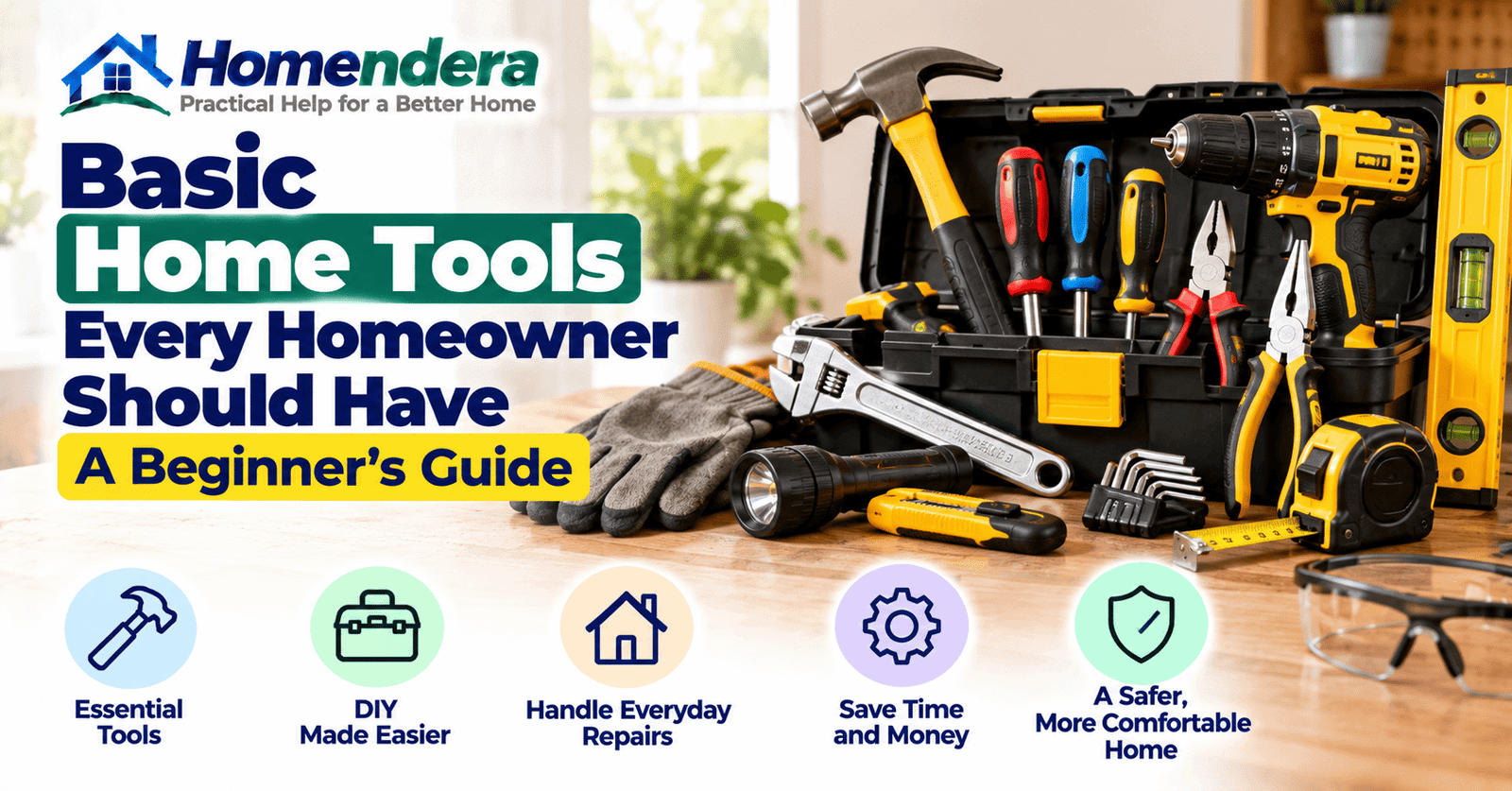
You do not need a workshop full of expensive equipment to handle everyday home maintenance. A small collection of reliable tools can help you tighten loose screws, assemble furniture, measure spaces, hang lightweight decorations, and complete other simple household tasks.
However, choosing the right tools can be confusing, especially for first-time homeowners. Hardware stores offer countless options, and not every tool is necessary for basic home repairs.
The good news is that you can start with a few essentials and expand your collection as your needs change.
This guide explains the basic home tools every homeowner should have, what each tool does, how to choose suitable equipment, and how to build a practical home toolkit without unnecessary spending.
Why Every Homeowner Needs a Basic Toolkit
Small maintenance problems can appear unexpectedly.
A cabinet handle may loosen, a door hinge may start squeaking, or a piece of furniture may need adjustment. Having the right tools nearby makes these tasks easier to manage.
A basic toolkit can help you:
- Handle minor household repairs.
- Assemble and adjust furniture.
- Measure spaces before buying new items.
- Inspect accessible fixtures.
- Complete simple home improvement projects.
- Perform routine maintenance.
- Avoid unnecessary purchases of specialized equipment.
Still, owning tools does not mean every repair is suitable for DIY.
Electrical wiring, gas systems, structural components, and other hazardous work may require qualified professionals.
For an introduction to manageable repairs, explore our guide on basic DIY home repairs every homeowner should know.
Essential Home Tools at a Glance
If you are building your first toolkit, start with these commonly useful items.
| Tool | Common Household Uses | Priority |
|---|---|---|
| Screwdriver set | Tightening and removing screws | Essential |
| Claw hammer | Driving and removing suitable nails | Essential |
| Tape measure | Measuring rooms, furniture, and fixtures | Essential |
| Adjustable wrench | Turning compatible nuts and bolts | Essential |
| Pliers | Gripping and holding small components | Essential |
| Hex key set | Furniture assembly and hardware adjustment | Essential |
| Utility knife | Cutting cardboard and suitable materials | Essential |
| Spirit level | Checking whether items are level | Essential |
| Flashlight | Inspecting poorly lit areas | Essential |
| Safety glasses | Protecting eyes during appropriate tasks | Essential |
| Work gloves | Protecting hands from suitable physical hazards | Recommended |
| Stud finder | Locating possible framing behind walls | Recommended |
| Putty knife | Applying filler and scraping suitable surfaces | Recommended |
| Caulking gun | Applying compatible sealant | Recommended |
| Cordless drill/driver | Drilling and driving screws | Optional |
| Tool storage box | Organizing and protecting equipment | Essential |
You do not need to purchase everything at once. Begin with the tools that match your most common household tasks.
1. Screwdriver Set
A screwdriver set is one of the most useful additions to any home toolkit.
Screws secure many everyday items, including cabinet handles, door hardware, furniture, and household accessories.
Common screwdriver types
Phillips screwdriver: Designed for cross-shaped screw heads.
Flat-head screwdriver: Used for compatible slotted screws.
Torx screwdriver: Fits star-shaped fasteners found in some furniture and hardware.
Other screw types also exist, so inspect the fastener before choosing a tool.
What to look for
Choose screwdrivers with comfortable handles and properly shaped tips.
A small set with several sizes is often more useful than one multipurpose screwdriver.
Avoid using an incorrectly sized screwdriver. It can damage the screw head and make removal more difficult.
Common uses
- Tightening cabinet handles
- Adjusting door hardware
- Assembling furniture
- Removing suitable access covers
- Installing small household accessories
If a door handle keeps wobbling, our guide on why your door handle is loose and how to fix it explains what to check before replacing the hardware.
A screwdriver is especially useful for cabinet maintenance. Our guide on how to fix a cabinet door that won’t close properly explains how to inspect loose hinges, check alignment, and identify damaged hardware.
2. Claw Hammer
A claw hammer is a familiar household tool.
One end drives suitable nails, while the curved claw can remove many common nails.
Common uses
- Installing suitable small nails
- Removing protruding nails
- Completing minor woodworking tasks
- Adjusting simple wooden fixtures
For general household use, a moderate-weight hammer with a comfortable, secure grip is usually sufficient.
Avoid using a hammer with a loose head or damaged handle.
Wear suitable eye protection when working with materials that may chip or produce flying fragments.
Also, never use a hammer to force components that require precise alignment.
3. Tape Measure
A tape measure helps prevent mistakes before they happen.
Whether you are buying curtains, arranging furniture, or planning storage, accurate measurements are essential.
Common uses
- Measuring room dimensions
- Checking furniture sizes
- Measuring shelves
- Planning curtain placement
- Checking door openings
- Measuring cabinet hardware
A retractable tape measure with clear markings is a practical choice.
Tips for accurate measurements
Start from the correct reference point and keep the tape straight.
Measure twice before cutting, drilling, or buying materials.
For larger spaces, ask someone to help hold the tape when necessary.
Record measurements immediately rather than relying on memory.
4. Adjustable Wrench
An adjustable wrench can turn nuts and bolts of different compatible sizes.
Its movable jaw makes it useful for occasional household adjustments.
Common uses
- Tightening accessible bolts
- Assembling furniture
- Adjusting suitable hardware
- Holding compatible nuts during minor repairs
Choose a wrench that fits comfortably in your hand.
Before applying force, adjust the jaws so they fit the fastener closely.
A loose fit can round the corners of a nut or bolt.
Do not use excessive force or extend the handle with another object.
For delicate plumbing fittings, specialized tools and proper techniques may be necessary to avoid damage.
5. Pliers
Pliers help you grip, bend, or hold suitable objects.
Different designs serve different purposes.
Common types
Slip-joint pliers: Useful for general gripping tasks.
Needle-nose pliers: Helpful for holding small components in narrow spaces.
Locking pliers: Designed to grip certain objects firmly.
Diagonal cutting pliers: Used for cutting suitable wire or similar materials.
A basic pair of slip-joint pliers and needle-nose pliers is often enough for beginners.
Never use ordinary pliers on energized electrical components.
Insulated-looking handles do not necessarily make a tool safe for electrical work.
6. Hex Key Set
Hex keys, sometimes called Allen keys, fit screws with hexagonal sockets.
They are common in flat-pack furniture, door handles, and other household hardware.
Common uses
- Assembling furniture
- Adjusting certain lever handles
- Tightening compatible fittings
- Maintaining selected household accessories
Choose a set containing several sizes.
Both metric and imperial sizes are available, and they are not always interchangeable.
Using the wrong size can damage the socket.
Keep the keys together in their holder so smaller pieces do not get lost.
7. Utility Knife
A utility knife can make clean cuts in suitable materials.
It is especially useful for opening packages and cutting cardboard.
Common uses
- Opening boxes
- Cutting cardboard
- Trimming certain lightweight materials
- Scoring suitable surfaces
Choose a knife with a secure blade-locking mechanism or a safe retractable design.
Always cut away from your body and keep your free hand outside the cutting path.
Use a stable cutting surface.
Retract or cover the blade immediately after use, and store the knife away from children.
Do not use a utility knife as a screwdriver or pry bar.
8. Spirit Level
A spirit level helps you determine whether a surface is horizontal or vertical.
It is useful when installing or arranging household items.
Common uses
- Checking shelves
- Aligning picture frames
- Positioning small fixtures
- Checking furniture placement
- Installing compatible wall-mounted accessories
A compact level is usually enough for simple household tasks.
However, a level does not confirm that a wall or fastener can safely support an object.
For heavier installations, use appropriate mounting hardware and follow the manufacturer’s instructions.
9. Flashlight or Rechargeable Work Light
Good lighting makes home inspections safer and more effective.
A flashlight helps you examine dark cabinets, utility spaces, and other poorly lit areas.
Common uses
- Looking beneath sinks
- Inspecting accessible corners
- Checking storage spaces
- Finding dropped screws
- Examining visible water stains
- Providing light during power interruptions
A rechargeable flashlight can be convenient, but a battery-powered backup may also be useful.
Choose a light that is comfortable to hold and bright enough for ordinary inspections.
Do not enter confined spaces or potentially hazardous areas simply because you have a flashlight.
If you suspect a gas leak, avoid operating electrical devices or switches in the affected area. Leave the area and follow local emergency guidance.
10. Safety Glasses
Eye protection is an important part of a basic toolkit.
Even small DIY tasks can produce dust, chips, or flying particles.
Safety glasses may be appropriate when:
- Hammering
- Drilling
- Scraping suitable surfaces
- Cutting certain materials
- Working with small fasteners under tension
Choose protective eyewear suitable for the task and meeting applicable safety standards.
Ordinary prescription glasses are not necessarily a substitute for safety-rated eyewear.
For tasks involving hazardous dust or chemicals, additional protective equipment and specialized procedures may be necessary.
11. Work Gloves
Work gloves can help protect your hands from certain cuts, abrasions, and rough surfaces.
They may be useful when moving materials, handling suitable tools, or performing general cleanup.
However, one glove type is not suitable for every job.
For example, gloves that protect against rough materials may not provide chemical protection.
Loose gloves can also create entanglement hazards around rotating equipment.
Select gloves based on the specific task and the tool manufacturer’s guidance.
12. Stud Finder
A stud finder can help locate possible framing members behind certain wall surfaces.
This may be useful when installing shelves, brackets, or other mounted items.
However, stud finders have limitations.
They can produce misleading readings, and they do not guarantee that an area is free from electrical wiring, plumbing, or other hidden services.
Before drilling
- Review the wall construction.
- Follow the stud finder’s instructions.
- Check for likely hidden services.
- Use suitable mounting hardware.
- Confirm the load requirements.
- Seek professional help when uncertain.
Do not drill into a wall solely because a stud finder indicates a possible framing location.
13. Putty Knife
A putty knife is useful for minor surface preparation and repairs.
It typically has a flat blade that helps spread filler or scrape suitable materials.
Common uses
- Applying wall filler
- Smoothing small patches
- Removing loose, nonhazardous material
- Preparing minor surface imperfections
Flexible putty knives are often useful for spreading filler, while stiffer versions suit certain scraping tasks.
Avoid aggressive scraping on delicate surfaces.
If old paint or building materials may contain hazardous substances, do not disturb them without appropriate precautions.
For more guidance, read how to patch small holes in drywall.
14. Caulking Gun
A caulking gun helps apply compatible sealants around suitable joints and gaps.
Homeowners may use it for certain nonstructural sealing projects.
Common uses
- Sealing suitable trim gaps
- Applying compatible interior caulk
- Completing selected finishing tasks
- Maintaining appropriate noncritical joints
Different sealants are designed for different materials and conditions.
Read the product label before use.
Do not assume ordinary caulk can repair active plumbing leaks, damaged waterproofing, or structural gaps.
For example, sealing over a damp area without correcting the moisture source can hide an ongoing problem.
15. Cordless Drill and Driver
A cordless drill/driver is useful for homeowners who regularly assemble furniture or install suitable hardware.
However, it is not essential for every beginner.
Common uses
- Driving compatible screws
- Drilling suitable materials
- Assembling furniture
- Installing appropriate fixtures
Choose a model with adjustable speed and torque settings.
Use the correct drill bits and follow the manufacturer’s instructions.
Before drilling, confirm that the work area is safe and free from suspected hidden services.
Wear suitable eye protection and secure loose materials.
Never use a drill for work beyond your experience or the tool’s rated capabilities.
16. Tool Storage Box or Bag
A simple tool box helps keep equipment organized and easy to find.
It also protects tools from unnecessary damage.
Look for storage with enough room for your essential items and smaller compartments for fasteners.
Organization tips
- Keep screwdrivers together.
- Store sharp tools safely.
- Separate small screws and fittings.
- Return tools after use.
- Keep equipment dry.
- Store hazardous tools away from children.
A dedicated storage area can also prevent tools from becoming scattered around the house.
Which Tools Should Beginners Buy First?
You do not need to buy all 16 items immediately.
For a first toolkit, I recommend prioritizing:
- Screwdriver set
- Tape measure
- Claw hammer
- Adjustable wrench
- General-purpose pliers
- Hex key set
- Utility knife
- Spirit level
- Flashlight
- Safety glasses
- Tool storage box
Add work gloves appropriate to your tasks, and purchase specialized tools when you have a clear reason to use them.
This approach helps control costs and avoids filling storage space with unnecessary equipment.
Manual Tools vs Power Tools: Which Are Better for Beginners?
Both have advantages.
| Manual Tools | Power Tools |
|---|---|
| Usually simpler to operate | Can make repetitive work faster |
| Often cost less initially | May require batteries and chargers |
| Useful for precise small adjustments | Useful for suitable drilling and fastening |
| Generally easier to store | Require additional operating precautions |
| Appropriate for many basic tasks | More useful for frequent or larger projects |
For occasional household repairs, a manual toolkit is often a sensible starting point.
A cordless drill/driver becomes more useful when you regularly complete suitable home improvement projects.
Do not purchase power tools simply because they appear more advanced.
How to Choose Good-Quality Home Tools
Expensive tools are not always necessary for occasional household use.
However, extremely poor-quality tools can be frustrating and may fail during use.
Consider the following factors.
Comfortable Grip
A tool should feel secure and manageable in your hand.
Avoid handles that are slippery, loose, or uncomfortable.
Suitable Materials
Look for well-made components without visible cracks, sharp manufacturing defects, or loose connections.
Correct Size
Choose tools that fit the fasteners and materials you expect to work with.
Manufacturer Instructions
Reliable products should provide clear information about intended use and limitations.
Replacement Parts and Warranty
For frequently used or powered tools, consider whether replacement accessories and support are available.
A smaller collection of suitable tools is usually more useful than a large set of poorly matched equipment.
Common Mistakes When Buying Home Tools
First-time homeowners sometimes purchase tools they rarely use.
Others choose equipment based only on price.
Avoid these mistakes:
- Buying large tool sets without checking their contents.
- Choosing tools that do not fit common household fasteners.
- Purchasing power tools before learning basic safety.
- Ignoring handle comfort.
- Buying incompatible drill bits or accessories.
- Choosing poor-quality equipment for frequent tasks.
- Forgetting protective equipment.
- Buying specialized tools for a single uncertain repair.
Before making a purchase, identify the tasks you actually expect to perform.
If a project requires expensive equipment you may never use again, professional service or appropriate tool rental may be more practical.
How to Use Home Tools Safely
Even basic tools can cause injuries when used incorrectly.
Follow these general precautions:
- Read the manufacturer’s instructions.
- Inspect tools before use.
- Choose the correct tool for the task.
- Work in a well-lit area.
- Keep the workspace free from unnecessary clutter.
- Wear suitable protective equipment.
- Secure materials when appropriate.
- Keep children and pets away from active work areas.
- Avoid using damaged equipment.
- Stop when a task exceeds your experience.
Never use ordinary household tools to work on live electrical systems.
Similarly, do not attempt gas, structural, or hazardous-material repairs without appropriate professional qualifications.
How to Maintain Your Home Tools
Basic maintenance can help tools remain reliable.
After use, wipe away dirt and moisture.
Store equipment in a dry location.
Inspect handles, blades, and moving parts periodically.
Replace damaged tools rather than continuing to use them.
For cordless equipment, follow the manufacturer’s battery charging and storage instructions.
Avoid leaving batteries or tools in excessively hot, wet, or otherwise unsuitable environments.
Where Should You Store Your Toolkit?
Choose a dry, accessible location that is secure from children.
Possible storage areas include:
- A utility closet
- A dedicated storage cabinet
- A suitable garage shelf
- A workshop storage unit
- A secure cupboard
Avoid damp basements or other areas where moisture may damage metal components.
If your home has persistent humidity problems, read our guide on signs of excess moisture in your home.
Which Home Repairs Can You Do With Basic Tools?
A small toolkit can help with several manageable tasks.
Examples include:
Tightening a Loose Door Handle
A screwdriver or suitable hex key may help secure accessible fasteners.
Our guide on why your door handle is loose and how to fix it explains the possible causes.
Fixing a Squeaky Door
Basic tools may help you inspect hinges and identify loose hardware.
For details, see how to fix a squeaky door.
Repairing Small Drywall Holes
A putty knife and suitable filler may be enough for minor cosmetic damage.
Our guide on how to patch small holes in drywall covers the process.
Assembling Furniture
Screwdrivers, hex keys, and measuring tools can help with compatible furniture assembly.
Always follow the manufacturer’s instructions, especially for wall anchoring and anti-tip requirements.
Completing Simple Weekend Improvements
A basic toolkit supports small projects such as changing cabinet hardware, adjusting suitable fixtures, and organizing storage.
Explore easy weekend home improvement projects for more practical ideas.
When Should You Call a Professional Instead?
Having the right tools does not replace professional knowledge.
Consider professional assistance when a project involves:
- Electrical wiring or distribution panels
- Gas lines or appliances
- Structural modifications
- Roof work
- Major plumbing repairs
- Fire-rated doors or specialized security hardware
- Hazardous building materials
- Unexplained water damage
- Repairs requiring permits or specialist qualifications
If you are unsure whether a project is safe, stop before beginning.
Our guide on DIY vs professional repair can help you make a more informed decision.
Frequently Asked Questions
What Are the Most Important Tools for a New Homeowner?
A screwdriver set, tape measure, hammer, adjustable wrench, pliers, hex keys, flashlight, and safety glasses are among the most useful starting items.
The ideal selection depends on the home’s condition and the tasks you plan to perform.
Do I Need a Power Drill for Basic Home Repairs?
Not necessarily. Many small repairs can be completed with manual tools.
A cordless drill/driver becomes useful when you frequently assemble furniture or perform suitable drilling and fastening tasks.
Is It Better to Buy a Complete Tool Set?
A complete set can be convenient if it contains tools you will actually use.
However, buying individual essentials may provide better value when a large set includes many unnecessary pieces.
How Much Should I Spend on a Basic Home Toolkit?
There is no universal budget.
Costs vary by country, brand, quality, and the tools included.
Start with essential items, compare suitable options, and expand your toolkit as your needs develop.
How Often Should I Replace My Home Tools?
Replace tools when they become damaged, unsafe, or unsuitable for their intended purpose.
Well-maintained manual tools may remain useful for many years.
Can Basic Tools Help Reduce Home Maintenance Costs?
Yes, for some minor tasks.
For example, tightening loose hardware or assembling furniture may not require professional assistance.
However, attempting unfamiliar or hazardous repairs can create additional costs and safety risks.
Basic tools can help with certain household maintenance tasks, but electrical and motor repairs require additional expertise. For example, our guide on ceiling fan noise problems explains which checks homeowners can perform safely and when to call a professional.
Final Thoughts
Building a practical home toolkit does not require buying every tool available.
Start with basic items such as screwdrivers, a hammer, tape measure, wrench, pliers, and safety glasses.
Then add specialized equipment when a genuine household need arises.
Choose tools that are comfortable, suitable for the task, and made well enough for reliable use.
Most importantly, understand their limitations and follow safe working practices.
With a small, organized toolkit, you can handle many everyday household adjustments and minor repairs more confidently.
For additional guidance, explore our basic DIY home repairs every homeowner should know guide and learn which tasks are suitable for beginners.