
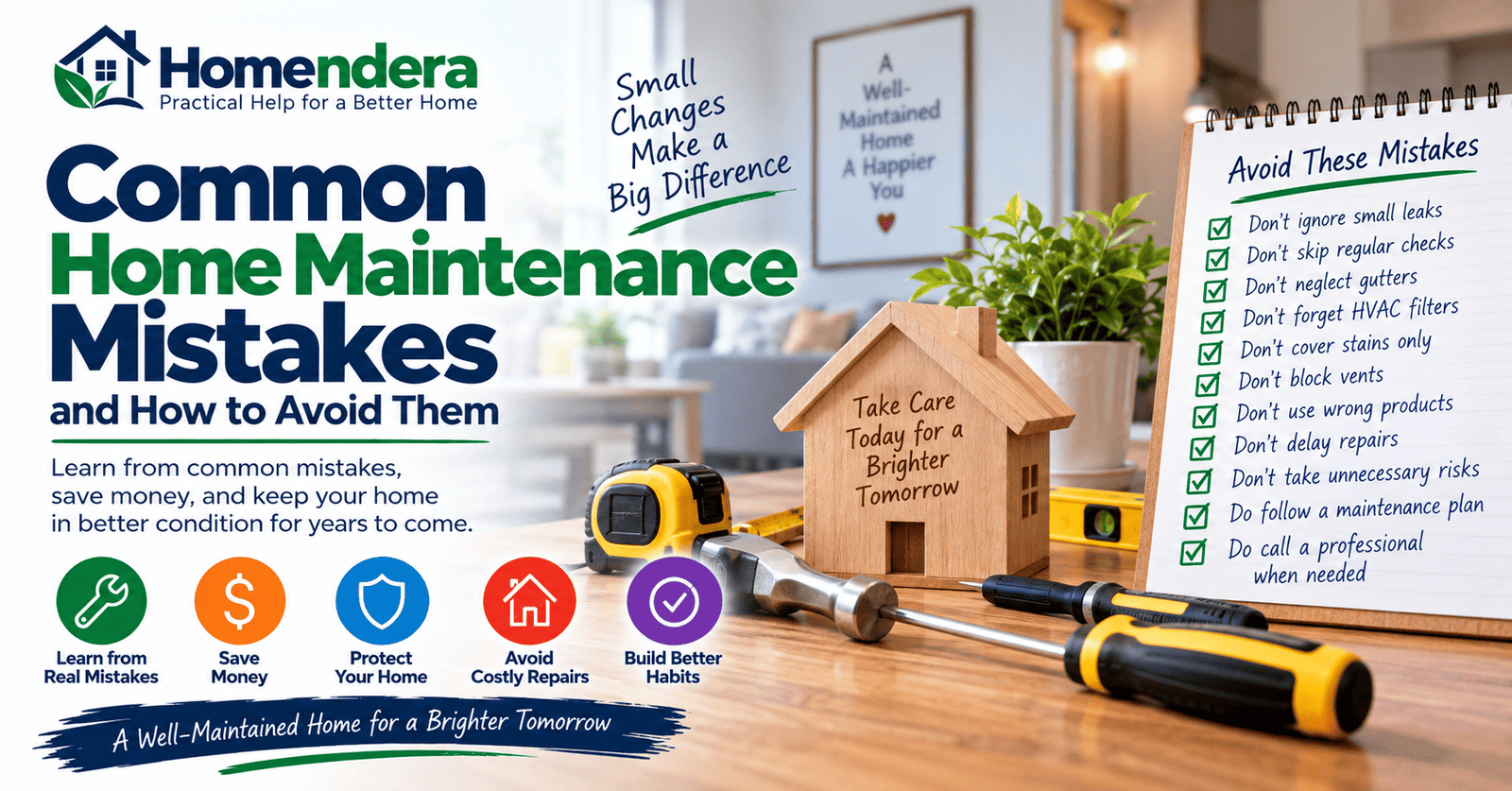
Home maintenance can save money, protect your property, and reduce the chance of unexpected repairs. However, maintaining a home is not simply about completing as many DIY tasks as possible.
Homeowners sometimes overlook small warning signs, use the wrong repair method, or postpone routine checks until something stops working. Other mistakes happen when a temporary fix is treated as a permanent solution.
Understanding the most common home maintenance mistakes can help you develop better habits. The goal is not to make your home perfect. Instead, regular attention can help you identify problems early and decide when you can handle a task yourself and when professional help makes more sense.
For a complete starting point, use our Home Maintenance Checklist: Essential Tasks for Every Home to build a practical maintenance routine.
1. Waiting Until Something Breaks
One of the biggest maintenance mistakes is treating home care as something that starts only after a failure.
A dripping connection, unusual HVAC sound, slow drain, damaged seal, or small moisture stain may not seem urgent. However, these changes can sometimes be early signs of a developing problem.
Regular inspections give you an opportunity to notice them.
You do not need to inspect the entire house every day. A simple monthly routine can make preventive maintenance much easier.
Our Monthly Home Maintenance Checklist provides a practical list of areas worth checking regularly.
2. Ignoring Small Water Leaks
A small leak can be easy to dismiss, especially when it does not immediately affect how you use a sink, toilet, or appliance.
The problem is that repeated moisture can affect surrounding materials over time.
Check beneath sinks and around toilets, appliances, plumbing fixtures, and visible connections.
Watch for dampness, stains, corrosion, swelling, or musty odors.
If you find moisture but cannot identify its source, our guide on how to inspect your home for water damage explains where to look.
3. Covering Water Stains Without Finding the Cause
A ceiling or wall stain can make a room look neglected, so repainting it may seem like the obvious solution.
Paint does not repair a leak.
Before covering a stain, determine whether the source of moisture has been identified and corrected.
Possible causes include plumbing problems, roof leaks, condensation, exterior water intrusion, or other moisture sources.
If the area continues to change, photograph it periodically. This makes it easier to determine whether the problem is active.
4. Forgetting About Gutters and Drainage
Home maintenance does not stop at the walls of the house.
Gutters, downspouts, surface drainage, and surrounding ground all influence how rainwater moves around a property.
Blocked or damaged drainage can allow water to collect where it should not.
Inspect visible drainage periodically and pay attention during rainfall. Water repeatedly overflowing from gutters or pooling close to the building deserves investigation.
Avoid unsafe ladder work simply to clean a difficult-to-reach gutter. Professional help may be safer for high or awkward areas.
5. Neglecting HVAC Filters
Air filters are easy to forget because they often remain out of sight.
However, an appropriate filter-maintenance routine is part of looking after many heating and cooling systems.
The mistake is not only forgetting the filter. Another common mistake is assuming that every filter must be changed on exactly the same schedule.
Replacement frequency can depend on filter type, equipment, system use, pets, household conditions, dust levels, and manufacturer recommendations.
Check the filter according to the instructions for your particular system rather than relying on one universal interval.
6. Blocking Vents and Registers
Furniture arrangements change. Rugs move, curtains hang differently, and storage boxes accumulate.
As a result, a vent or register that was once clear may become partially obstructed.
Periodically check visible HVAC openings and keep them clear where the system design requires airflow.
If one room develops a significant heating or cooling problem, do not automatically assume that a blocked vent is the only possible cause. HVAC performance can be affected by many factors.
7. Ignoring Unusual Sounds
Homes make ordinary sounds, but new or changing noises deserve attention.
You may hear dripping, rattling, buzzing, grinding, knocking, or water running when you do not expect it.
An unfamiliar sound does not automatically indicate a serious failure. Still, ignoring a persistent change can allow a problem to develop unnoticed.
Try to determine where the sound originates without dismantling equipment or exposing yourself to electrical, mechanical, gas, or other hazards.
8. Ignoring Unusual Smells
Smell can provide another early warning.
Persistent musty odors may be associated with unwanted moisture. Burning or overheating smells can indicate a potentially serious problem, while gas-like or sewage odors may require prompt investigation.
Do not simply cover persistent unusual odors with fragrances.
If you suspect gas, combustion problems, electrical overheating, or another immediate hazard, prioritize safety and follow the appropriate local emergency or utility guidance.
9. Using Temporary Repairs for Too Long
Temporary measures can sometimes prevent immediate damage while you arrange a proper repair.
The mistake is forgetting that they were temporary.
Tape, improvised seals, containers placed beneath leaks, or other short-term measures may hide the fact that the underlying problem still exists.
Record temporary repairs on your maintenance list and arrange an appropriate permanent solution.
10. Using the Wrong Product for a Repair
Home-improvement stores contain sealants, adhesives, fillers, cleaners, lubricants, fasteners, and other products designed for different applications.
Similar-looking products are not necessarily interchangeable.
Before using one, check:
- What materials it is designed for
- Whether it is suitable indoors or outdoors
- Temperature and moisture requirements
- Surface preparation instructions
- Safety precautions
- Manufacturer directions
Using an unsuitable product can result in a poor repair and may make later corrective work more difficult.
11. Sealing Every Crack Without Investigating It
Small cosmetic cracks are common in many homes.
However, automatically filling every crack can hide useful information.
Before repairing one, consider its location, width, direction, and whether it appears to be changing.
Photographs and dated measurements can help with monitoring.
Large, recurring, rapidly changing, or otherwise concerning cracks—particularly when accompanied by movement elsewhere—may require professional evaluation.
12. Treating Every Clogged Drain the Same Way
A slow sink and a major drainage problem are not necessarily the same issue.
Repeatedly using aggressive drain chemicals without understanding the blockage can create unnecessary risks and may not address the underlying cause.
Start with safe, appropriate methods for the particular fixture and follow product or manufacturer instructions where applicable.
Recurring clogs, multiple affected fixtures, sewage backup, or other significant drainage symptoms may require a plumber.
13. Forgetting About Caulk and Weather Seals
Sealants and weatherstripping do not last forever.
Exposure to moisture, sunlight, movement, and temperature changes can cause them to deteriorate.
Periodically inspect appropriate joints around windows, doors, tubs, showers, and other areas where seals serve a specific purpose.
Do not simply add new material over failing sealant without proper preparation. Also remember that not every gap in a building is intended to be sealed.
Use products suitable for the particular application.
14. Overlooking Areas Behind Stored Items
A wall can look perfectly dry while moisture develops behind a cabinet full of belongings or boxes stacked against it.
Storage can hide leaks, pests, deterioration, and condensation.
Periodically inspect less-visible areas, particularly beneath sinks and around exterior walls, plumbing, appliances, basements, and other moisture-prone locations.
You do not need to empty every cupboard monthly. Just make hidden areas part of your wider maintenance routine.
15. Skipping Seasonal Maintenance
Different weather conditions create different maintenance priorities.
Preparing heating equipment after cold weather has already arrived, for example, leaves little time to address problems. Similarly, discovering blocked drainage during heavy rainfall is less convenient than finding it beforehand.
Our Seasonal Home Maintenance Checklist divides practical inspections into spring, summer, fall, and winter.
Your actual schedule should still reflect your local climate. Homes in hot, humid, dry, coastal, rainy, or freezing environments will have different priorities.
16. Forgetting Manufacturer Instructions
Homeowners often rely on general advice when their equipment already comes with more specific information.
Appliances, HVAC systems, filters, water heaters, finishes, and other products can have their own maintenance requirements.
Manufacturer instructions should therefore be an important part of your routine.
They can tell you which maintenance is appropriate for the owner, which products to use, and when professional service may be required.
17. Performing Repairs Without Turning Off the Appropriate Supply
Some household tasks require water, electricity, gas, or equipment to be isolated before work begins.
Starting without understanding the system can create serious hazards.
Never assume that turning off a nearby switch makes electrical equipment safe to work on. Similarly, gas systems and pressurized equipment require appropriate knowledge.
If safe isolation procedures are outside your competence, use a qualified professional.
18. Taking Unnecessary Risks on Ladders and Roofs
A maintenance task may look simple until it requires working several metres above the ground.
Gutter cleaning, roof inspection, exterior painting, tree trimming, and other elevated work can involve serious fall risks.
Do not let the desire to save money turn an ordinary maintenance job into an unsafe situation.
Many roof conditions can initially be observed from the ground. Work requiring dangerous access is often better handled by someone with suitable training and equipment.
19. Attempting Technical HVAC Repairs Yourself
Replacing or inspecting an accessible filter may be ordinary homeowner maintenance.
Opening technical components and attempting electrical, refrigerant, gas, or combustion repairs is different.
Modern heating and cooling equipment can contain high-voltage electrical components, moving parts, pressurized refrigerant, fuel systems, or other hazards.
Know the boundary between routine maintenance and technical repair.
Qualified HVAC service is appropriate when the work exceeds safe homeowner-level maintenance.
20. Treating Electrical Problems as Simple DIY Jobs
A loose cabinet handle and an electrical fault do not belong in the same risk category.
Repeated breaker trips, overheating, burning smells, damaged wiring, sparking, or other abnormal electrical behavior can indicate a serious problem.
Avoid improvised repairs.
Electrical work may also be subject to local codes, permits, and licensing requirements. When the work involves meaningful electrical risk, use an appropriately qualified electrician.
21. Ignoring Small Exterior Problems
A loose exterior component, damaged seal, peeling finish, or minor drainage problem can seem less important than something happening inside the home.
Exterior materials protect the building from weather.
Inspect them periodically from a safe location and watch for deterioration.
Early maintenance can sometimes be simpler than repairing materials after prolonged exposure to moisture or weather.
22. Forgetting to Check Safety Devices
Smoke alarms and carbon monoxide alarms should not disappear into the background simply because they rarely demand attention.
Test devices according to manufacturer instructions and replace batteries or units when required.
Never disable an alarm because it is inconvenient.
If an alarm indicates a possible emergency, treat the warning seriously and follow appropriate safety procedures.
23. Buying Tools Before Understanding the Problem
Home maintenance can quickly turn into tool collecting.
Before buying specialized equipment, identify what you are actually trying to repair or inspect.
For occasional tasks, you may not need an expensive specialist tool at all. In other cases, having the correct basic tool can make a safe DIY task easier.
The repair should determine the tool—not the other way around.
This principle will become important later as Homendera begins covering useful home-maintenance tools and products.
24. Failing to Keep Maintenance Records
It is surprisingly difficult to remember when something was last inspected, serviced, or replaced.
Keep simple records of important work.
You might record:
- HVAC servicing
- Filter changes
- Plumbing repairs
- Appliance maintenance
- Roof work
- Water leaks
- Professional inspections
- Exterior repairs
Photos can also document cracks, stains, or other conditions you want to monitor.
A phone note, spreadsheet, or notebook is enough. The system does not need to be complicated.
25. Trying to Do Everything Yourself
DIY can be practical and satisfying, but it should have limits.
A homeowner does not need to personally complete every repair to maintain a home well.
Gas systems, significant electrical work, structural problems, dangerous roof access, major HVAC faults, extensive water damage, and other high-risk situations may require qualified professionals.
Calling a professional is not a failure of DIY.
Good home maintenance means choosing an appropriate solution while protecting people and property.
Build a Preventive Maintenance Habit
Avoiding these mistakes becomes easier when home care is part of a routine.
Start with a brief monthly inspection. Add seasonal tasks when weather changes, and follow manufacturer recommendations for equipment and appliances.
When you notice something unusual, record it.
Then decide whether the issue needs monitoring, a manageable DIY repair, or professional attention.
This approach is much more practical than waiting for several neglected problems to demand attention at once.
Final Thoughts
Most home maintenance mistakes come from one of three things: overlooking warning signs, postponing routine care, or attempting a repair without first understanding the problem.
Regular inspections can change that.
Check your home consistently, investigate changes rather than hiding them, and keep simple maintenance records. At the same time, recognize when safety or technical complexity makes professional help the better option.
A well-maintained home does not require constant work. It requires regular attention and sensible decisions.
1 thought on “Common Home Maintenance Mistakes and How to Avoid Them”