
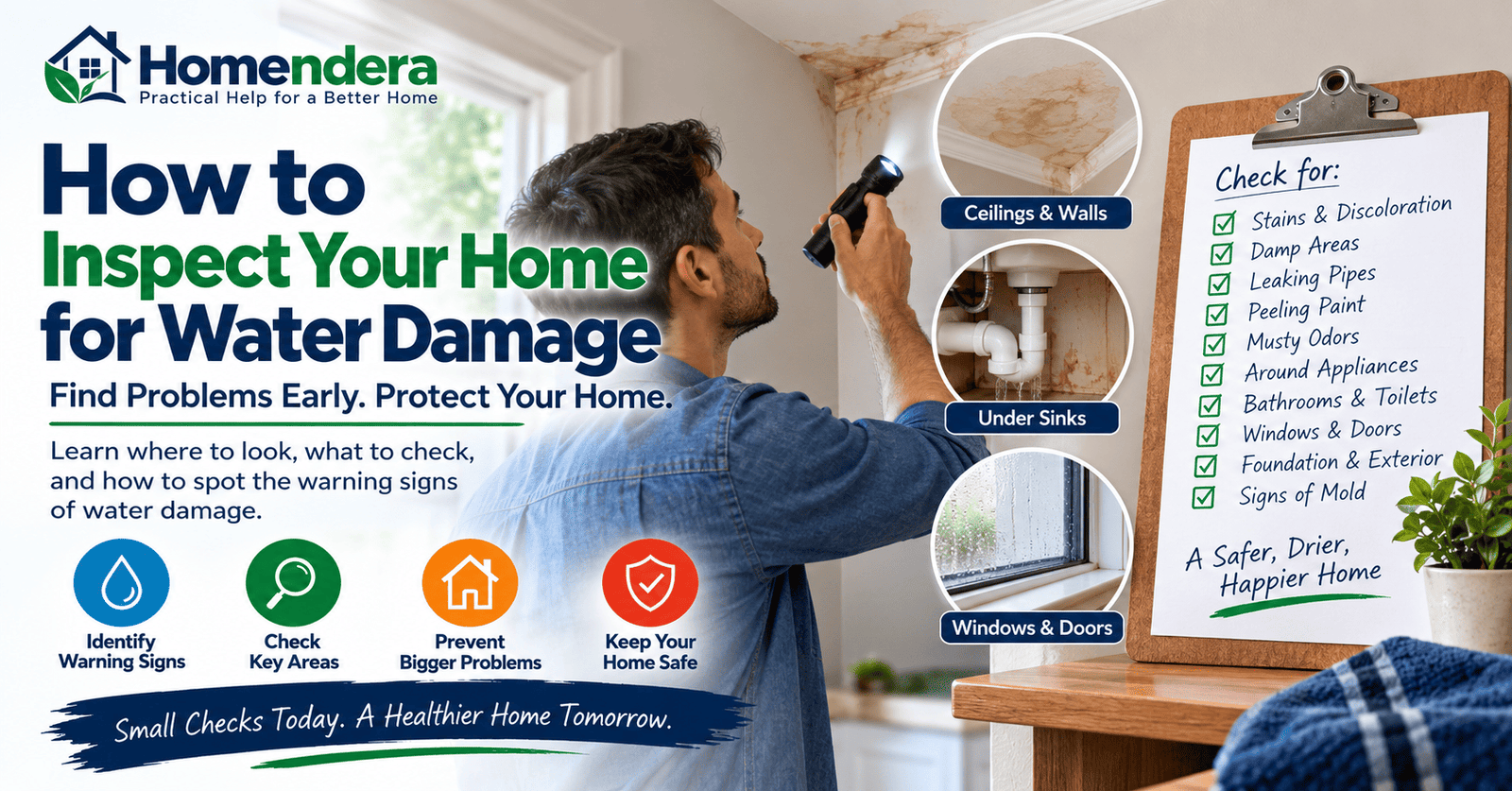
Water damage is not always easy to spot. A leaking pipe may remain hidden behind a wall, while a roof problem can slowly create stains on a ceiling. In other cases, moisture develops around windows, bathrooms, appliances, or foundations before homeowners realize something is wrong.
Learning how to inspect your home for water damage can help you identify warning signs early. A simple inspection does not require you to open walls or dismantle plumbing. Instead, it involves knowing where to look and recognizing changes that may indicate unwanted moisture.
Regular inspections are also part of good preventive maintenance. Our Home Maintenance Checklist: Essential Tasks for Every Home explains how water checks fit into a broader home-care routine.
Why Water Damage Should Be Taken Seriously
A small amount of unwanted water can affect more than appearance.
Persistent moisture may damage drywall, wood, flooring, cabinets, insulation, paint, and other building materials. It can also create conditions that support mold growth.
The longer the source continues, the larger the affected area may become.
Early detection therefore matters. Finding a small stain does not necessarily mean you have major damage, but it gives you a reason to investigate before simply covering it.
Common Signs of Water Damage
Water does not always appear as an obvious puddle.
During an inspection, watch for:
- Yellow, brown, or dark stains
- Peeling or bubbling paint
- Soft or swollen materials
- Warped flooring
- Damp surfaces
- Musty odors
- Persistent condensation
- Crumbling drywall or plaster
- Visible mold-like growth
- Rust or corrosion
- Unexplained changes in walls or ceilings
A single sign does not always identify the cause.
For example, condensation, plumbing leaks, roof leaks, drainage problems, and high indoor humidity can sometimes produce similar symptoms.
Your first objective is to determine whether unwanted moisture is present and where it may be coming from.
Start With Ceilings and Walls
Walk slowly through each room and look at ceilings and walls.
Pay particular attention to areas below bathrooms, plumbing fixtures, roofs, balconies, or other locations where water may be present.
Look for discoloration, bubbling paint, sagging surfaces, or changes in texture.
A ceiling stain can sometimes remain visible after an old leak has been repaired. Therefore, the existence of a stain does not prove that water is currently entering.
If you are monitoring an old mark, photographs can help you determine whether its size or appearance changes over time.
Be Careful With Bulging Ceilings
A ceiling that is visibly bulging or holding water needs more caution than an ordinary stain.
Do not stand directly beneath a badly sagging area or puncture it casually. Water can add considerable weight, and damaged ceiling materials may fail.
If there appears to be significant water accumulation or structural deterioration, keep people away from the affected area and seek appropriate professional help.
Check Under Every Sink
Kitchen and bathroom sink cabinets can hide slow leaks.
Remove enough stored items to see the cabinet floor and accessible plumbing.
Look for:
- Water droplets
- Dampness
- Stains
- Swollen cabinet material
- Corrosion
- Mineral deposits
- Musty smells
Run the faucet while observing accessible connections.
However, do not loosen plumbing fittings simply to test them. If you find active leakage that you cannot safely address, a plumber can investigate further.
Inspect Around Toilets
Check the floor around each toilet.
Moisture at the base should not be treated as normal. Look for staining, soft flooring, recurring dampness, or movement when the toilet is used.
A toilet that rocks or moves may need attention even when you cannot see water.
Also listen for continuous running after flushing. Although a running toilet does not necessarily cause exterior water damage, it can indicate a plumbing problem and waste water.
Examine Showers and Bathtubs
Bathrooms experience regular moisture, which makes them an important part of any inspection.
Look at:
- Tub and shower edges
- Visible seals
- Tile joints
- Walls beside the shower
- Flooring around the tub
- Areas near plumbing fixtures
Watch for loose materials, deteriorated sealant, staining, swelling, or persistent dampness.
Not every dark mark is mold, and visual appearance alone may not identify what is growing on a surface. The more important question is whether excess moisture is present and why.
Check Around the Washing Machine
Washing machines combine water supply connections, drainage, and regular movement.
Inspect accessible hoses and connections for moisture, deterioration, or obvious damage. Look at the floor and nearby walls as well.
If you notice recurring water, stop and determine its source.
Follow the appliance manufacturer’s instructions for hose inspection and replacement. Different appliances and installations may have different requirements.
Look Around the Dishwasher
A dishwasher leak may not always appear directly in front of the appliance.
Check nearby flooring, cabinets, and accessible plumbing under the kitchen sink.
Watch for swelling, discoloration, moisture, or changes in flooring around the appliance.
Do not pull out or dismantle an appliance if doing so could damage electrical, plumbing, or gas connections.
Professional appliance service or plumbing assistance may be appropriate when the source cannot be safely identified.
Inspect the Refrigerator Area
Some refrigerators have water supplies for ice makers or dispensers.
If yours does, look for moisture around accessible connections and nearby flooring.
Unexpected water beneath or behind a refrigerator can have several possible causes, including condensation, drainage issues, or a water-supply problem.
Follow manufacturer guidance before moving or servicing the appliance.
Check the Water Heater Area
Look around your water heater if it is safely accessible.
Water on the floor, corrosion, staining, or recurring moisture deserves attention.
Do not dismantle the unit or attempt technical repairs involving gas, electricity, pressure controls, or other safety components.
A leaking or malfunctioning water heater may require prompt professional assessment.
Inspect Windows and Exterior Doors
Not all water damage begins with plumbing.
Rain can enter through deteriorated seals, damaged components, or other defects around exterior openings.
Look around window and door frames for:
- Water stains
- Peeling paint
- Soft materials
- Damaged seals
- Swelling
- Persistent dampness
Condensation can also create moisture around windows, so investigate before assuming that rainwater is entering from outside.
Look Inside Closets
Closets are easy to overlook because walls may be hidden behind clothing, boxes, or shelving.
Exterior-wall closets can be particularly useful places to inspect periodically.
Look for stains, dampness, musty odors, or changes in stored items.
Avoid packing belongings tightly against a wall if you are monitoring a suspected moisture problem. You need to be able to see whether conditions change.
Check Basements and Crawl Spaces
If your home has a basement or safely accessible crawl space, moisture there can provide clues about drainage, plumbing, or groundwater problems.
Look for visible water, staining, deterioration, condensation, or musty odors.
Do not enter a confined, flooded, structurally unstable, contaminated, or otherwise unsafe space.
Standing water may also create electrical hazards. If there is any possibility that electrical equipment or wiring has been affected, keep away and seek qualified assistance.
Walk Around the Exterior
An indoor water problem can sometimes begin outside.
Walk around the house after rainfall when conditions are safe.
Observe where water goes.
Look for:
- Standing water near the building
- Overflowing gutters
- Disconnected downspouts
- Damaged exterior materials
- Areas where water repeatedly collects
- Visible deterioration around windows and doors
Our Seasonal Home Maintenance Checklist covers exterior and drainage inspections throughout the year.
Look at the Roof From a Safe Location
Roof problems can lead to moisture inside ceilings, walls, or attic areas.
From the ground, look for obvious missing or displaced roofing materials, damaged edges, or other visible changes.
After severe weather, pay particular attention to anything that looks different.
Do not climb onto a roof merely to search for a leak. Working at height carries significant risk, and professional roof inspection is appropriate when the problem cannot be assessed safely.
Pay Attention to Musty Odors
Your nose can sometimes identify a moisture problem before your eyes do.
A persistent musty smell may indicate damp materials or another moisture-related condition, particularly in poorly ventilated areas.
However, an odor alone cannot tell you exactly what is causing the problem.
Investigate the surrounding area for moisture rather than simply covering the smell with fragrance or air freshener.
Watch for Flooring Changes
Water can affect different flooring materials in different ways.
Look for unexpected lifting, buckling, staining, swelling, softness, or separation.
Changes close to bathrooms, kitchens, appliances, exterior doors, or plumbing fixtures deserve particular attention.
The visible flooring may not reveal how far moisture has traveled underneath it.
Persistent or extensive damage may therefore require professional assessment.
Should You Use a Moisture Meter?
A moisture meter can sometimes provide additional information when investigating building materials.
However, readings need context.
Different materials can produce different readings, and the device does not automatically tell you why moisture is present or where it originated.
For an ordinary homeowner inspection, begin with visual observations, smells, known water sources, and changes over time.
If the situation is complicated or the extent of moisture is uncertain, professional assessment may provide more useful information.
What to Do When You Find Water Damage
Finding a wet area is only the first step.
Try to identify whether water is actively entering and whether there is an immediate safety concern.
Where appropriate:
- Keep people away from unsafe areas.
- Stop the water source if this can be done safely.
- Protect unaffected belongings where practical.
- Document visible damage with photographs.
- Arrange appropriate repairs.
- Address wet materials and drying promptly.
- Continue monitoring the area afterward.
Do not focus only on the stain or damaged finish.
Unless you correct the source of moisture, cosmetic repairs may hide the problem temporarily while damage continues.
Water and Electricity Require Extra Caution
Never treat water around electrical equipment casually.
Do not touch electrical panels, outlets, appliances, wiring, switches, or energized equipment while standing in water or when the area may be electrically unsafe.
Similarly, do not enter flooded spaces where electrical hazards may be present.
Use a qualified electrician or appropriate emergency service when electrical safety is uncertain.
When Should You Call a Professional?
Some moisture problems are straightforward. Others require specialist investigation.
Consider professional assistance when you find:
- Significant or continuing leaks
- Large areas of damaged material
- Water near electrical systems
- Structural deterioration
- Roof leaks requiring work at height
- Repeated water intrusion
- Sewage or contaminated water
- Extensive microbial growth
- Moisture with an unknown source
- Flooding
- Damage you cannot safely access
Depending on the problem, you may need a plumber, roofer, electrician, HVAC technician, building professional, or water-damage specialist.
Add Water Checks to Your Monthly Routine
Water-damage inspection should not be something you perform only after noticing a stain.
A quick monthly check of plumbing areas, bathrooms, appliances, ceilings, and other vulnerable locations can make developing problems easier to spot.
Our Monthly Home Maintenance Checklist: What to Check Every Month provides a simple routine for incorporating these inspections into regular home care.
Internal link: Link the bold article title to Article #2.
Keep a Record of Anything Suspicious
Photographs are useful when you are unsure whether a mark is changing.
Take a clear picture and note the date.
You can also record repairs, professional inspections, unusual weather events, or plumbing problems.
When you inspect the area later, you will have something more reliable than memory for comparison.
Final Thoughts
Water damage is easier to manage when you notice it early.
Regularly inspect ceilings, walls, plumbing fixtures, bathrooms, appliances, windows, flooring, drainage areas, and other locations where unwanted moisture may appear.
Remember that finding the visible damage is not enough. The underlying water source matters most.
Knowing how to inspect your home for water damage can help you recognize warning signs and decide what to do next. When the problem involves electrical hazards, structural damage, contaminated water, significant leakage, or another serious risk, professional help is the safer approach.
3 thoughts on “How to Inspect Your Home for Water Damage”