
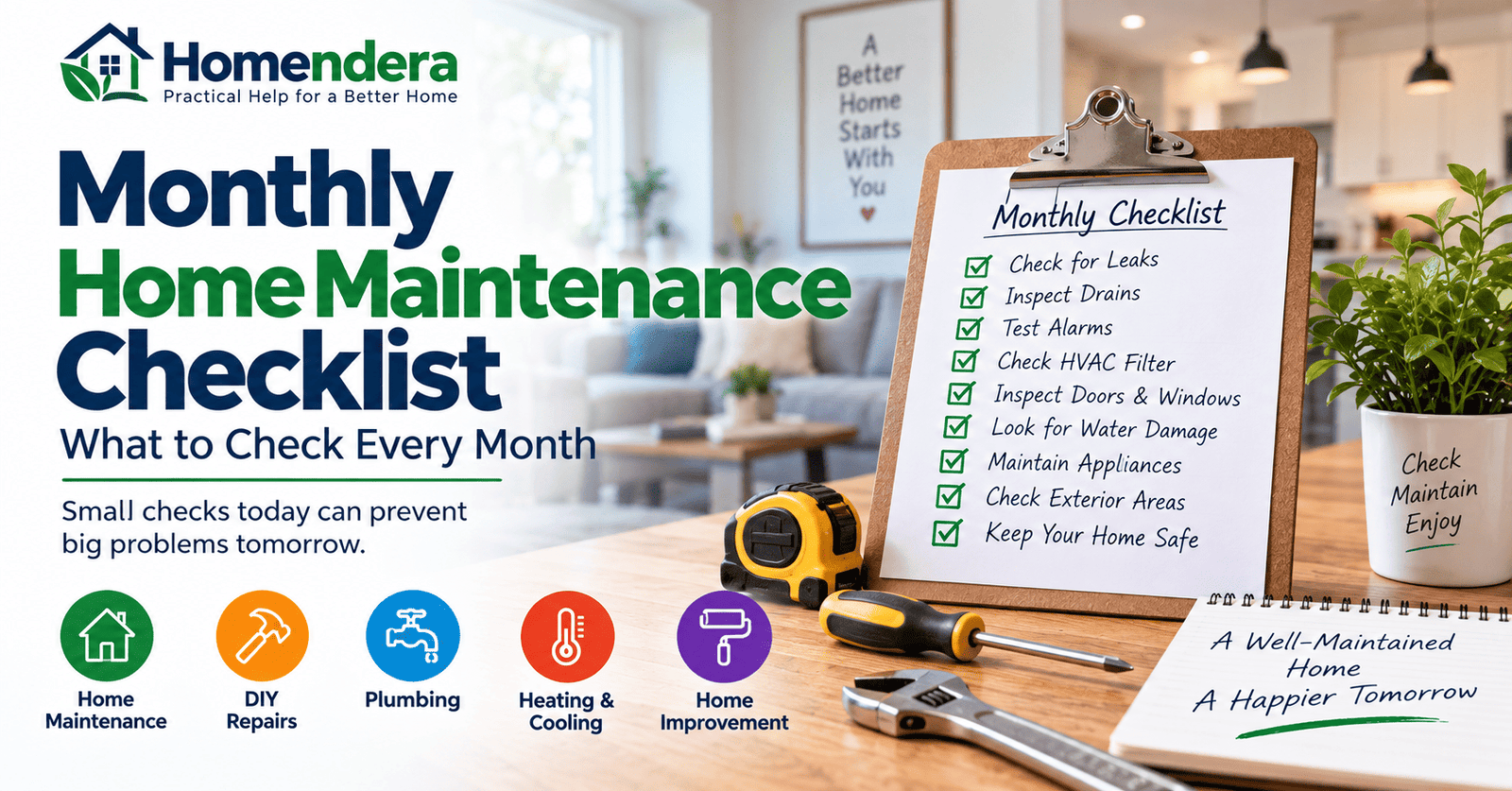
A home does not need a major inspection every few weeks. However, spending a little time checking important areas each month can help you notice problems before they become expensive repairs.
This monthly home maintenance checklist focuses on practical tasks that most homeowners can work into a regular routine. You can complete many of these checks simply by walking through your home and paying attention to anything that looks, sounds, smells, or works differently than usual.
For a broader overview of year-round household care, see our Home Maintenance Checklist: Essential Tasks for Every Home.
Why Check Your Home Every Month?
Small household problems rarely improve by themselves.
A minor plumbing leak can damage a cabinet. A slow drain may eventually become blocked. Meanwhile, a damaged seal around a window can allow moisture or outside air into the home.
Monthly checks give you an opportunity to identify these changes early.
They also help you become familiar with your home’s normal condition. Once you know what is normal, unusual sounds, moisture, odors, movement, or changes in performance become easier to recognize.
You do not have to complete every repair immediately. The first goal is simply to notice what needs attention.
1. Look for Plumbing Leaks
Start with areas where water is used regularly.
Check underneath kitchen and bathroom sinks. Look around toilets, faucets, washing machines, dishwashers, and other visible plumbing connections.
Watch for:
- Drips or standing water
- Damp cabinets
- Water stains
- Swollen materials
- Rust or corrosion
- Musty odors
- Peeling or bubbling finishes
Run your hand over accessible, safe surfaces if you suspect moisture.
A tiny leak may appear harmless, but repeated exposure to water can damage surrounding materials.
If you cannot determine where moisture is coming from, further investigation may be necessary. We will cover this in detail in our upcoming guide on how to find a water leak in your home.
2. Check Sinks, Showers, and Drains
Pay attention to how quickly water drains from sinks, showers, and tubs.
A drain that becomes gradually slower may be developing a blockage.
Remove accessible hair or debris where this can be done safely. Cleaning removable strainers can also help prevent buildup.
Avoid automatically pouring strong drain chemicals into a slow drain. Different drainage problems have different causes, and some products can create additional hazards or damage certain materials if used incorrectly.
Our Plumbing section will include a dedicated guide to dealing with a slow-draining sink safely.
3. Inspect Toilets
Look around the base of each toilet for moisture or staining.
After flushing, listen to what happens. A toilet that continues running may have a problem with one of its internal components.
Also check whether the toilet feels stable.
Movement at the base, recurring moisture, damaged flooring, or unexplained odors should not be ignored. Some problems may require a plumber to identify the underlying cause.
4. Check for Signs of Water Damage
Water damage is not always obvious.
Look at ceilings and walls for new stains or discoloration. Check cabinets, flooring, basements, and other moisture-prone areas as appropriate for your home.
Pay attention to:
- New stains
- Damp patches
- Peeling paint
- Swollen wood or other materials
- Persistent condensation
- Musty smells
- Unexplained changes in flooring
Finding a stain is only the beginning. You also need to determine where the moisture came from.
For a more complete room-by-room inspection, see our guide on how to inspect your home for water damage.
5. Test Smoke and Carbon Monoxide Alarms
Safety devices deserve regular attention.
Test smoke alarms and carbon monoxide alarms according to their manufacturers’ instructions. Replace batteries or devices when required by those instructions and applicable local requirements.
Never permanently disable an alarm because it repeatedly sounds or chirps.
Instead, determine why it is happening. A warning may indicate a battery or device issue, while an active alarm may indicate a genuine hazard.
If you suspect carbon monoxide or another immediate danger, leave the affected area and follow local emergency guidance rather than trying to diagnose the source yourself.
6. Look at Your HVAC Air Filter
Check the air filter serving your heating or cooling system if it is safely accessible and designed for homeowner inspection.
A filter’s condition can vary significantly depending on the household.
Pets, dust, equipment use, filter type, indoor activities, and manufacturer specifications can all affect how frequently replacement is necessary.
Therefore, avoid assuming that every HVAC filter must follow exactly the same schedule.
Our Heating & Cooling cluster will include a complete article explaining how often you should change your HVAC air filter.
7. Check HVAC Vents and Registers
Walk through the rooms and inspect visible vents and registers.
Make sure furniture, rugs, curtains, boxes, or other household items are not unintentionally blocking them.
You can also pay attention to whether heating or cooling feels noticeably different in one area.
A small difference does not necessarily indicate a fault. However, a significant or sudden change may justify further investigation.
Avoid opening technical HVAC components unless the work is specifically intended for homeowner maintenance and you can perform it safely.
8. Inspect Doors and Windows
Open and close frequently used doors and windows.
Notice whether they move normally. Look for loose handles, damaged locks, deteriorating weatherstripping, visible gaps, or difficulty opening and closing them.
Seasonal changes can sometimes affect how building materials behave.
However, significant movement, repeated sticking, large new gaps, or changes accompanied by cracking may deserve closer assessment rather than simply adjusting the door or window repeatedly.
9. Look for Moisture Around Windows
Windows can provide useful clues about moisture problems.
Check frames, sills, and surrounding walls for staining, peeling finishes, damaged seals, or persistent dampness.
Condensation can occur for several reasons, so moisture on a window does not automatically mean that the window is leaking.
Repeated water accumulation or deterioration around the frame should still be investigated.
10. Inspect Frequently Used Appliances
You do not need to dismantle appliances every month.
Instead, look for visible signs that something has changed.
For applicable appliances, check for unexpected water, damaged hoses, unusual noises, unusual smells, excessive vibration, or visible deterioration.
Follow the manufacturer’s maintenance instructions for each appliance.
Stop using equipment if you notice signs that could indicate an electrical, gas, overheating, or other serious safety problem. Qualified service may be necessary.
11. Check Under the Kitchen Sink
The cabinet under the kitchen sink deserves its own quick inspection because small leaks can remain hidden there.
Remove enough stored items to see the plumbing and cabinet floor.
Look for moisture, stains, corrosion, swelling, or an unusual smell.
Also check whether household products stored there have leaked or become damaged.
Catching moisture early can prevent prolonged exposure to cabinet materials.
12. Inspect Bathroom Seals and Moisture-Prone Areas
Bathrooms regularly experience water and humidity.
Check visible seals around showers, tubs, sinks, and other wet areas. Look for deterioration, gaps, persistent moisture, or changes in surrounding surfaces.
Ventilation also matters.
If the bathroom remains unusually damp for long periods, investigate why rather than repeatedly covering visible deterioration.
13. Check Stairs and Handrails
Walk through stairs and other frequently used areas.
Make sure handrails feel secure. Look for loose flooring, damaged steps, lifted edges, or objects that create a trip hazard.
A few minutes spent correcting a simple household hazard can prevent an injury.
Structural movement or unstable stairs require more than a cosmetic repair and may need professional assessment.
14. Walk Around the Exterior
Once a month, take a quick look around the outside of your home when weather conditions allow.
You do not need specialist equipment.
From safe ground level, look for obvious changes such as:
- Damaged exterior materials
- New or changing cracks
- Water collecting near the building
- Blocked visible drainage
- Loose components
- Damaged doors or windows
- Signs of moisture
- Storm-related damage
You may also notice vegetation beginning to interfere with the building or drainage areas.
The purpose is to identify changes, not to perform risky inspections.
15. Look at the Roof From the Ground
Do not climb onto your roof simply to complete a monthly checklist.
Instead, look at it from a safe location where possible.
Notice obvious missing or displaced materials, damaged edges, unusual sagging, or changes following severe weather.
Roof work carries a significant fall risk. If something looks wrong and cannot be assessed safely from the ground, use a suitably qualified professional.
16. Check Gutters and Visible Drainage
Observe gutters and downspouts from a safe position.
Leaves and other debris can restrict water flow. You may also notice overflowing gutters during rain, disconnected downspouts, or water collecting where it should not.
Water should generally be managed so that it does not repeatedly collect against the building.
Never use an unsafe ladder setup simply to inspect or clean a difficult-to-reach gutter.
17. Notice Unusual Sounds and Smells
Not every maintenance issue is visible.
Your senses can sometimes provide an early warning.
Pay attention to new dripping, rattling, buzzing, grinding, or running-water sounds. Similarly, investigate unexplained musty, burning, gas-like, sewage, or other unusual odors.
Some smells can indicate serious hazards.
If you suspect gas, electrical overheating, combustion problems, or another immediate danger, prioritize safety and follow the appropriate local emergency or utility guidance.
18. Check for Signs of Pests
Look for evidence of insects, rodents, or other pests, particularly in kitchens, storage areas, garages, basements, and other vulnerable spaces.
Signs can include droppings, damaged packaging, gnaw marks, nesting material, or unexplained damage.
Early action can make a developing pest problem easier to address.
Avoid using hazardous pest-control products in ways that could endanger people, pets, or the environment. Follow product instructions and use professional services when appropriate.
19. Review Anything You Planned to Repair
A monthly inspection is useful only if important problems do not disappear from your attention afterward.
Review anything you noticed during previous checks.
Ask:
- Has the problem become worse?
- Has a leak returned?
- Has a crack changed?
- Is a repair still outstanding?
- Does professional service need to be scheduled?
A simple list on your phone is enough for most homes.
20. Keep a Short Maintenance Record
Finish your monthly check by recording anything important.
Note the date and what you inspected. Add repairs, filter changes, professional visits, or problems that need monitoring.
Taking a photograph can be particularly useful when you want to see whether a stain, crack, damaged surface, or other visible condition changes over time.
You do not need detailed paperwork. Consistency matters more than complexity.
A Simple Monthly Routine
This checklist may look long, but many items take only a few seconds to inspect.
Rather than treating monthly maintenance as a major project, walk through the home systematically.
You might begin in the kitchen, continue through bathrooms and living areas, check your heating and cooling system, and finish with a short walk around the exterior.
If you discover a problem, decide whether it needs immediate attention, monitoring, a straightforward repair, or professional help.
What Should Not Be a Routine DIY Task?
Monthly inspections can reveal problems that are outside the scope of ordinary homeowner maintenance.
Be particularly careful with:
- Electrical faults
- Gas systems
- Structural movement
- Major HVAC repairs
- Serious roof damage
- Extensive water damage
- Suspected hazardous materials
- Work at dangerous heights
Finding a problem does not mean you need to repair it yourself.
A good maintenance routine helps you recognize when professional expertise is the safer choice.
Final Thoughts
Regular maintenance becomes much easier when you divide it into small tasks.
Use this monthly home maintenance checklist to look for leaks, moisture, drainage problems, safety concerns, HVAC changes, exterior damage, and other signs that your home needs attention.
Most months, you may find very little wrong. That is still useful. Regular inspections help establish what is normal for your home and make meaningful changes easier to spot.
Combine these monthly checks with seasonal maintenance and manufacturer-recommended servicing to build a practical long-term care routine for your home.
2 thoughts on “Monthly Home Maintenance Checklist: What to Check Every Month”